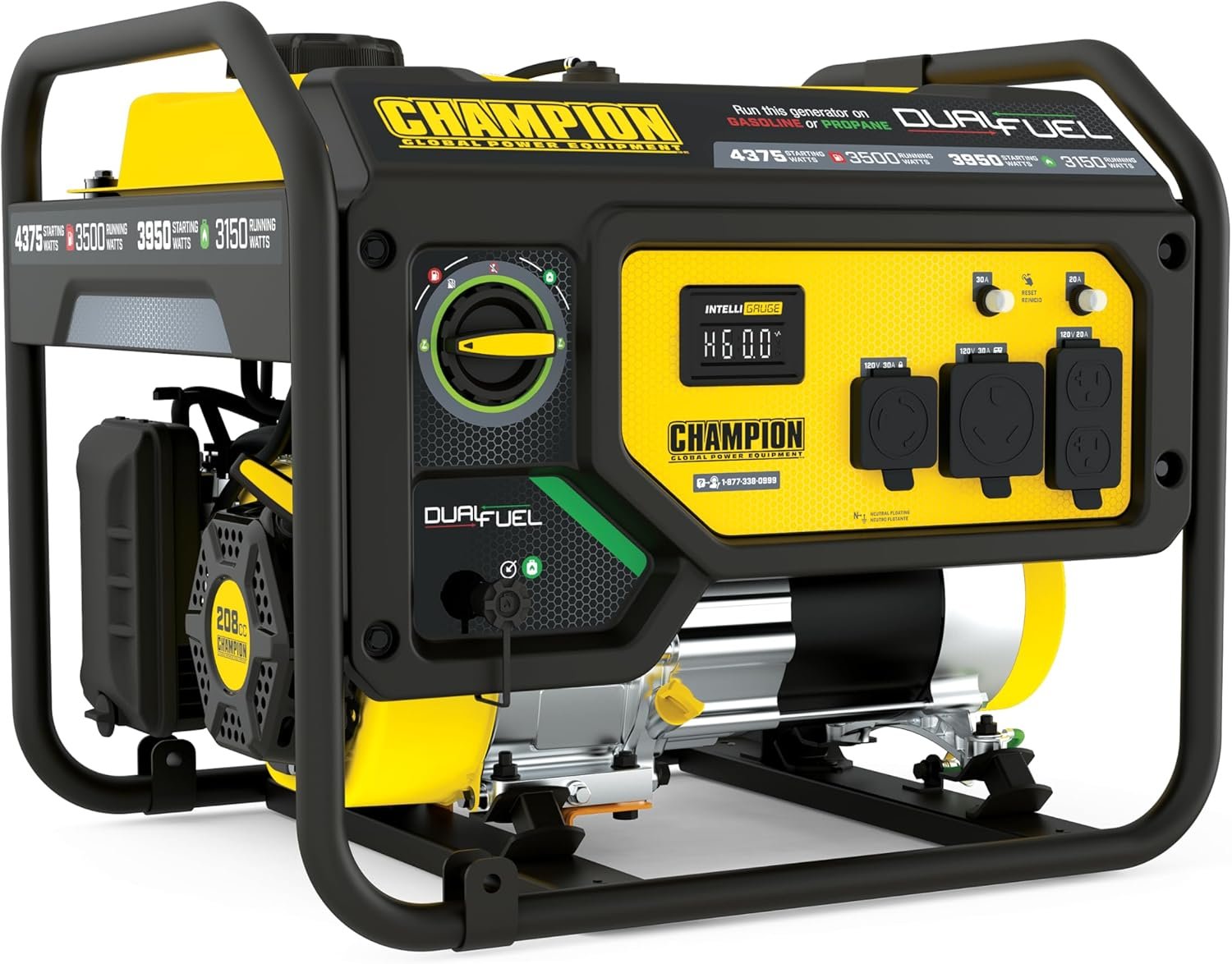
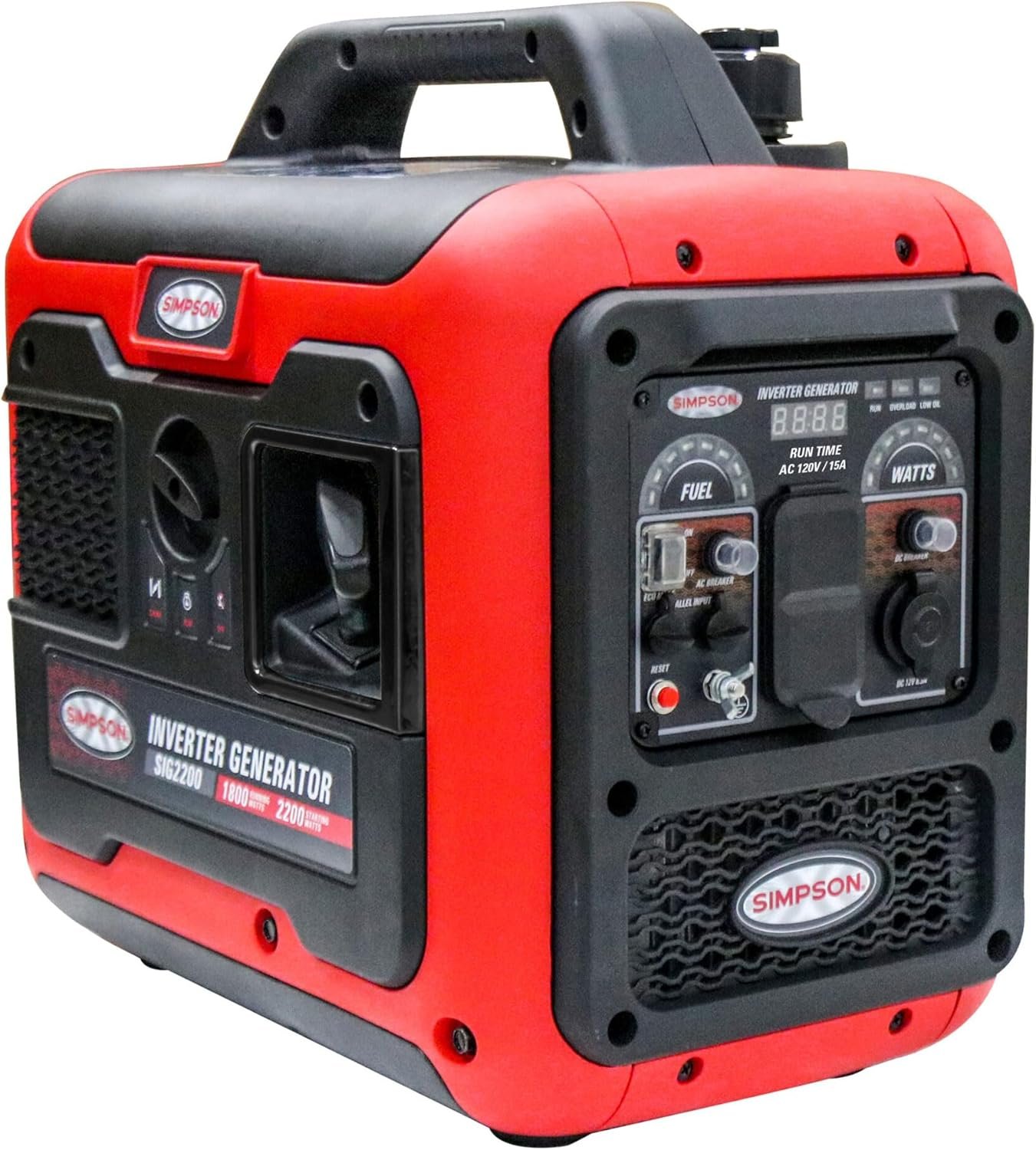
The Westinghouse 6500W Dual Fuel Generator pairs a 274cc OHV engine with dual-fuel flexibility, delivering 5300W gasoline and 4800W propane running power. It offers transfer-ready outlets, TT-30R and L14-30R receptacles, and strong safety features including CO sensing and low-oil shutdown. It is not an inverter and shows mild post-run odor. Runtimes and load stability are solid for the class, but noise and THD may limit sensitive electronics. How does it fare under sustained 50% and 75% loads?
Key Takeaways
- Dual-fuel 274cc generator delivers 6500W peak/5300W running on gasoline, 5800W peak/4800W running on propane.
- Outlets include 5–20R duplex, TT-30R RV-ready, and L14-30R transfer switch-ready, all with rubber covers.
- Runs up to 14.5 hours on a 4.7-gallon tank, depending on load and conditions.
- Safety features: automatic low-oil shutdown, integrated CO sensor/shutdown, EPA compliant; factory test burn-in.
- Trade-offs: not inverter-grade, 30A at 240V limit, open-frame noise, minor residual odor after operation.
Overview(optimize_title)(yt)
How well does a 6.5 kW-class portable handle real backup and RV loads? This unit posts 6500W peak/5300W running on gasoline, 5800W/4800W on propane, driven by a 274cc OHV with cast-iron sleeve. A 4.7-gallon tank and selectable 120/240V mode enable up to 14.5 hours, contingent on load and ambient conditions. Benchmark-relevant outputs include 5–20R duplex, TT-30R RV, and L14-30R transfer-ready, all with covered receptacles and CO sensing. Failure-aware safeguards include automatic low-oil and CO shutdown. EPA compliance and factory test burn-in reduce early-life defects. Included wheel kit and tools support rapid deployment for grid-outage autonomy or RV freedom.
Detailed features(CTA)
Building on the baseline specs, this section itemizes the feature set relevant to performance, safety, and deployment. The 274cc OHV with cast-iron sleeve drives 5300/6500W (gas) and 4800/5800W (propane), anchored by a 4.7-gallon tank and up to 14.5-hour runtime at 120/240V select. Output topology includes 5–20R duplex, TT-30R RV-ready, and L14-30R transfer switch-ready, all with rubber covers. Safety stack: automatic low-oil shutdown and integrated CO sensor. EPA compliance and factory testing reduce early-life failures; minor residual odor can occur. Kit includes oil, funnel, propane hose, tools, wheel kit, and manual. Warranty: 3-year limited, nationwide service. Plug-and-play deployment.
Pros and Cons
Why this unit matters becomes clear when weighing measured strengths against known trade-offs. On gasoline, 5300 running/6500 surge watts with a 274cc OHV and cast-iron sleeve deliver dependable load support; propane’s 4800/5800 profile ensures flexible fuel autonomy. A 4.7-gallon tank, fuel gauge, and up to 14.5-hour runtime at 120/240V selection optimize endurance. Transfer-ready L14-30R and RV TT-30R simplify deployment; CO and low-oil shutdowns harden safety. Rubber-covered outlets aid durability.
Limitations: not inverter-grade—voltage/frequency sensitivity may affect electronics; 30A ceiling restricts large 240V tools; weight and noise typical of open-frame designs; minor factory-test odor; 3-year warranty is finite.
Concluding thoughts(cta)
Ultimately, this dual-fuel unit merits shortlisting for users who need 5.3 kW continuous on gasoline (4.8 kW on propane), 30A transfer and RV readiness, and up to 14.5 hours of endurance from a 4.7-gallon tank—while accepting open-frame noise, 30A limits at 240V, and non-inverter power quality. Its 274cc OHV with cast-iron sleeve, CO shutdown, and factory test pedigree signal durable intent. Benchmarking against peers, the L14-30R and TT-30R simplify outage and campsite loads; rubber-covered outlets and low-oil shutdown reduce risk. Failure modes remain: THD-sensitive electronics, cold-start propane derate, and surge mis-sizing. For autonomy seekers, it’s a pragmatic, service-backed workhorse.
Frequently Asked Questions
Can It Run Sensitive Electronics Without an External Inverter or UPS?
No. It lacks inverter-grade THD control; likely >5% harmonic distortion risks sensitive electronics. Suitable for tools and appliances via L14-30R/TT-30R, but laptops, servers, and audio gear warrant a line-interactive UPS or true inverter generator for liberation-grade reliability.
What’s the Recommended Maintenance Schedule and Oil Change Interval?
Recommended schedule: first oil change at 20–30 hours or first month, then every 50–100 hours/season; check oil before each use, air filter every 25 hours, spark plug 100 hours. Replace fuel filter annually. Prioritize CO sensor tests.
How Loud Is It at 25% and 50% Load in Dba?
At 25% load: roughly 68–70 dBA; at 50% load: about 72–74 dBA. Though not inverter-quiet, measurements align with class benchmarks. Users seeking autonomy should position and baffle strategically; CO/low-oil protections mitigate operational risk despite elevated acoustic footprint.
Can It Be Remotely Started or Monitored via App?
No. It lacks remote electric start and app-based telemetry. Control is manual recoil/electric at the unit only. Users seeking autonomy should benchmark alternatives with Wi‑Fi/Bluetooth modules, alert notifications, geofencing, and start/stop scheduling to avoid operational blind spots.
Is a Spark Arrestor Included for Campground Compliance?
Yes—this model includes an EPA-compliant spark arrestor for campground compliance. However, verification in the user manual and muffler labeling is advised. If absent or damaged, install a USFS-approved arrestor to avoid citation, fire risk, or access denial.