
Quiet nights, steady power—camping in 2025 demands both. We’ve tested compact solar generators that charge fast, run quietly, and keep essentials like lights, phones, and cameras powered without fuss. We’ll compare the Jackery Solar Generator 300 with its 100W panel, the Explorer 300 alone, and a 288Wh LiFePO4 option with a 40W panel to see which fits your kit, budget, and recharge needs—especially when clouds roll in and outlets are days away.
Jackery Solar Generator 300 with SolarSaga 100W Panel
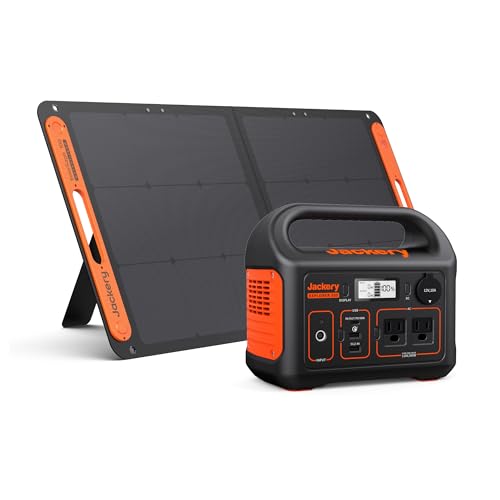

If you want an ultralight, grab-and-go power station for weekend camping, the Jackery Solar Generator 300 with the SolarSaga 100W panel stands out. You get a 293Wh lithium battery in a 7.1-pound package with two 110V pure sine wave AC outlets (300W), a 60W PD USB-C in/out, a Quick Charge 3.0 port, a USB-A, and a 12V car port. Recharge to 80% in about two hours using wall plus 60W USB-C. The MPPT controller speeds solar charging, and pass-through lets you power devices while recharging. Run laptops, drones, cameras, lights, and phones quietly—ideal for tents, road trips, outages, and emergencies.
Best For: Ultralight campers, road trippers, and emergency-prep users who need a compact, quiet power station to run small electronics and recharge quickly via wall, car, or the included SolarSaga 100W panel.
Pros:
- Lightweight 7.1 lb design with 293Wh capacity and versatile ports (2 AC, 60W USB-C PD, QC 3.0, USB-A, 12V car).
- Fast recharge to 80% in ~2 hours using AC + 60W USB-C, plus MPPT for efficient solar charging.
- Pass-through charging for powering devices while recharging; pure sine wave AC for sensitive electronics.
Cons:
- 300W inverter (200W starting) limits use to small devices; not suitable for high-draw appliances.
- 293Wh capacity may be insufficient for multi-day trips without frequent recharging or sun.
- USB-C limited to 60W; no higher-wattage PD for power-hungry laptops.
Jackery Portable Power Station Explorer 300 (293Wh)

Compact workhorse. You get 293Wh of clean, quiet lithium power in a 7.1‑pound package. The Explorer 300 delivers up to 300W with two pure sine wave AC outlets, plus a 60W USB‑C PD (in/out), QC 3.0, USB‑A, and a 12V car port. It protects sensitive gear and needs no maintenance or fuel.
Recharge fast: hit 80% in about 2 hours using the wall plus USB‑C PD. Top up via AC, your car, or a 100W SolarSaga panel; the built‑in MPPT speeds solar. Run up to six devices—laptops, cameras, drones, routers, fans, lights. Includes AC adapter and car cable. Not for high‑draw appliances.
Best For: Campers, road-trippers, and emergency preppers who need a lightweight, quiet, maintenance-free power station for laptops, cameras, routers, fans, and other small electronics off-grid.
Pros:
- Fast recharge to ~80% in about 2 hours via wall + 60W USB-C PD; multiple recharge options (AC, car, 100W solar with MPPT).
- Clean, pure sine wave power with multiple ports (2 AC, 60W USB-C PD in/out, QC 3.0, USB-A, 12V car) to run up to six devices.
- Compact 7.1 lb design; quiet operation with no fumes or maintenance; protects sensitive electronics.
Cons:
- 300W output (500W surge) limits use with high-draw appliances like induction cooktops or blenders.
- 293Wh capacity may be insufficient for extended trips without solar or vehicle recharging.
- Solar panel not included; adds cost if you want off-grid recharging.
Portable Power Station with 40W Solar Panel (288Wh LiFePO4, 350W)

Perfect for weekend campers who value longevity over sheer size, this 288Wh LiFePO4 power station delivers a true 350W output (600W surge) and packs a 40W folding solar panel for emergency top-ups. At 8.2 lb, it’s compact (10 x 6.6 x 8.22 in) yet practical: two AC outlets, USB-C PD60W, two USB-A 18W, and DC in/out cover phones, drones, cameras, and a laptop.
Expect realistic runtimes: a 30W CPAP ~8 hours; a 150W appliance ~1.6 hours. The 40W panel yields 28–36W in sun—good for trickle charging, not full daily replenishment; use an 80–100W panel for routine solar. LiFePO4 chemistry delivers 3,500+ cycles, BMS protections, display, LED/SOS, and a 1‑year warranty.
Best For: Weekend campers, emergency preppers, and mobile creators who want a compact, long‑life LiFePO4 power station with practical ports and occasional solar top-ups rather than daily solar dependence.
Pros:
- True 350W output (600W surge) with versatile ports: 2 AC, USB‑C PD60W, 2× USB‑A 18W, DC in/out
- Long‑life LiFePO4 battery (3,500+ cycles) with BMS protections, display, and LED/SOS
- Lightweight and compact (8.2 lb; 10 x 6.6 x 8.22 in); includes a 40W folding solar panel
Cons:
- 288Wh capacity limits runtime for higher‑draw devices (e.g., ~1.6 h at 150W)
- Included 40W panel is mainly for trickle/emergency charging; 80–100W recommended for routine solar
- Vehicle charging cable not included; 1‑year warranty is shorter than some competitors
Factors to Consider When Choosing Portable Solar Generators for Camping
As we choose a portable solar generator for camping, we should match power capacity to our gear and check the inverter’s continuous/surge output for appliances. Let’s make sure the port mix fits our setup—AC, USB-C PD, car/DC—and confirm how fast it recharges via solar, wall, and car. We’ll also weigh total pounds and handle design to ensure it’s truly portable.
Power Capacity Needs
How much power do we really need? Let’s total our daily energy use in watt-hours, then match it to battery capacity. If we draw 200Wh/day, a 293Wh unit covers essentials for a day with a buffer. List each device’s wattage and hours used to get Wh. Remember some appliances spike: starting watts can exceed running watts (e.g., 500W start vs 300W run), so size accordingly.
Plan for simultaneous loads by summing all active devices’ wattages; that peak determines what the system must sustain. Translate trip length into capacity: two days at 300Wh/day suggests about 600Wh, plus margin. Account for solar replenishment, too. With good sun and MPPT, panels can restore capacity during the day, reducing required battery size while maintaining acceptable runtimes.
Inverter Output Rating
Before we pick a battery size, we need to match the inverter output rating to our actual AC loads. The inverter’s continuous wattage tells us how much AC power the generator can supply nonstop. A higher rating—say 300W—can run more or larger appliances; a lower rating may limit us to small items like phones, lights, or a camera charger.
We also need to verify surge (peak) wattage for startup spikes. Inductive loads—fans, mini-fridges, air pumps—often demand 2–3x their running wattage to start. The inverter’s surge spec should exceed that momentary draw.
Add up the running watts of everything we’ll use at the same time and choose an inverter that comfortably covers it. Finally, prefer a pure sine wave inverter for clean, stable power that keeps sensitive electronics safe.
Port and Outlet Mix
With the inverter sized to our loads, we need the right ports to actually use that power. For camping, we look for at least two AC outlets so we can run a couple essentials at once. We also want USB-C PD for fast laptop and phone charging, a few USB-A ports for accessories, and a 12V car socket for fridges, inflators, or ham gear.
We check continuous output and surge capacity so AC ports can handle steady draws and short bursts from CPAPs or small appliances. Next, we count how many devices we plan to run simultaneously; more devices demand both a larger inverter and more outlets to avoid overloading. Finally, we verify pass-through charging, letting us power gear while topping up from another source.
Recharge Methods Speed
Why does recharge speed matter on a camping trip? It dictates how quickly we’re back to full power after breakfast or during a cloudy afternoon. Faster inputs mean less waiting and fewer compromises on lights, cooking, or cameras.
We look for fast wall recharge that hits about 80% in 2 hours by combining a high-input port (like 60W USB‑C) with the AC adapter. For solar, speed hinges on panel wattage and MPPT efficiency; a quality 100W panel with MPPT stays near its max power point for quicker fills. Pass‑through charging is key—we can run gear while the station refuels, minimizing downtime. Car charging adds flexibility on the drive. Remember, total time depends on battery capacity (Wh), inverter efficiency, and whether multiple inputs work simultaneously.
Weight and Portability
Weight decides how far we can carry power and how easily it fits our kit. For true trail use, we look for compact generators in the 7–8 pound range. They’re light enough for day hikes and quick overnights, especially when the body measures roughly 9–10 inches long, 5–6 inches wide, and 7–8 inches tall. Those dimensions slip into small packs or tuck neatly in a hatch.
Handle design matters. A solid, built-in handle makes one‑handed lifts and door‑to‑campsite hauls simple. We also weigh features against ounces. Some lightweight models include pass‑through charging and multiple ports, adding versatility without bulk.
When we prioritize capacity, weight climbs. That’s fine for car‑camping where space and wheels help, but it’s a compromise we avoid for backpacking miles.
Battery Chemistry Lifespan
Although specs can blur together, battery chemistry sets the pace for how long a portable solar generator stays useful. If we want a unit that lasts for years of trips, LiFePO4 is the standout. It commonly delivers 3,000–5,000+ full cycles before notable fade, far beyond conventional lithium-ion NMC/LC packs that often dip after 500–1,000 cycles.
Depth of discharge matters, too. Running shallower cycles—say 20–80%—can multiply usable cycles regardless of chemistry. A robust BMS is essential; it shields cells from overcharge, overdischarge, and thermal stress, directly preserving lifespan and reliability.
We should also manage heat and charge speed. High temperatures and aggressive fast charging accelerate degradation. Moderate temperatures, balanced charging, and reasonable solar input keep the pack healthier, protecting capacity for the long haul.
Frequently Asked Questions
Can I Bring Portable Solar Generators on Airplanes or Check Them in Luggage?
No, we generally can’t bring portable solar generators on planes. Lithium batteries over airline limits are banned in checked bags and often restricted in carry-ons. Let’s confirm watt-hours, remove batteries if possible, and contact the airline first.
How Do Portable Solar Generators Perform in Cold or Snowy Conditions?
They work, but capacity drops and charging slows in cold. We keep batteries warm, use insulated covers, elevate panels above snow, brush frost, tilt steeply, and preheat cells. We avoid deep discharges and store around 50% when freezing conditions persist.
Are There Insurance or Warranty Options for Outdoor Adventure Use?
Yes—many brands offer extended warranties and accidental damage plans; some insurers add gear riders. We’ll check exclusions for water, sand, drops, and commercial guiding. Register products, document serials, keep receipts, and photograph condition to streamline claims.
What Wildlife Safety Considerations Apply When Using Generators at Campsites?
Yes—wildlife safety matters. We minimize scents, store food and batteries sealed, avoid bright lights at night, keep cords tidy, place generators 100+ feet from tents, use low-noise modes, clean spills immediately. After all, who wants curious bears visiting?
How Do I Recycle or Dispose of Depleted Lithium or Lifepo4 Batteries?
We take depleted lithium or LiFePO4 batteries to certified e‑waste or battery recyclers, never trash them. We tape terminals, bag individually, check manufacturer/town programs, use Call2Recycle locators, and follow hazmat shipping rules for mail‑back kits.
Conclusion
We’ve covered three compact, quiet champs that keep our essentials powered at camp: the Jackery Solar Generator 300 with SolarSaga 100W, the Explorer 300 alone, and a 288Wh LiFePO4 option with a 40W panel. Each balances capacity, ports, and portability differently. If we want proven convenience, Jackery’s a safe bet; if longevity’s king, LiFePO4 shines. Consider watt-hours, output, solar input, and weight—and we’ll be sitting pretty, with power to spare, come rain or shine.