
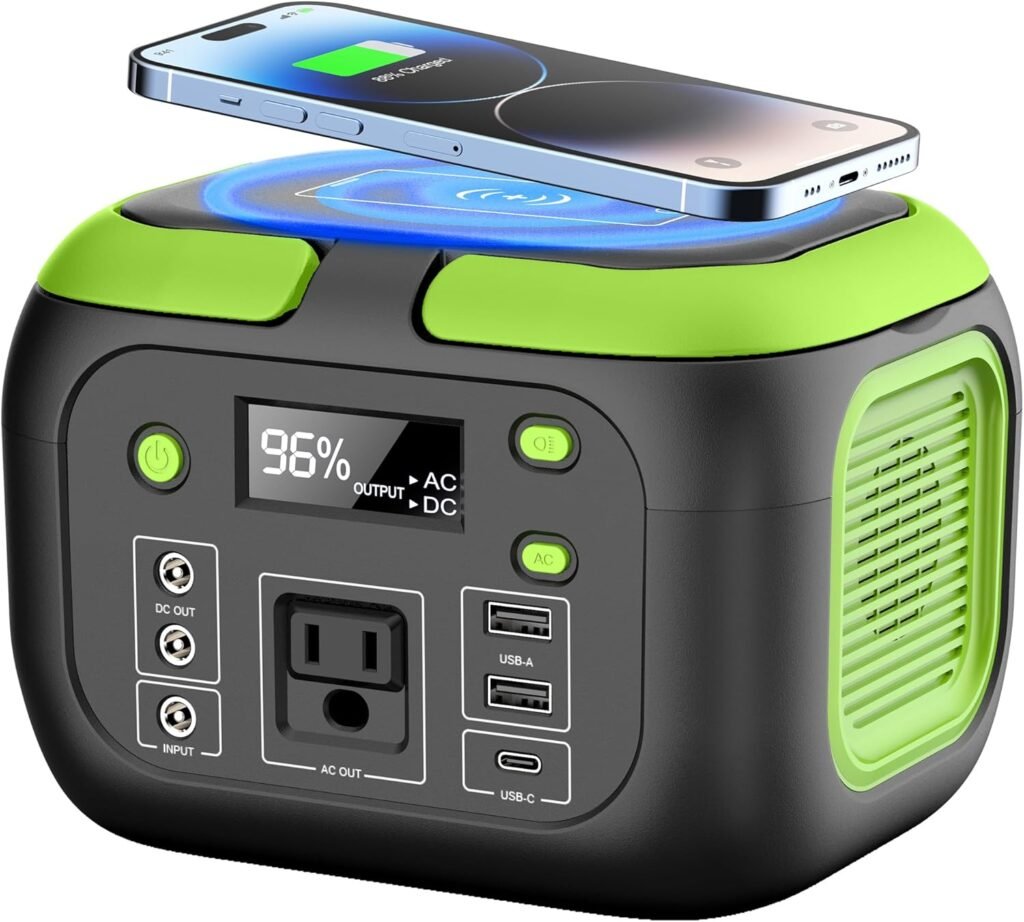
Have we ever wished we could plug in our laptop, run a small fan, and charge our phones all at once while sitting at a campsite or during a power outage?

Why We Picked the SinKeu 200W Portable Power Station
When we look for a portable power station, we usually want something that is compact, powerful, and easy to use. This SinKeu 200W Portable Power Station aims to cover all of those bases. It gives us multiple ways to charge our devices, and it packs them into a lightweight body with a simple foldable handle.
We see it as a small, flexible backup power hub that fits well into camping trips, road travel, and emergency home use. In this review, we will walk through how it performs, what it offers, and where it shines or falls short for real-world use.
Key Specifications at a Glance
Before we go into details, it helps to see the main features and specs in one place. This way we can quickly decide if it matches our needs for power, ports, and portability.
| Feature | Details |
|---|---|
| Model | SinKeu 200W Portable Power Station (G200) |
| Battery Capacity | 155Wh / 42000mAh (at 3.7V) |
| Weight | ~3.5 lbs (lightweight) |
| AC Output | 1 × 110V / 200W (peak higher), pure sine wave not specified |
| DC Outputs | 2 × DC 9–12.6V / 10A Max (car-style ports) |
| USB-A Ports | 2 × USB-A (total 5V / 3.1A) |
| USB-C Port | 1 × USB-C (5V/3A, 9V/2A) |
| Wireless Charging | 10W wireless fast charger (for phones, earbuds, etc.) |
| Lighting | Built-in LED camping lantern with 3 brightness levels + SOS modes |
| Charging Methods | Wall outlet, 12V car adapter, solar panel (16.4–24V/1.5A Max) |
| Charging Time (Wall) | About 5 hours |
| Charging Time (Car) | About 7 hours |
| Charging Time (Solar) | Around 6–8 hours (panel not included) |
| Display | LCD screen showing operating status |
| Safety | Built-in BMS (Battery Management System) for voltage, current, temp |
| Included Accessories | AC power adapter, car charging cable, carport cable, user manual |
| Warranty / Service | 12 months service, 7×24 customer support |
This overview shows that the SinKeu unit sits in the “small to mid” capacity class. It is not meant to power an RV or big appliances, but it is designed to keep our portable electronics and small devices running smoothly.

Design and Build Quality
Compact Form Factor and Foldable Handle
We appreciate that this power station weighs only about 3.5 lbs and has a foldable handle. That combination makes it easy to toss into a backpack, store in a car trunk, or move around the house without effort.
The foldable handle also reduces the footprint when we store it. We can lay it flat on a shelf, in a cabinet, or under a desk without the handle sticking up and taking space. For a device we might only use occasionally, that kind of compact storage feels very practical.
Materials and Overall Feel
The casing appears to be sturdy enough for normal outdoor use. While we should not treat it as a rugged, waterproof device, the plastic feels solid and the layout of the ports is sensible. It seems designed more for casual camping, car travel, and home emergencies than extreme off-grid abuse.
We like that the main buttons and ports are clearly labeled, so we are not constantly guessing what each section does. That matters a lot when we are tired or dealing with a power outage in the dark.
Battery Capacity and Real-World Runtime
Understanding the 155Wh / 42000mAh Rating
This power station advertises a 155Wh battery capacity, equivalent to roughly 42000mAh at 3.7V (the typical battery cell voltage). That number can feel a bit abstract, so we find it helpful to think in terms of real devices.
The manufacturer gives a simple formula:
Working time ≈ 155Wh × 0.85 ÷ (power of our device in watts)
The “0.85” factor accounts for efficiency losses when converting DC battery power into AC or other outputs. All portable power stations have these losses, so we like that SinKeu provides a realistic formula.
Example Runtimes for Common Devices
To make this clearer, we can look at some examples. These are rough estimates and actual results might vary with usage patterns, temperatures, cable quality, and specific device behavior.
| Device Type | Approx. Power Use | Estimated Runtime / Charges |
|---|---|---|
| Smartphone (10–15Wh) | ~10W while charging | About 8–12 full charges |
| Tablet (20–30Wh) | ~15–20W | About 4–7 full charges |
| Laptop (40–60W) | ~40–60W | About 2–3 hours of use while plugged in |
| Small fan (15–25W) | ~20W | Around 5–6 hours |
| LED light string (5W) | ~5W | Around 20–25 hours |
| Camera battery charger | ~10W | Many recharges, depending on battery size |
| Car mini-fridge (45W) | ~40–50W average | About 2–3 hours depending on cycling |
These numbers give us a sense of what this station is designed for. It is ideal for keeping phones, tablets, cameras, and laptops running, as well as small DC gadgets and lights. It will not handle large appliances or high-wattage tools, but it is not built for that category.
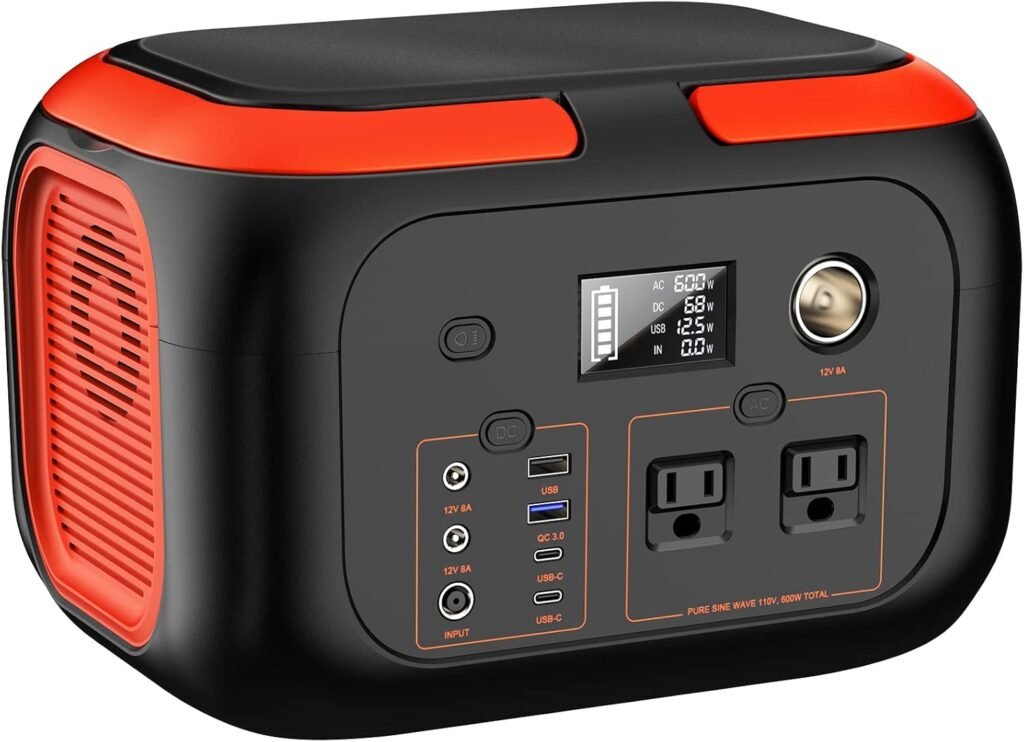
Ports and Outputs: Powering Up to Seven Devices
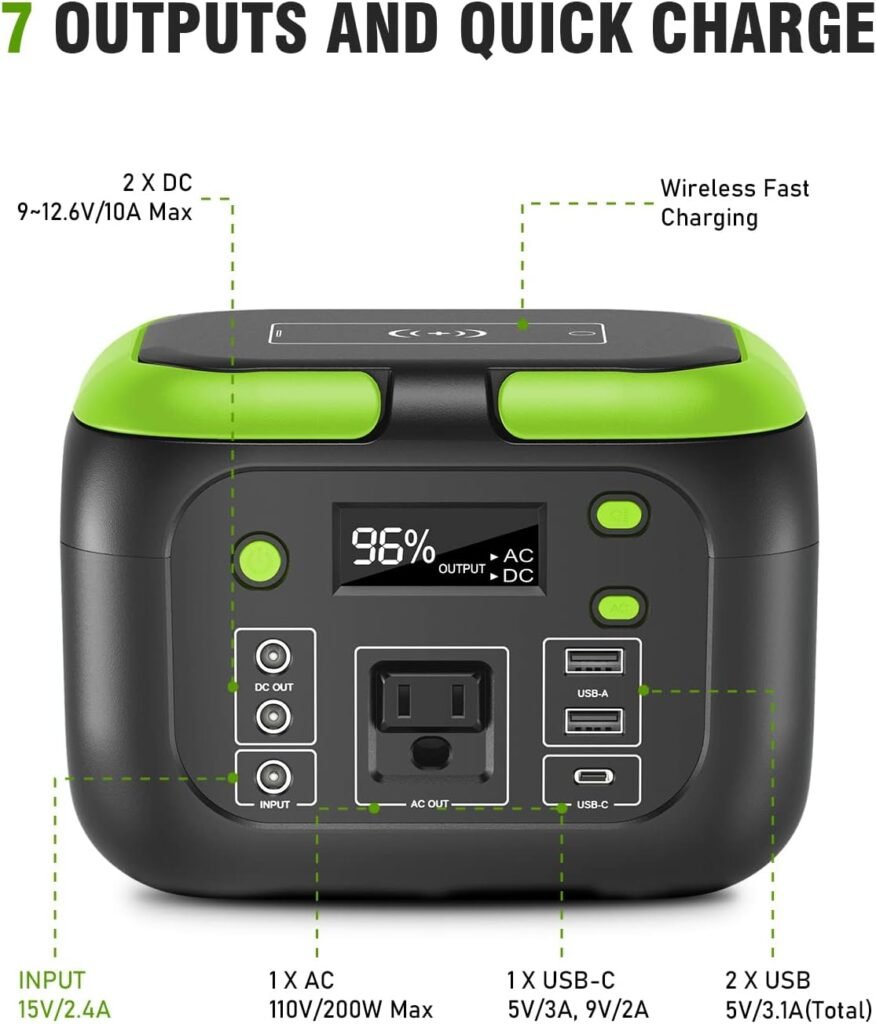
One of the biggest advantages of this SinKeu power station is the variety of outputs. We can power or charge up to seven small devices at once, which is very handy when we camp as a group or share power during an outage.
AC Outlet: 110V / 200W
The single AC outlet is rated at 110V and up to 200W. This is the port we use for devices that normally plug into a wall socket, such as:
- Laptops and notebooks
- Small fans
- LED desk lamps
- Camera battery chargers
- Lightweight projectors
We do need to pay attention to the wattage of whatever we plug in. Devices over about 200W are not suitable here. That includes things like hair dryers, kettles, toasters, space heaters, and large gaming desktops.
To turn on the AC output, SinKeu instructs us to press the “AC” button for three seconds. That is an important detail: a quick tap will not do it. Holding the button helps prevent accidental activation when we bump it or when it is packed.
USB-A Ports: General Charging Workhorses
There are two USB-A ports, sharing a total of 5V/3.1A. We can think of these as our standard USB outlets for:
- Smartphones
- Basic tablets
- Bluetooth speakers
- Action cameras and GoPros
- E-readers
These ports are not branded as high-end fast charging, but they are perfectly fine for overnight or steady charging of most devices.
USB-C Port: Faster and More Modern
The USB-C port supports 5V/3A and 9V/2A. That means we can charge more modern smartphones and some smaller laptops or tablets more quickly, especially when they support USB Power Delivery (PD) profiles close to those levels.
For many of us, USB-C is becoming the default port for laptops, tablets, and phones, so having it on the power station feels almost mandatory now. It helps cut down on the number of chunky AC adapters we need to bring.
10W Wireless Fast Charger
One of the more convenient touches is the built-in 10W wireless charger. We simply place our Qi-compatible phone or wireless earbuds case on the marked area and let it charge.
We like this for a couple of reasons:
- We avoid digging for cables when we are already short on cords.
- We reduce cable wear and tear, especially at a campsite or in the car.
While 10W is not the fastest wireless standard on the market, it is enough to charge overnight or during extended use. For quick, heavy power needs, we would still opt for a wired port, but the wireless pad is a nice bonus.
DC Outputs: For Car Accessories
The two DC outputs (9–12.6V / 10A Max) are set up for typical car accessories. This includes things like:
- Car vacuums
- Small car refrigerators or coolers
- Some types of DC fans or lights
We find these most useful for road trips and camping. They let us run devices that we normally plug into a car’s cigarette lighter without needing to keep the car engine running. That can save fuel and reduce noise, especially at night.
Built-In LED Camping Lantern
Adjustable Brightness Levels
The SinKeu 200W Portable Power Station includes an integrated LED flashlight/camping lantern. It offers three brightness levels, giving us flexibility depending on the situation:
- Low brightness for reading in a tent or preserving battery
- Medium brightness for general area lighting
- High brightness for walking around a dark campsite or room
This built-in light means we do not necessarily need a separate lantern for short trips. It helps us pack lighter and reduces the number of separate devices we have to keep charged.
Lighting Modes: Steady, Twinkling, and SOS
The lantern supports three modes: steady, twinkling, and SOS. We switch between modes by pressing the flashlight button, as SinKeu explains.
- Steady: For normal continuous lighting when we are cooking, reading, or working.
- Twinkling: Can be useful for attracting attention or marking a location.
- SOS: Designed for true emergencies, helping others spot us from a distance.
When we think about emergency preparedness, that SOS function adds real value. If we are stranded on a dark roadside or dealing with a long power outage, an integrated SOS beacon can be more effective than a small flashlight on a phone.
Charging the Power Station: Three Flexible Methods
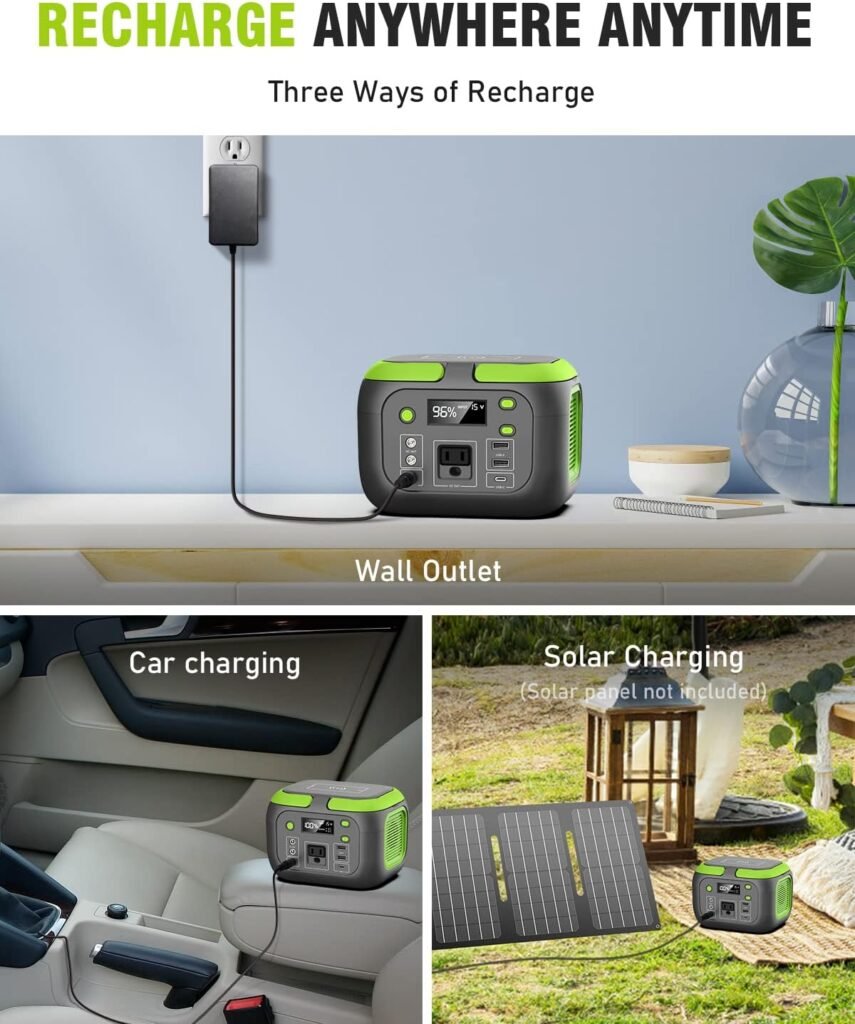
We appreciate that SinKeu gives us three different ways to recharge the unit. That flexibility helps us use the power station in different settings and conditions.
Wall Outlet Charging
Using the included AC adapter, we can fully recharge the power station from a standard wall outlet in about 5 hours. This is the fastest and most straightforward method.
Our routine might look like this:
- Keep it plugged in at home so it is ready for emergencies.
- Top it off before we leave for camping or a road trip.
Since the unit is not extremely large, 5 hours is quite reasonable as a full recharge time.
Car Adapter Charging
SinKeu also includes a car charging cable. Using a 12V car adapter, the unit should recharge in about 7 hours.
We see this as a perfect option for:
- Long road trips, where we can charge it while driving.
- Times when we do not have access to grid power during travel.
Charging from a car is slower than from a wall, but it is extremely convenient when we are already on the move.
Solar Charging (Panel Not Included)
The power station supports solar charging with a compatible solar panel in the 16.4V–24V/1.5A range. With appropriate conditions and panel size, SinKeu estimates a 6–8 hour charging time.
Since the solar panel is not included, we need to purchase it separately, either from SinKeu’s store or another compatible brand. This turns the unit into a small solar generator, allowing us to keep it charged indefinitely off-grid, as long as we have sunlight.
For camping and emergency preparedness, solar charging is a huge advantage. It means we are not limited to a single full battery; instead, we can regenerate power each day with proper planning.
Safety Features and Battery Management
Built-In BMS for Protection
Safety is crucial when we work with lithium-based batteries. SinKeu integrates a BMS (Battery Management System) that monitors:
- Voltage
- Current
- Temperature
The goal is to protect the battery pack and our connected devices from:
- Overvoltage or undervoltage
- Overcurrent or short circuits
- Overheating
This protection helps extend the life of the unit and provides more peace of mind. We do not have to constantly worry about overloading the battery, as the system is designed to shut down or correct dangerous conditions.
Clear LCD Status Display
The front LCD screen shows the operating status of the power station. This can include:
- Remaining battery level
- Active output ports
- Charging status
We like having a clear, real-time view of our power situation. It helps us decide when to reduce load, when to recharge, and how to plan device usage. For emergency situations, an accurate battery indicator is especially important.
Everyday Use Cases
Camping and Outdoor Adventures
For camping, this SinKeu unit fits into the “essentials” category. We can:
- Charge our phones and cameras
- Power small lights around camp
- Keep a laptop running for work or entertainment
- Run a small fan in a tent on hot nights
The LED lantern and SOS mode make it more than just a battery box—it becomes part of our lighting system as well. And with solar charging, we can extend trips without relying on a car or generator.
Road Trips and Car Travel
On road trips, we can use this as our central charging hub. Instead of fighting over the car’s single 12V outlet, we can:
- Plug in multiple phones and tablets via USB
- Run a car fridge from the DC ports
- Charge the power station itself while we drive
This reduces clutter and keeps our devices powered without constantly swapping cables or adapters.
Home Backup and Emergencies
During power outages, we might not be able to keep the whole house running, but we can maintain some key devices:
- Phones and tablets for communication and news updates
- LED lights and lamps for evening visibility
- A laptop to work or access important information
- A small fan for comfort in warm weather
We see this unit as a compact emergency backup that is easy to keep on a shelf and pull out when needed. The built-in lantern is especially useful during nighttime outages when we do not want to scramble for flashlights.
Work, Study, and On-the-Go Productivity
For those of us who work remotely or study on the go, this power station can become a quiet companion. In places without easy outlets—parks, outdoor seating areas, or older buildings—we can:
- Power a laptop through AC or USB-C
- Keep our phone topped up
- Charge accessories like headphones, mice, or cameras
Being able to set up a “mobile office” without hunting for outlets can be surprisingly liberating.
Strengths of the SinKeu 200W Portable Power Station
Lightweight and Compact Design
We cannot overstate the convenience of a 3.5 lb unit with a foldable handle. It is easy to carry with one hand, and it is much lighter than many larger power stations. If we prioritize portability, this is a strong point.
Versatile Output Options
Between the AC outlet, USB-A, USB-C, DC ports, and wireless charger, we have a wide variety of ways to connect our devices. Being able to power up to seven small devices at once is helpful when sharing with family or friends.
Built-In LED Lantern and SOS
The integrated lantern with SOS mode adds real value for emergency and camping use. It saves us from carrying a separate lantern, and the emergency signaling feature could be very important in critical situations.
Multiple Charging Methods
We appreciate being able to recharge via wall, car, or solar. This flexibility makes the unit viable for home, travel, and off-grid uses. We are not tied to a single power source, which is key in unpredictable situations.
Safety and Monitoring
The BMS and LCD screen combine to give us both safety and visibility. We can use the power station more confidently, knowing that built-in protection is watching over our devices and the internal battery.
Limitations and What to Keep in Mind
Not Designed for High-Power Appliances
With a 200W AC rating and 155Wh capacity, this unit has its limits. It will not suit high-power devices such as:
- Hair dryers
- Electric kettles
- Large power tools
- Space heaters
We need to check the wattage of any device before plugging it into the AC outlet. Exceeding the rating can trigger protection or even damage devices in extreme cases.
Modest Capacity for Extended Off-Grid Use
For short trips, weekend camping, or day-long outings, 155Wh can be enough. But for longer off-grid stays with multiple people and power-hungry devices, we might want a larger capacity power station or rely more heavily on solar recharging.
We should think of this SinKeu model as a “compact backup,” not a full replacement for extensive power needs.
Solar Panel Sold Separately
If we want to use solar charging, we must buy a compatible solar panel. That adds cost and complexity. We need to match voltage and connector types properly to avoid issues.
For some users, that is not a problem, but it is something to plan for if solar is a key part of our strategy.
Tips for Getting the Most Out of the SinKeu Power Station
Use the Right Ports for the Right Devices
To stretch the battery and charge faster:
- Use USB-C for modern phones and tablets when possible.
- Use the wireless charger for convenience, not for rapid top-ups.
- Use DC ports for car-style accessories to avoid AC converter losses.
- Reserve the AC outlet for devices that truly need it, like laptops.
By matching devices to optimal ports, we reduce energy loss and keep things efficient.
Monitor the LCD and Plan Usage
Keeping an eye on the LCD lets us manage our power more intelligently. If we see the battery dropping faster than expected, we can:
- Turn off non-essential devices.
- Drop the lantern to a lower brightness level.
- Charge crucial devices (phones, radios) first before using others.
For emergencies, this kind of planning helps ensure we have power when we need it most.
Charge It Before We Need It
We recommend making a habit of topping off the power station regularly, especially during storm seasons or before long trips. Keeping it near full capacity ensures it is ready when an unexpected outage or trip happens.
We might set a reminder every month or so to check the charge and give it a quick top-up if needed.
Follow the AC Button Instructions
Remember that we must press the “AC” button for three seconds to turn on or off the AC output. This is easy to forget, and some of us might think the outlet is broken if we just tap the button. Holding it down properly ensures the AC inverter activates.
Who This Power Station Is Best For
Casual Campers and Weekend Adventurers
If we love short camping trips or weekend outings, this SinKeu model fits nicely. It is not too heavy, it covers all our small device needs, and the lantern feature is a strong bonus.
We can keep lights on, power a small fan, charge cameras and phones, and still have space for a laptop or tablet.
Families Wanting a Simple Home Backup
For families who want a straightforward, compact backup option, this is an appealing choice. It will not run the refrigerator or microwave, but it can keep communication devices and basic lighting going during a blackout.
The user-friendly design and clear labels make it approachable for everyone in the household.
Road Trippers and Van Life Starters
If we travel by car often or are just starting with a simple van or SUV camping setup, this power station works as an easy entry-level solution. It can run car fridges for a short while, charge multiple phones, and be recharged itself via the car during drives.
For minimal setups, it might be all we need. For more advanced van life, it could still serve as a backup or secondary unit.
Students and Remote Workers
Students and remote workers who move between homes, libraries, co-working spaces, and parks might find this particularly handy. It gives us a flexible, portable source of AC and USB power that we can bring almost anywhere.
We can work at a picnic table without worrying that our laptop will die, or we can support multiple devices in a shared study space.
Value for Money and Overall Impression
When we look at the feature set—AC output, USB-A, USB-C, wireless charging, DC ports, LED lantern with SOS, multiple charging methods, and a 155Wh capacity—the SinKeu 200W Portable Power Station offers a solid balance of portability and functionality.
We see it as a strong choice in these situations:
- We want a light, compact unit rather than a heavy, high-capacity one.
- We mainly need to power phones, tablets, laptops, and small DC devices.
- We appreciate built-in lighting and emergency features.
- We plan to use wall, car, and possibly solar charging depending on the scenario.
It is not the right tool for large appliances or power-hungry gear, but it does a very good job in the “small devices and lights” category that most of us care about on trips and during outages.
Final Thoughts on the SinKeu 200W Portable Power Station
As a 155Wh backup power solution, the “200W Portable Power Station, SinKeu 42000mAh Solar Generator With 110V AC Outlet, DC, USB C, USB QC3.0, 155Wh Backup Battery Pack Power Supply for Camping Essential Road Trip Home Outdoor Emergency” delivers a thoughtful mix of convenience, safety, and versatility.
We like its:
- Lightweight and compact design with foldable handle
- Variety of outputs, including AC, DC, USB-A, USB-C, and wireless charging
- Built-in LED camping lantern with SOS mode
- Multiple charging options (wall, car, solar)
- Clear LCD display and BMS safety protections
We simply need to remember its limits: it is designed for small electronics, modest loads, and short to medium usage periods, not for heavy-duty appliances or whole-house backup.
For many of us who want a friendly, easy-to-carry power station for camping, road trips, and basic emergency backup, this SinKeu model fits those needs well and offers a comfortable balance between portability and capability.
Disclosure: As an Amazon Associate, I earn from qualifying purchases.