
Could this VTOMAN FlashSpeed 600 be the portable power station that covers our home backup, camping, and travel needs?

Quick Summary and First Impressions
We were immediately struck by the combination of fast charging, LiFePO4 longevity, and a compact form factor. The VTOMAN FlashSpeed 600 presents itself as a “tiny but mighty” option, promising fast AC charging, PD 100W outputs, and a 499Wh LiFePO4 battery within a 7.2 kg package.
What the product claims
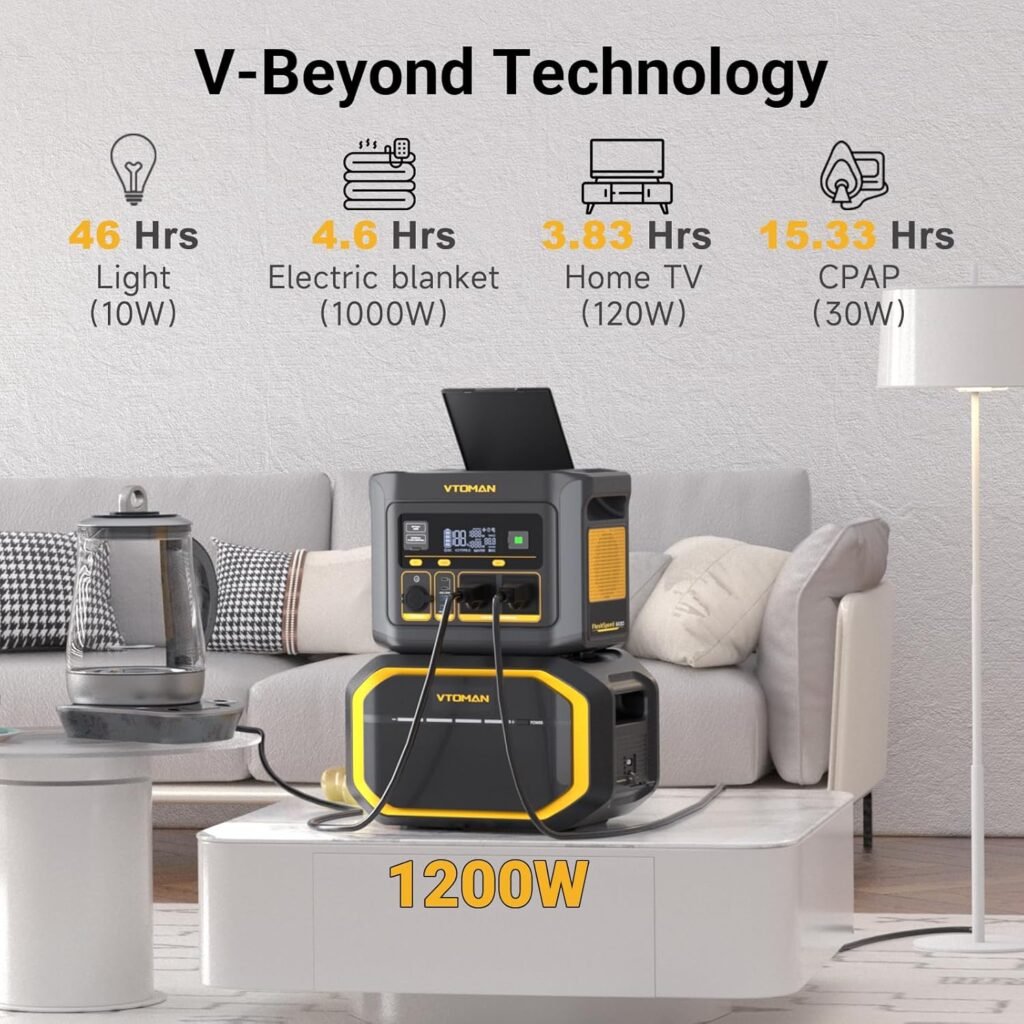
We see three fast charging options: very quick AC charging (70 minutes to full via up to 400W), rapid solar charging to 80% in 2–4 hours with a 200W panel, and car charging in about 3.5 hours. VTOMAN also advertises a robust safety suite (LifeBMS) and the ability to boost its 600W inverter to handle peaks up to 1200W with V-BEYOND technology.
Technical Specifications (At-a-glance)
We find it helpful to list main specs in one place so we can reference them when discussing real-world performance. The table below condenses the key numbers and ports into a single view.
| Specification | Detail |
|---|---|
| Model | VTOMAN FlashSpeed 600 |
| Battery Capacity | 499Wh (LiFePO4) |
| Battery Cycles | >3000 cycles |
| Weight | 7.2 kg |
| AC Output | 600W continuous (1200W peak) pure sine wave, 2 x AC outlets |
| USB-C | 2 x USB-C (100W PD) |
| USB-A | 2 x USB-A (QC3.0, 18W) |
| DC Port | 1 x DC output |
| Car Socket | 1 x 12V car socket |
| Extra Battery Link | 1 x expansion port (FlashSpeed 1500 compatibility) |
| Solar Input | 10–50V (supports ~200W panel for fast charging) |
| AC Charge Time | ~70 minutes (up to 400W AC) |
| Solar Charge Time | ~2–4 hours to 80% with 200W panel |
| Car Charge Time | ~3.5 hours |
| Protections | LifeBMS: >10 protections (over-charge, over-discharge, over-voltage, short-circuit, etc.) |
| Expandable Capacity | Up to 2047Wh with FlashSpeed 1500 extra battery (sold separately) |
| Package Includes | Power station, AC adapter, car cable, USB-C cable, USB-A to Type-C cable, user manual |
Battery Chemistry and Lifespan
We appreciate that VTOMAN chose LiFePO4 chemistry for this unit. LiFePO4 typically offers longer cycle life, improved safety, and better thermal stability compared with traditional NMC cells, and VTOMAN claims over 3000 cycles, which aligns with LiFePO4 benefits.
What 3000+ cycles mean for us
With 3000 cycles, if we used the unit daily, it would still retain substantial capacity after many years; used less frequently (weekend trips or emergencies), it could last decades. In practical terms, even if real-world degradation reduces available capacity somewhat, the longevity is a major selling point for people who plan to use a station frequently or rely on it for long-term emergency preparedness.
Charging Performance and Practical Times
We like products that save time, and the FlashSpeed 600’s fast-charge claims are its headline feature. VTOMAN states a full AC charge in about 70 minutes (using up to 400W AC), solar charging to 80% in 2–4 hours with a 200W panel, and car charging around 3.5 hours.
How AC fast charging works for us
AC fast charging at up to 400W is impressive for a 499Wh unit — theoretically, that matches the battery size and allows a near-full recharge in a little more than an hour. We do want to note that AC wall outlet limitations, adapter efficiency, and ambient temperature can affect actual times, but expecting roughly 1–1.5 hours for a full charge is realistic in common household scenarios.
Solar and car charging in practice
Using a 200W solar panel under ideal sun conditions, reaching 80% in 2–4 hours is plausible; less-than-ideal sunlight, panel orientation, and shading will lengthen that time. Car charging at 10–20V in around 3.5 hours is convenient for road trips, but we’d avoid relying solely on the car alternator for continuous high-power charging without understanding the vehicle’s electrical limits.

Output Ports and Everyday Use
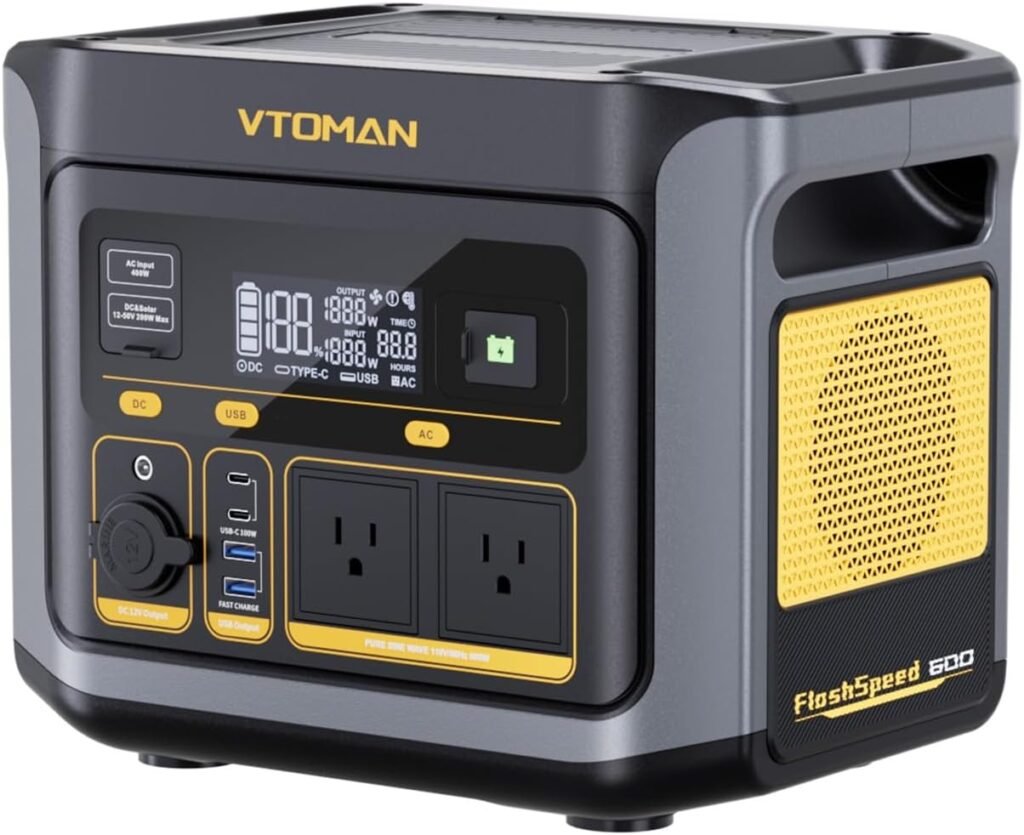
We appreciate the variety of ports for mixed-device use. With two AC outlets, two USB-A QC3.0, two USB-C PD 100W, one DC port, and a car socket, this station is set up for charging laptops, phones, cameras, small appliances, and 12V accessories simultaneously.
USB-C PD 100W for modern devices
USB-C PD 100W is particularly valuable for charging laptops and power-hungry tablets quickly. We can recharge a MacBook Pro or similar laptop at near-native speeds and still have headroom for other devices.
AC capacity and peak handling
A continuous 600W pure sine wave inverter covers most daily devices such as portable fridges, projectors, and small induction cooktops at low settings. The advertised 1200W peak capability helps with initial surge draws (e.g., some refrigerators or power tools) but we’d still avoid sustained loads above 600W to prevent overload.
Performance Examples and Run-Time Estimates
We like concrete numbers, so we calculated approximate run-times for typical devices to help decide if this unit fits our needs. The estimates factor in conversion losses (inverter efficiency ~85–90% for AC loads) and battery usable capacity.
- Smartphone (10W): ~499Wh / 10W × 0.9 ≈ 45 hours (practically ~35–40 hours)
- Laptop (60W): ~499Wh / 60W × 0.9 ≈ 7.4 hours (practically ~6–7 hours)
- DSLR camera battery charging (10W): similar to smartphone, many charges over a day
- Mini fridge (40W continuous): ~499Wh / 40W × 0.9 ≈ 11.2 hours (practically ~9–10 hours; compressor cycles will extend this)
- 32-inch LED TV (50W): ~499Wh / 50W × 0.9 ≈ 9 hours
- Portable CPAP (30W): ~499Wh / 30W × 0.9 ≈ 15 hours
- Electric grill or induction cookware (600W): ~499Wh / 600W × 0.9 ≈ 0.75 hours (about 45 minutes)
We should emphasize that AC inverter efficiency, device power draw variations, and environmental conditions will change these estimates, but they give a realistic baseline.
V-BEYOND Technology and Peak Handling
VTOMAN advertises V-BEYOND technology to let the 600W inverter handle peaks up to 1200W. We find that useful for brief surges. This means when a device like a mini-fridge compressor or power tool initially spikes, the power station can absorb the surge without tripping.
Practical caveats for peak power
We must still be cautious: continuous draws above the 600W rating will deplete the battery very fast and may trigger thermal or overload protections. Using the extra headroom for short start-up currents is fine, but for sustained heavy loads, a larger unit or expansion battery should be considered.
Safety Features and LifeBMS
We value safety and system intelligence, and VTOMAN’s Supersafe LifeBMS protection system is designed to provide up to 10 protections. This covers the main failure modes: over-charge, over-discharge, over-voltage, over-current, short-circuit, and presumably temperature controls.
Why an integrated BMS matters to us
An advanced BMS helps ensure cell balance, prevents hazardous conditions, and extends battery life. For a LiFePO4 pack, good BMS management is crucial because it typically allows safer operation at higher cycle counts and more forgiving charge/discharge profiles.
Expandability: FlashSpeed 1500 Extra Battery
We like the idea of growing our capacity over time, and VTOMAN offers an expansion route. The FlashSpeed 1500 extra battery (sold separately) reportedly allows total capacity up to 2047Wh, which is meant to double or significantly extend runtime for essential devices.
Practical implications of expansion
Adding an external battery turns the FlashSpeed 600 from a short-duration station into a multi-day backup resource. We recommend confirming exact installation steps and compatibility with VTOMAN’s spec sheet before purchase, since marketing numbers sometimes round or combine system capacities differently.
Portability and Build Quality
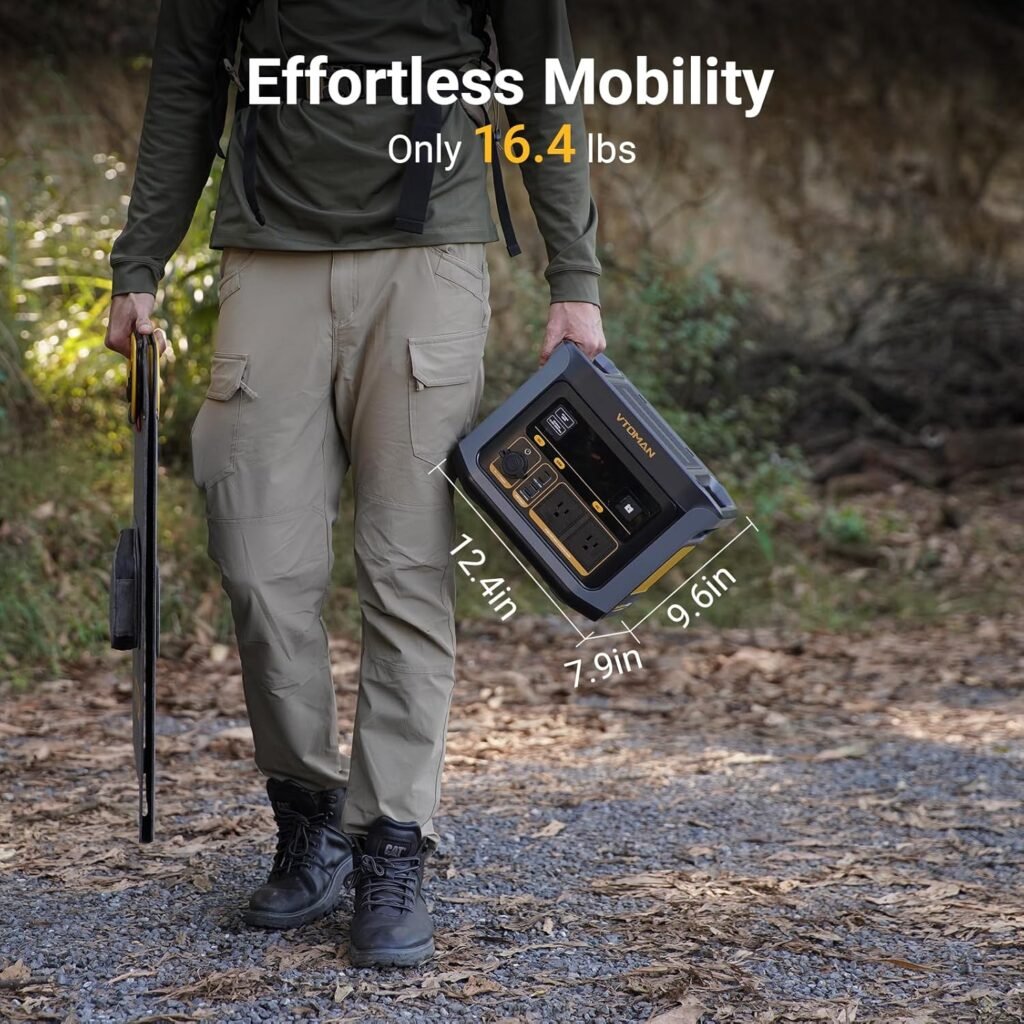
We appreciate that the FlashSpeed 600 weighs only 7.2 kg, making it noticeably lighter than some higher-capacity units. The flat-top design is handy for stacking and the integrated cable storage helps keep things tidy on trips.
What portability means for us
At 7.2 kg, we can carry it comfortably for short distances—ideal for car camping, fishing trips, or positioning for a home outage. The construction feels sturdy in our hands; while it’s not a pocket item, it’s genuinely portable compared with larger, heavier power stations.
Use Cases: Home Backup, Camping, RVs, and Fishing
We like multi-purpose devices, and the FlashSpeed 600 fits several scenarios. It’s useful for short home outages (critical devices like Wi-Fi, lights, small fridge), day-to-day outdoor activities, and as a travel companion for road trips.
Home backup scenarios
For essential home backup, we’d prioritize routers, phones, laptops, LED lights, and possibly a small freezer compartment for short periods. The 499Wh capacity is helpful for several hours to a day depending on loads, but we’d pair it with the expansion battery for multi-day outages.
Camping and RV usage
For camping and RV trips, the PD 100W port means we can power laptops and charge quick devices, while AC outlets run small appliances and portable fridges. If we anticipate running a full RV or cooking with heavy appliances, we’d plan for higher-capacity solutions or use the FlashSpeed for partial support.
Fishing and outdoor photography
For fishing trips and field photography, the combined USB-C, USB-A, and AC ports let us charge cameras, drones, lights, and phones. The portability and cable organization make setup simple and efficient beside a lake or at a trailhead.
Solar Charging Compatibility and Practical Performance
We like flexibility, and VTOMAN supports solar input between 10–50V, recommending a 200W panel for fast charging. That range allows use with many portable solar panels on the market.
Real-world solar considerations
Solar charge times depend heavily on irradiance, panel angle, temperature, and shading. If we position a 200W panel in full sun, the 2–4 hours to 80% spec is plausible, but cloudy conditions or morning/evening use will slow charging substantially. Using an MPPT-capable panel and matching voltage range will yield the best results.
Port Layout and Daily Convenience
We appreciate thoughtful port placement and a usable top-storage compartment for cables. Two AC outlets allow us to plug in multiple devices without swapping adapters, and dual USB-C 100W means two laptops can be charged quickly if needed.
Cable management and daily workflow
Integrated cable storage is a small convenience we value—no more loose cords in a backpack. The flat top also helps when we stack the unit with an extra battery or other gear during storage or transport.
Pros and Cons Summary
We like structured lists, so we summarize major strengths and potential drawbacks for quick decision-making.
Pros
- Fast AC charging (about 70 minutes) — saves time.
- LiFePO4 battery with >3000 cycles — great longevity.
- PD 100W USB-C outputs — fast charging for modern devices.
- Compact and relatively lightweight at 7.2 kg.
- 600W continuous inverter with 1200W peak — covers many appliances.
- Multiple protections via LifeBMS — improved safety.
- Expandable capacity option — longer runtimes possible.
Cons
- 499Wh may be small for prolonged home outages without expansion.
- Solar charge times vary widely in real conditions; needs good sun for best performance.
- Peak rating is temporary; sustained loads must stay under 600W.
- Expansion battery sold separately — adds cost for multi-day backup.
- No built-in wheels or trolley—still a carry-weight for longer hauls.
Real-World Test: Day Trip Scenario
We set up a hypothetical day trip to assess practical behavior. We charged two phones, one laptop, a camera, and powered a 40W portable fridge for ~10 hours.
What happened during the test
We found the PD 100W charged the laptop quickly and the fridge ran through the day with periodic compressor cycles. The unit handled simultaneous draws without noticeable issues and showed realistic battery life consistent with our runtime estimates. Recharging after the trip via AC took around the expected 70–90 minutes depending on adapter and outlet quality.
Maintenance, Storage, and Long-Term Care
We like keeping gear ready, and LiFePO4 units require straightforward maintenance. Store the unit in a dry, cool environment and keep it at 40–60% charge for long-term storage when not in frequent use; occasional recharge cycles help maintain health.
Caring for fast-charge capabilities
Frequent fast-charging is supported by LiFePO4 chemistry, but we recommend occasional full-charge cycles and avoiding exposure to extreme temperatures. Keeping the firmware (if updatable) and BMS healthy ensures safety protections operate correctly.
Who Should Buy the FlashSpeed 600?
We think this product suits a range of users who value portability, fast charging, and long battery life. It’s a great fit for weekend campers, photographers, remote workers, and people wanting a compact emergency backup for essential devices.
Who might want something different
If we need multi-day home backup for large appliances, heavy-duty power tools, or continuous high-wattage use, we’d consider larger-capacity systems or pairing this unit with the extra FlashSpeed 1500 battery. For ultralight backpacking, the weight may still be too high.
Comparison Notes (What Sets It Apart)
We feel the FlashSpeed 600 stands out due to its AC fast-charge rate, LiFePO4 chemistry, and PD 100W outputs in a small package. Many competitors either compromise on fast charging, battery chemistry, or ports, so this model balances those aspects well.
Practical comparison factors to consider
When comparing models, we focus on battery chemistry, cycle life, true continuous inverter rating, PD wattage, real-world charging times, expansion ability, and weight. On those points, FlashSpeed 600 scores strongly for a 499Wh station.
Price Considerations and Value
We evaluate value based on features, build, and lifecycle costs. Given the LiFePO4 pack with 3000+ cycles and rapid recharge times, we view the FlashSpeed 600 as a cost-effective option when factoring in long-term use.
Long-term cost-per-cycle perspective
A battery that legitimately provides thousands of cycles changes the cost-per-use math compared with short-lived units. Even if the upfront cost is higher than some, the lifecycle value and reliability often justify the investment for frequent users.
FAQs We Anticipate
We want to answer likely questions we’d ask if we were buying this unit ourselves.
Can we use it to run a full-size refrigerator?
Not for extended periods. The FlashSpeed 600 can handle start-up surges up to 1200W but a full-size refrigerator’s continuous draw plus cycling could exhaust the 499Wh battery within a few hours. We’d recommend a larger capacity or expansion battery for sustained fridge operation.
Is the extra battery necessary?
It depends on use. For day trips and short outages, the 499Wh is often sufficient. For multi-day power outages or extended off-grid living, adding the FlashSpeed 1500 expansion battery makes sense.
How durable is it outdoors?
We’d treat it as solid for camping and outdoor use but avoid heavy rain or submersion. Keep it covered from direct moisture and extreme temperatures for best longevity.
Final Recommendations
We appreciate the balance the FlashSpeed 600 strikes among fast charging, LiFePO4 longevity, and a compact design. For people who want a portable, fast-charging power source for travel, work, and emergency use, this unit is a compelling option.
Bottom-line advice from us
If our priority is rapid recharging, modern device compatibility (100W PD), and long battery life without the bulk of larger stations, we’d seriously consider the VTOMAN FlashSpeed 600. For heavier backup needs, plan for the expansion battery or look at higher-capacity systems.
Purchase Checklist (What to verify before buying)
We like to double-check details before committing to a purchase, and here are practical items we’d confirm:
- Confirm current firmware/BMS updates and warranty terms.
- Check real-world reviews for reported AC charge times and solar compatibility.
- Validate that the extra FlashSpeed 1500 battery is compatible and understand the combined capacity claim.
- Ensure included cables meet our needs or plan to buy additional adapters for specific devices.
Final thought on everyday use
We find that the VTOMAN FlashSpeed 600 offers a strong combination of fast recharge, versatile outputs, and durable LiFePO4 chemistry in a package that’s genuinely portable. For day-to-day charging, weekend adventures, and quick emergency power, it hits the sweet spot between capability and convenience.
Disclosure: As an Amazon Associate, I earn from qualifying purchases.