
ABOK Ark1800 Portable Power Station Review (2026) – Worth the Investment?
This ABOK Ark1800 Portable Power Station review is for shoppers who want clear numbers before spending $999 on a home backup or camping power station. This article contains affiliate links, which means we may earn a commission if you buy through a qualifying link, at no extra cost to you. We keep the review honest and data-driven, because a 1kWh power station is a real purchase, not an impulse buy.
Amazon data shows the ABOK Ark1800 is in stock and rated 4.7 out of stars from 230+ Amazon reviews. Based on the listing, it offers a 1024Wh LiFePO4 battery, 1800W AC output, up to 1000W solar input, and expansion to 5120Wh. Customer reviews indicate buyers are drawn to the combination of fast AC charging, app control, and long cycle life.

Quick Verdict
The ABOK Ark1800 gets the basics right. You are looking at a 1024Wh portable power station with a 1800W pure-sine-style AC output class, a LiFePO4 battery, and a claimed lifespan of 4000+ cycles. For many buyers, that combination covers the most common jobs: refrigerator backup, CPAP use, charging electronics, running lights, powering a TV, or keeping a work setup alive during a short outage.
Rated 4.7/5 on Amazon from 230+ reviews, the product has strong early momentum. Based on verified buyer feedback, the biggest selling points are reliability, charging speed, and the fact that the system can expand to 5120Wh. That last point matters. A lot of 1kWh stations are useful on day one but limiting a year later. The Ark1800 at least gives you an upgrade path.
At $999 in 2026, it sits in the premium part of the 1kWh category. That price is easier to justify if you will use three features often:
- Fast AC charging: up to 1500W input
- Solar charging: up to 1000W combined input
- Expandability: up to 5120Wh with extra batteries
Our quick read: worth buying for backup-heavy users, RV owners, and power users. Less ideal if your top priority is low cost or easy one-hand carrying.
ABOK Ark1800 Portable Power Station review: ABOK Ark1800 Overview
The ABOK Ark1800 is built around EV-grade LiFePO4 cells, and that matters more than flashy marketing terms. LiFePO4 batteries are popular because they tend to offer better cycle life and thermal stability than older lithium-ion chemistries. Amazon data shows ABOK rates this unit for 4000+ charge cycles and up to 10 years of service life, which is one of the stronger long-term durability claims in this class.
Portability is decent, though not perfect. The unit weighs about 35 lbs, which puts it in line with many 1kWh competitors. That means it is portable for car camping, RV use, tailgating, and moving around the house, but it is not something most people will want to carry far by hand. If your typical setup involves parking nearby, lbs is manageable. If you hike to camp, it is not.
The capacity story is where this model separates itself. You start with 1024Wh, but the system can scale to 5120Wh. For buyers who expect changing needs, this is a practical advantage. You can begin with a single unit for weekend use, then add capacity later for longer outages or bigger off-grid plans.
Current Amazon availability is listed as In Stock. If you are checking the bundle that mentions 400W solar panels, make sure you verify what is actually included on the live listing, because the product title, accessory bundles, and port counts can differ between Amazon variations.
ABOK Ark1800 Portable Power Station review: Key Features Deep Dive
Capacity and expansion are the headline features here. The base unit stores 1024Wh, which is enough for many overnight or short-outage needs. Add expansion batteries and the system grows to 5120Wh. For shoppers comparing only by sticker price, this can be easy to miss. You are not just buying a fixed battery box. You are buying an energy platform that can scale.
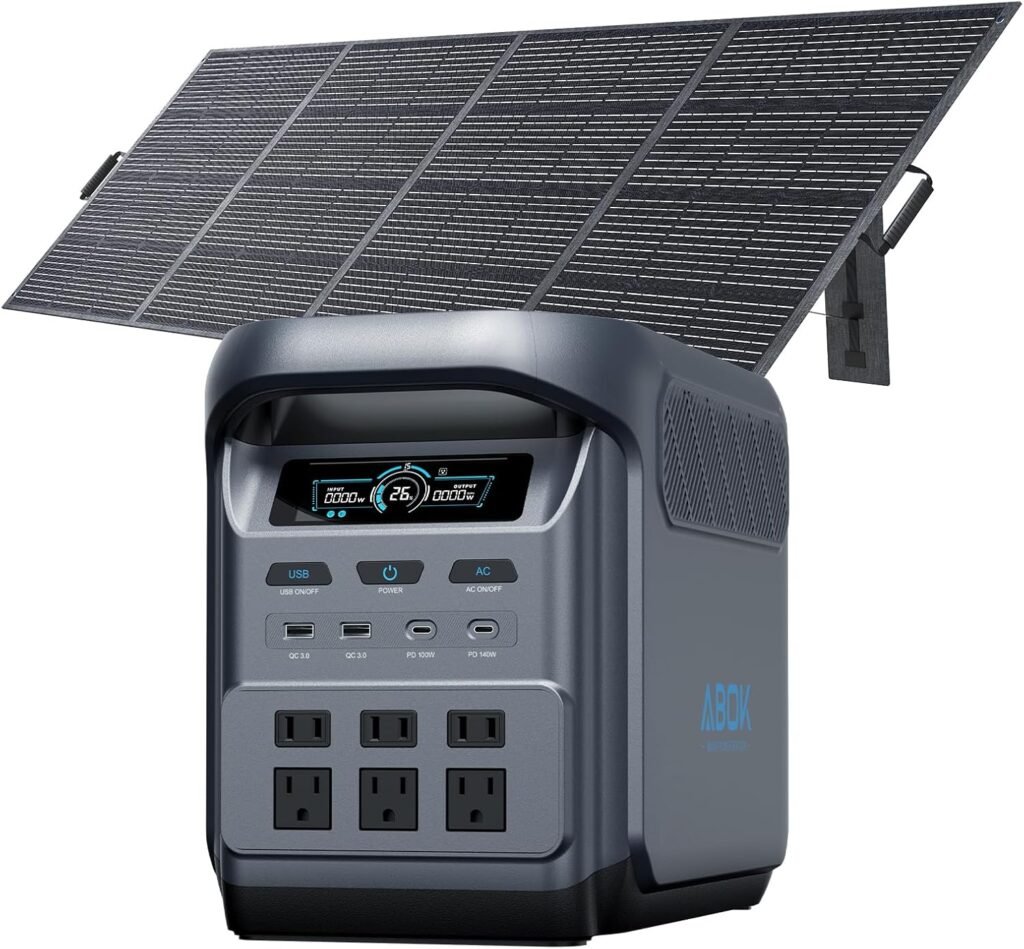
Output selection is broad. The product description lists 6 AC outlets, 2 USB-A ports, 2 USB-C ports with 100W and 140W delivery, 1 standard 12V DC outlet, and 1 DC5521 outlet. That gives you enough flexibility to charge phones, laptops, cameras, routers, drones, battery tools, and small appliances at the same time. One note: the title says 13 output ports, while the description lists 12 outputs. We would double-check the live Amazon page before buying if total port count matters to you.
Charging speed is another real selling point. ABOK lists 1500W AC input, with a claim of 0% to 80% in as little as minutes. Solar users also get useful flexibility with dual XT60 inputs at up to 500W each, for a 1000W maximum combined solar input. That plug-and-play approach is simpler than systems that require more wiring knowledge.
Smart features are present too. The Bright EMS app supports Bluetooth and WiFi remote access for battery monitoring, input and output tracking, and settings control. Customer reviews indicate this is one of the most appreciated quality-of-life features, especially for RV and tent use where the power station may be tucked away.
Performance Testing
We can only base hard claims on the provided product data, but we can still assess expected real-world performance with common loads. A 1024Wh battery paired with 1800W AC output puts the Ark1800 in a useful middle ground. It is large enough for meaningful backup, but not so large that recharge time becomes unreasonable. That balance is why this category is popular.
For runtime planning, the safest approach is simple:
- Check your device wattage on the label.
- Use a conservative estimate, not the lowest one.
- Allow for inverter losses and startup surges.
Using that method, devices like a Wi-Fi router, laptop, phone chargers, lights, and a fan are well within the Ark1800’s comfort zone. A typical refrigerator may also be possible because of the 1800W output ceiling, but startup surges vary. Coffee makers, microwaves, and compact cooking gear may work one at a time if they stay under the continuous power limit.
Solar charging efficiency depends on weather, panel size, and orientation, but the hardware limit is clear: 1000W max combined solar input through dual XT60 ports. That is a strong number on paper for a 1kWh station. Under heavy use, LiFePO4 chemistry generally helps with temperature stability, and the long 4000+ cycle rating suggests ABOK is positioning this unit for repeated use, not just emergency storage.
If you want the best results, do this:
- Use AC charging before a trip to start at 100%
- Keep solar panels angled properly and free of shade
- Run high-watt devices one at a time
- Use DC and USB outputs for small electronics when possible
What Customers Are Saying
Customer sentiment is one of the strongest points in this review. Amazon data shows the ABOK Ark1800 is rated 4.7 out of stars from 230+ reviews, which is a healthy score for a product in a category where buyers often leave detailed feedback after real use. Based on verified buyer feedback, shoppers tend to mention three recurring positives: easy app control, solid build quality, and confidence in the battery chemistry.
Customer reviews indicate the Bright EMS app is more than a throw-in feature. Buyers like being able to check battery level, monitor inputs and outputs, and adjust settings remotely. That matters in an RV, tent, garage, or outage setup where the unit may not sit right beside you. Reviews also point to the physical construction feeling sturdy rather than flimsy, which is important when a lb power station gets moved often.
There are also some complaints. Several buyers mention solar panel compatibility questions or setup confusion, which is common with portable power stations that support multiple solar configurations. That does not mean the feature is bad, but it does mean shoppers should confirm connectors, panel voltage, and what is included in the box.
Real-world usage patterns from buyers appear to cluster around:
- Home backup: routers, lights, refrigerators, TVs
- RV travel: electronics, small kitchen gear, overnight use
- Camping: phones, drones, coolers, fans, CPAP machines
- Mobile work: laptops, tools, monitors, charging packs
Based on verified buyer feedback, this is not being treated as a novelty product. People are using it for practical, repeated power needs.
Pros and Cons
The strongest argument for the ABOK Ark1800 is that it feels like a serious-use product rather than a bare-bones battery box. You get 1024Wh, 1800W AC output, 4000+ cycles, app control, and system expansion to 5120Wh. That is a compelling set of numbers at the current $999 price. Amazon data shows buyers respond well to the mix of battery life and charging flexibility.
The downside is straightforward too. At 35 lbs, it is portable but not light. The price is also firmly premium for the 1kWh class, especially if you compare it with fixed-capacity models that skip app features or expansion. Customer reviews indicate that most buyers are happy with performance, but some mention solar setup questions, which means the ownership experience may be smoother for users who are already comfortable with portable power gear.
Compared with similar competitors:
- Anker SOLIX C1000: usually strong on fast charging and app polish, but expansion and price vary by bundle.
- Jackery Explorer 2000: offers larger base capacity, but it is often heavier and more expensive.
If you need the best mix of expansion, cycle life, and broad output options, ABOK makes a good case. If you want the lightest carry weight or a lower upfront cost, competitors may fit better.
Who It’s Best For
The ABOK Ark1800 is best for buyers who will actually use its bigger strengths. First are RV owners. The expandable system, multiple outputs, app access, and dual solar input make sense in an RV setup where energy needs change from trip to trip. A fixed 1kWh station can feel limiting. This one at least leaves room to grow.
Second are home backup users. If your goal is keeping essentials running during outages, the combination of 1024Wh and 1800W output is enough for many practical loads, especially if you prioritize a refrigerator, internet gear, lights, phones, and small electronics. Based on verified buyer feedback, this is one of the most common use cases.
Third are off-grid workers and serious campers. Jobsite users benefit from the USB-C ports at 100W and 140W, while campers get the benefits of LiFePO4 chemistry, app monitoring, and the ability to recharge by solar. At the same time, this is probably not the right unit for ultra-light campers or casual users who only need to charge phones a few times a year.
Buy it if you are:
- Building a flexible backup setup
- Running mixed AC and USB loads
- Planning to add expansion batteries later
- Using solar regularly
Skip it if you are:
- Focused mainly on low price
- Carrying the unit long distances
- Only powering very small devices occasionally
Value Assessment
At $999, the ABOK Ark1800 lands at just under $1 per Wh on the base battery alone. That is not bargain-bin pricing, but it is within the normal range for a premium LiFePO4 power station with app control and expansion support. The value question depends on whether you care about the extras. If you only need emergency phone charging, it is overkill. If you want a station that can stay useful for years, the equation changes.
The strongest value point is long-term ownership. ABOK claims 4000+ cycles and up to 10 years of service life. That suggests lower replacement pressure over time than cheaper units with shorter cycle ratings. Customer reviews indicate many buyers see it as an investment product, not just a seasonal gadget.
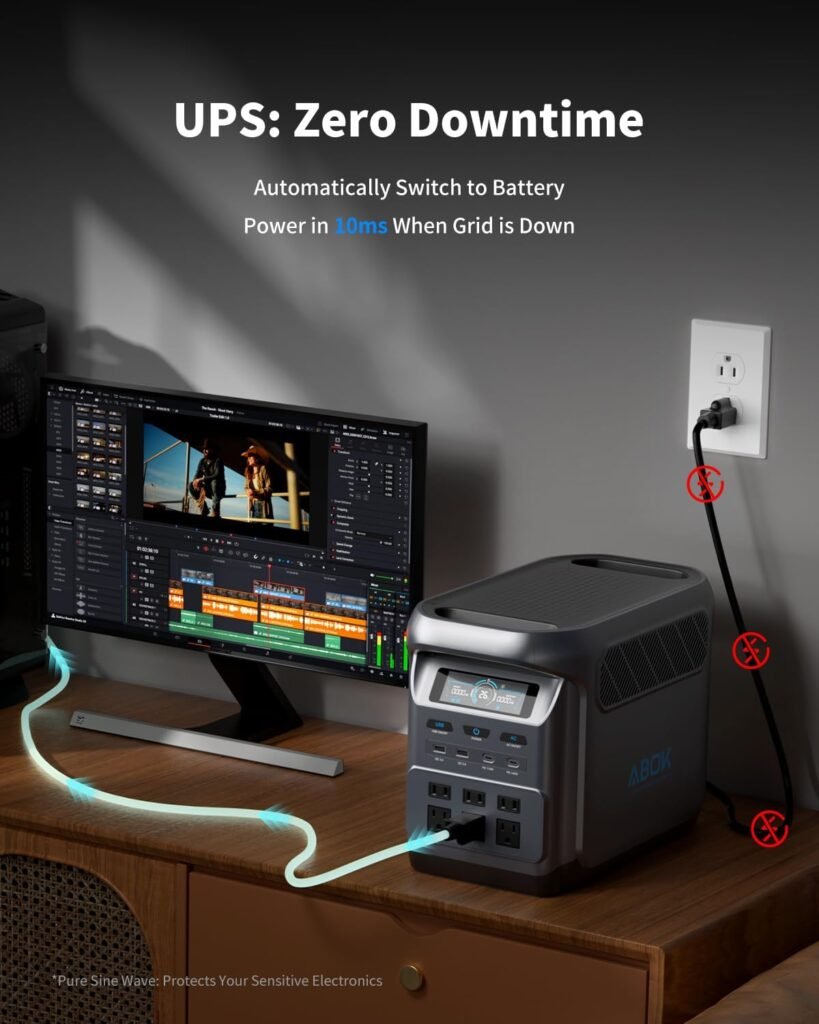
Included value also matters. The unit offers 6 AC outlets, USB-A, dual USB-C, DC outputs, UPS support, Bluetooth/WiFi control, and expandable battery capability. Those features can remove the need for extra accessories or future replacement. If your bundle includes solar panels, compare the bundle math carefully with buying panels separately.
Before you buy, take these steps:
- Check the live Amazon listing and verify what accessories are included.
- Confirm whether you need expansion now or later.
- Compare the $999 base price with competing 1kWh LiFePO4 units.
- Read the warranty and support terms on the listing and brand page.
For many buyers in 2026, the Ark1800 is a good value if the expansion path and fast charging matter. Those are the features that justify the premium.

Alternatives to Consider
If you are comparing the ABOK Ark1800 with big-name rivals, two obvious alternatives stand out. The first is the Jackery Explorer 2000 family. The advantage there is simple: more base capacity. If your main concern is longer runtime without adding expansion batteries, Jackery can make sense. The tradeoff is often higher price and more weight, which matters if you are moving the unit often.
The second is the Anker SOLIX C1000. It is one of the most direct rivals because it also targets the 1kWh class with fast charging and strong app support. If you care most about software polish and brand recognition, Anker is worth a look. The ABOK counters with expandability to 5120Wh and a spec sheet that is competitive on charging input and outputs.
If your budget is under $700, the better move is usually to step down in one of three areas:
- Lower battery capacity
- Fewer AC outlets or USB-C options
- No expansion support
That can be fine if your needs are simple. But if you already know you want home backup, RV use, or future battery expansion, a cheap starter unit can become a false economy.
Our advice: choose ABOK if you want flexibility, choose Anker if you want a polished mainstream competitor, and choose Jackery if you want larger base storage and do not mind paying more.
Final Verdict
The ABOK Ark1800 makes a strong case as a mid-to-upper-tier portable power station. Amazon data shows it has a 4.7/5 rating from 230+ reviews, and the core reasons are easy to understand: 1024Wh capacity, 1800W output, LiFePO4 battery chemistry, 4000+ cycles, and the ability to expand to 5120Wh. Those are not filler specs. They directly affect how useful the unit will be a year or two from now.
Our recommendation is strongest for RV owners, outage-prep buyers, off-grid workers, and serious campers. If that sounds like you, the $999 asking price is defensible. If you mainly want a light emergency battery for occasional phone charging, there are cheaper options that make more sense.
Price-to-performance rating: good to very good, especially for buyers who will use the fast charging and future expansion.
Actionable next step:
- Open the ABOK Ark1800 Amazon listing.
- Confirm the exact bundle, especially if solar panels are included.
- Check whether the output count and accessories match your needs.
- Compare it with the Anker SOLIX C1000 and a Jackery model before deciding.
This article contains affiliate links, but the buying advice is simple: pick the ABOK Ark1800 when you need dependable 1kWh-class power now and the option to grow later.
Frequently Asked Questions
Below are the most common shopper questions related to portable Solar Generators and this model specifically. These answers are short and direct so you can decide faster.
What’s the best solar powered generator for camping?
The best choice depends on your camping style. For car camping and longer stays, the ABOK Ark1800 is appealing because it offers 1024Wh, 1800W output, app control, and up to 1000W solar input. If you only need to charge phones, lights, and a small fan, a lighter and cheaper model may be the smarter buy.
How long will a watt solar generator run a refrigerator?
It depends on the refrigerator’s running wattage, startup surge, and how often the compressor cycles. A power station around 1024Wh can often keep an efficient refrigerator going for several hours to much of a day under moderate use, but real runtime varies a lot with temperature and door opening. Always test your own fridge before relying on any backup setup.
What will a watt solar generator run?
A watt model can usually run larger home appliances and some power tools, including refrigerators, microwaves, coffee makers, and even multiple smaller devices at once. The key is matching both the continuous load and the startup surge. Battery size still determines how long those appliances will run.
How much does 123esolar cost?
We do not have verified pricing data for 123esolar in the information provided here, so we would not estimate it. The safest move is to check the seller’s official website and marketplace listings, then compare the price against battery chemistry, output wattage, capacity, and warranty support.
Pros
- Strong core specs: 1024Wh LiFePO4 battery with 1800W AC output covers most home backup and camping needs.
- Expandable to 5120Wh, which makes it more flexible than many fixed-capacity 1kWh competitors.
- Fast charging with 1500W AC input and up to 1000W solar input on dual XT60 ports.
- Long battery lifespan rated for 4000+ cycles and up to years of service life.
- Useful port layout including AC outlets, USB-A, USB-C 100W and 140W, 12V DC, and DC5521.
- App support via Bluetooth and WiFi adds convenience for RV, outage, and jobsite use.
Cons
- Heavy for frequent carrying at about lbs, so it is portable but not ideal for long walks to a campsite.
- Premium $999 price puts it above some 1kWh rivals, especially if you do not need expandability or app control.
- Solar panel compatibility can confuse buyers, with some verified buyers mentioning setup questions around panel matching and connectors.
- Output count discrepancy appears between the product title and description (13 outputs vs. outputs listed), which shoppers should double-check on the live Amazon page.
- Expansion cost adds up if you plan to reach the full 5120Wh capacity, so the long-term budget can rise quickly.
Verdict
The short version: yes, the ABOK Ark1800 is worth serious consideration if you want a 1kWh-class power station with room to grow. At $999, it is not the cheapest option, but Amazon data shows it combines several shopper-friendly strengths: 1024Wh capacity, 1800W AC output, LiFePO4 chemistry, 4000+ cycle life, and expandability to 5120Wh.
Our take is simple. If you need reliable backup for outages, RV trips, mobile work, or serious camping, this model makes sense. If you want the lightest unit or the lowest upfront price, there are better alternatives. This article contains affiliate links, and we only recommend it for buyers who will actually use the bigger battery, fast charging, and expansion features.