
Have we ever wished we could keep everything powered—at home or outdoors—without stressing over dead batteries, noisy generators, or unpredictable weather?

Our Hands-On Take on the Anker SOLIX C1000 Portable Power Station with 200W Solar Panel
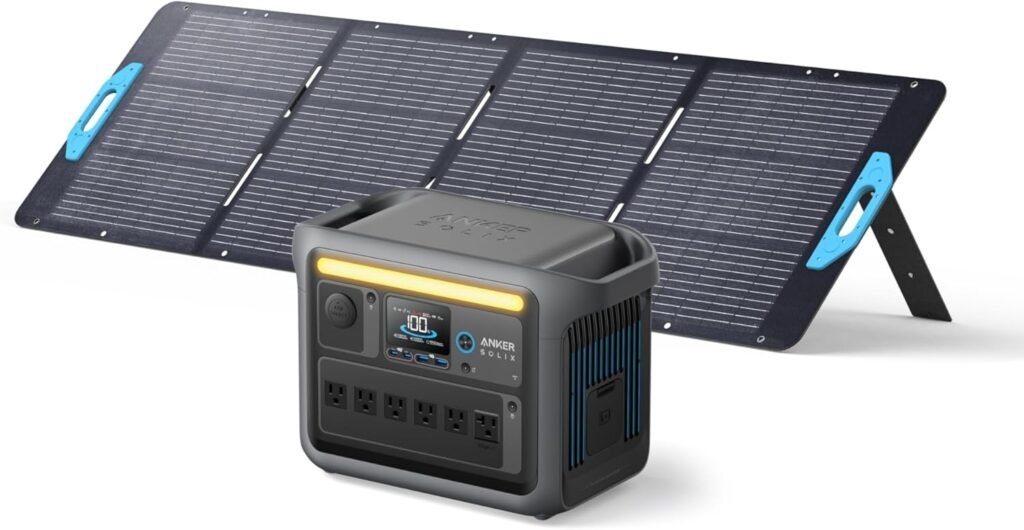
When we look at the Anker SOLIX C1000 Portable Power Station with 200W Solar Panel, we see a power solution built for real life, not just specs on a page. It gives us serious output, long battery life, fast recharging, and a rugged solar panel that actually makes off‑grid energy feel practical.
In this review, we walk through how this system fits into our daily life: from power outages and home backup to road trips, camping, and emergency preparedness. We want to understand not just what it claims, but what it genuinely helps us do.
Key Features at a Glance
Before we get into the details, it helps to look at some core specs and features in one place. This gives us a baseline for what we’re dealing with and whether it matches our needs.
| Feature | Details |
|---|---|
| Battery Capacity | 1056Wh LFP (LiFePO₄) |
| Rated AC Output | 1800W (with SurgePad up to 2400W) |
| Battery Lifespan | 3,000 cycles (up to 10 years of daily use) |
| AC Recharging Speed | 0–80% in about 43 minutes; 0–100% in about 58 minutes (UltraFast mode) |
| Solar Panel Included | Anker SOLIX PS200 200W solar panel |
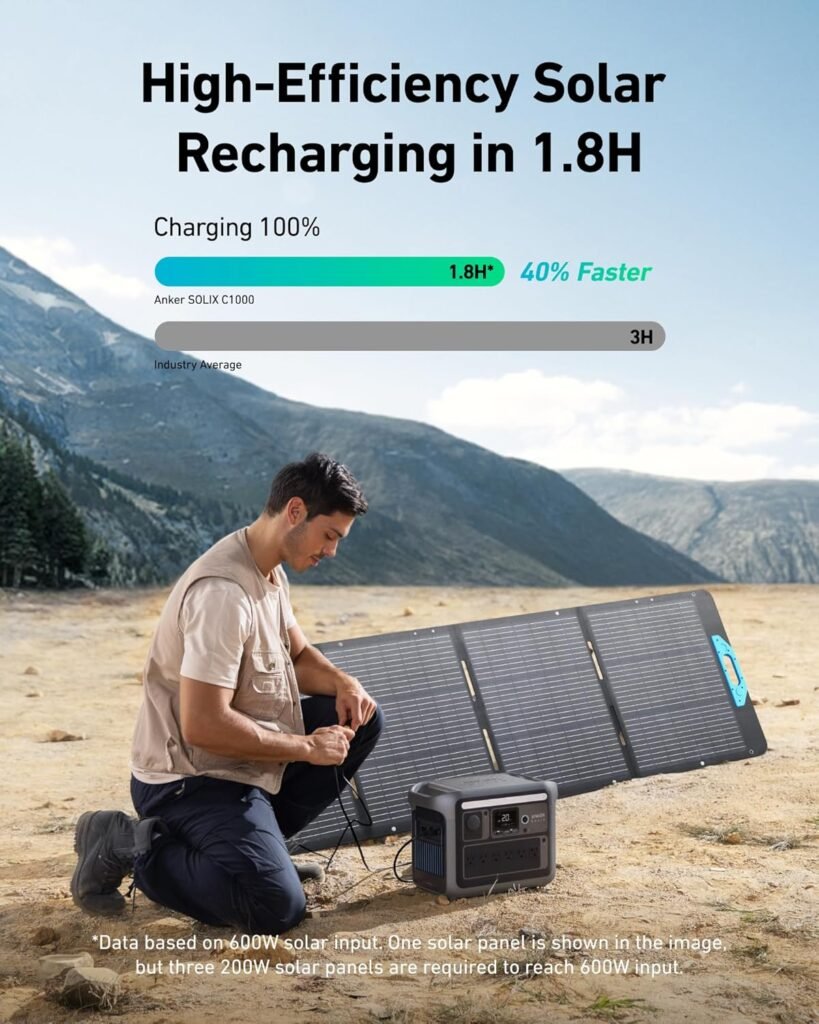
| Solar Conversion Efficiency | Up to 23% (about 1.5x higher than many typical panels) |
| Panel Adjustment Angles | 30°, 40°, 50°, and 80° |
| Weather Protection (Panel) | IP67 water and dust resistance |
| Output Ports | 11 total, including 6 AC outlets |
| Typical Uses | Home backup, power outages, road trips, camping, off‑grid charging |
Just from this overview, we can already see this is more than a casual “phone charger.” It’s a compact power station capable of running substantial household devices and outdoor gear.

Battery Capacity and Real-World Usage
How Much Power Do We Really Get from 1056Wh?
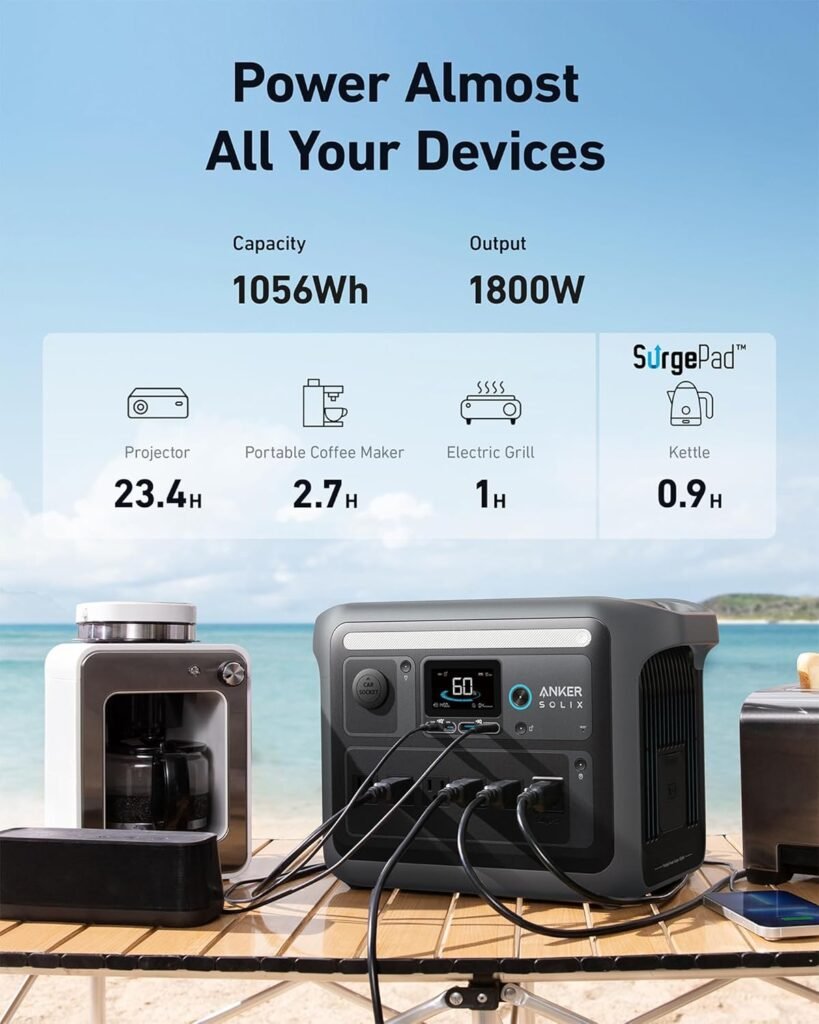
On paper, 1056Wh sounds like a big number, but it helps to translate that into daily usage so we know what to expect. This capacity sits in a sweet spot: big enough to handle meaningful loads, but still portable enough for travel and outdoor use.
In everyday terms, here’s roughly what 1056Wh can handle under typical conditions (actual runtime can vary with power draw and efficiency):
- A 60W laptop: around 14–15 hours
- A 10W LED light: several nights of lighting
- A 100W mini fridge: roughly 8–9 hours of continuous runtime
- A 700–800W microwave: short bursts for cooking, multiple times
- Phone charging: easily dozens of charges
For home backup, this capacity won’t run an entire house for days, but it can keep essentials going: phones, Wi‑Fi router, a laptop or two, some lighting, small appliances, and short use of higher‑draw devices like a coffee maker or microwave.
Outdoors, it gives us enough energy to run camping fridges, CPAP machines, cameras, drones, and portable cooking appliances for a weekend when paired with the solar panel.
Why the LFP (LiFePO₄) Battery Matters
The Anker SOLIX C1000 uses an LFP (LiFePO₄) battery instead of the more traditional lithium‑ion chemistry we see in many smaller power banks and older power stations. This matters for:
- Longevity: Over 3,000 cycles means we can charge and discharge it daily for about 10 years before noticing significant capacity loss.
- Safety: LFP chemistry is known for thermal stability and reduced fire risk compared with some other lithium types.
- Consistency: It holds up better over time, especially if we use it frequently or store it for emergencies.
We like that we can treat this more like a long‑term piece of equipment rather than a disposable gadget that feels worn out after a couple of years.
UltraFast Recharging: 80% in 43 Minutes
Why Fast Charging Is Such a Big Deal
One of the standout claims is the ability to recharge from 0 to 80% in about 43 minutes, and up to 100% in about 58 minutes when using AC power and UltraFast recharging (enabled via the Anker app). We might wonder when we would need that speed, but once we think about real-life scenarios, it becomes huge:
- We have a short power window before an incoming storm.
- We’re packing for a trip and realize the power station is empty.
- We’re using it daily and want quick top‑ups between uses.
Instead of waiting several hours to get usable power back, we can plug it into a wall outlet while we load the car, cook dinner, or prep our gear—and we’re ready to go before we know it.
Using the Anker App for Charging Control
UltraFast recharging is controlled via the Anker app on a smartphone. Through the app, we can:
- Turn UltraFast mode on or off
- Monitor charging status
- Check remaining battery percentage
- Adjust certain power settings
While requiring a smartphone might feel like a small extra step, it also gives us more control and visibility. For those of us who like to keep an eye on our gear, having that data in our pocket is useful.
Power Output: 1800W with SurgePad up to 2400W
Running 99% of Our Appliances
Anker highlights that the SOLIX C1000, with SurgePad technology, can handle up to 2400W output, which is enough for 99% of common household and outdoor appliances. The standard rated output is 1800W, and SurgePad allows higher short‑term output to accommodate demanding devices.
This level of power puts plenty of typical items within reach:
- Kitchen appliances such as blenders, coffee makers, and some microwaves
- Power tools like drills, saws, or air compressors (within range)
- Electric kettles and induction cookers (depending on wattage)
- Portable air conditioners or space heaters with compatible draws
The key is that we’re not limited to just light electronics. We can actually run devices that materially affect our comfort in a power outage or while camping.
Balancing Power Use Between Multiple Devices
With 11 total ports and 6 AC outlets, it’s not just about peak power; it’s also about how we share it efficiently. We can, for example:
- Run a small fridge and some lights at home while charging phones and laptops
- Power a projector, speaker, and lights for an outdoor movie night
- Use power tools while also keeping chargers for batteries and phones going
We just need to be mindful of the overall wattage draw; if we stack too many high‑demand appliances, we may hit the upper limit. The good news is that with SurgePad, we have some headroom for appliances that temporarily pull more power at startup.
Ports and Connectivity: 11 Ways to Power Our Gear
Port Variety for Different Devices
The Anker SOLIX C1000 offers a generous set of ports, designed so we don’t have to keep swapping plugs or carrying extra adapters. While the exact layout can vary slightly, we typically get:
- 6 AC outlets for standard household plugs
- Multiple USB-A and USB-C ports for phones, tablets, and laptops
- Car (12V) port for compatible car‑style chargers or devices
- Possibly additional DC outputs depending on the configuration
Having 6 AC outlets stands out in particular. Many portable power stations have fewer, which can force us to juggle extension strips or prioritize what to plug in. Here, we can spread things out comfortably for a family or a small group.
Why This Matters for Shared Use
For group camping trips, family road travel, or shared workspaces, multiple ports mean less negotiation. Everyone can plug in their own devices without feeling like we’re managing a tiny, limited hub. It feels more like a small, mobile power grid than a glorified battery pack.
Solar Charging with the 200W Anker SOLIX PS200 Panel
Harnessing the Sun for True Off‑Grid Power
The included 200W solar panel changes the equation from “we have a big battery” to “we have a renewable source of power.” With up to 23% conversion efficiency and high‑quality monocrystalline cells, this panel can generate significantly more energy from the same amount of sunlight compared to lower‑efficiency options.
In good sunlight conditions, a 200W panel can:
- Replenish a decent portion of the 1056Wh capacity over the course of a sunny day
- Extend our run time on trips so we’re not just draining the battery
- Keep key devices running day after day if we manage power use wisely
We still need to plan around sunlight hours and weather, but having an efficient panel makes solar a realistic part of the system rather than a token accessory.
4 Adjustable Angles for Maximum Sunlight
One standout feature of the PS200 solar panel is the ability to set it at 4 angles: 30°, 40°, 50°, and 80°. This seems simple, but it’s surprisingly impactful.
Different conditions benefit from different angles:
- 30°–40° for midday sun or lower latitudes
- 50°–80° for morning/evening light or higher latitudes and winter sun
By being able to adjust, we can:
- Maximize output across changing times of day
- Get better performance in shoulder seasons
- Avoid wasting potential energy because the panel is lying too flat or standing too upright
It also makes the system more user‑friendly for those of us who are not solar experts. We just pick an angle that faces the sun well and adjust occasionally.
IP67 Weatherproofing and Durability
Solar Panel Built for Real-World Conditions
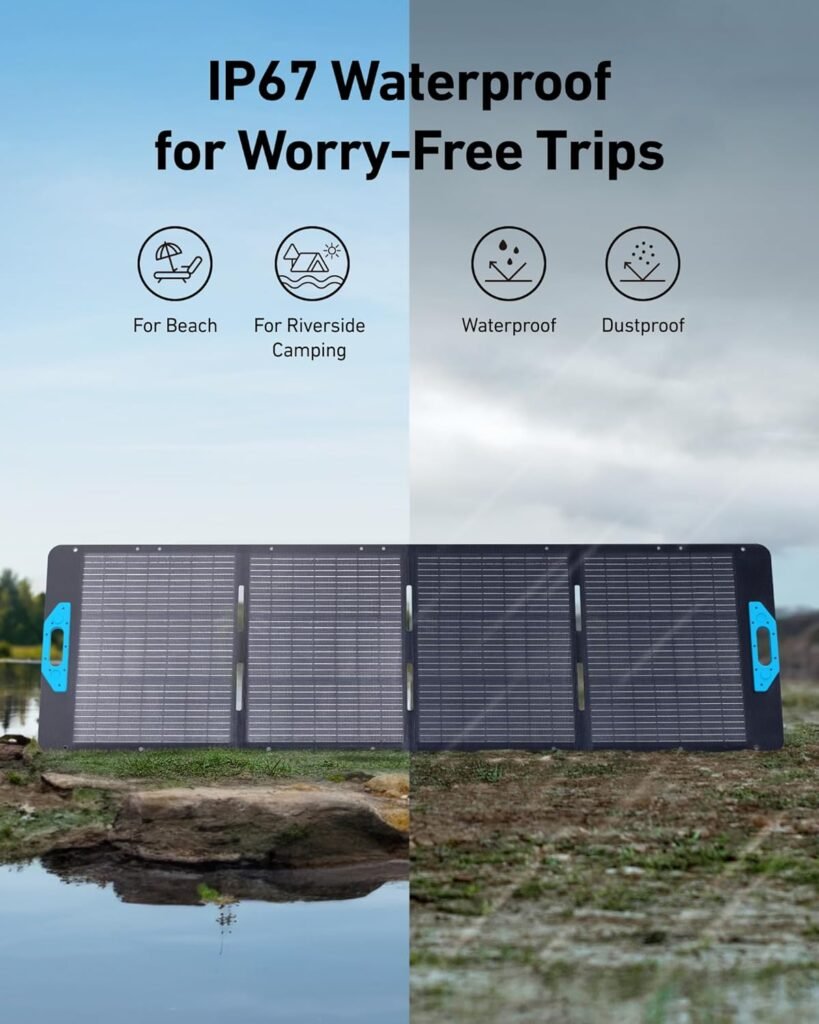
The Anker SOLIX PS200 solar panel is rated IP67, meaning:
- It is fully protected from dust ingress
- It can handle immersion in water up to 1 meter deep for a limited time
In practical terms for us, this means:
- Heavy rain, splashes, and accidental puddles are not a big concern
- Dusty areas or wind‑blown sand are far less likely to cause damage
- We don’t have to panic if the weather changes suddenly while we’re outdoors
We still want to use common sense, but this rating gives us real peace of mind when using it for camping, overlanding, or emergency setups in varied conditions.
Rugged Enough for Adventure and Emergency Use
Between the IP67 panel and the robust battery unit, we can treat this more like a piece of field equipment than a fragile gadget. For road trips, off‑grid cabins, or emergency storage at home, that durability translates to reliability.
We like knowing that if we need it during a storm, a heatwave, or an unexpected outage, it won’t let us down just because conditions are a bit rough.
Higher Solar Efficiency: Up to 23% Conversion
Why 1.5x Higher Efficiency Matters to Us
Anker mentions that the PS200 panel offers up to 1.5x higher conversion efficiency than some other models, reaching up to 23%. On the surface, a few percentage points might not sound like much, but in solar performance, it’s a big deal.
Here’s why:
- We get more usable power from the same surface area
- Shorter hours of good sunlight still produce meaningful charging
- Cloudy or hazy conditions can still offer better results than lower‑efficiency panels
In other words, we’re making better use of every ray of sun that hits the panel. Over weeks and months of use, that adds up to many extra hours of usable power.
Better Solar Yields for Longer Trips
If we’re on an extended camping trip or living out of a van for several days, efficiency directly impacts how independent we can be from the grid. The more we can harvest daily:
- The less we need to ration power
- The more we can comfortably run small fridges, fans, lights, and devices
- The more confident we feel staying longer in remote spots
Pairing a high‑efficiency panel with a 1056Wh battery gives us a very practical balance between storage and generation.
Everyday Use Cases: Home, Outages, and Camping
Using It as a Home Backup Solution
When we think about power stations at home, our immediate use case is usually power outages. The Anker SOLIX C1000 is not a whole‑house generator, but it’s extremely helpful for essentials such as:
- Keeping our Wi‑Fi router and modem running
- Charging phones, tablets, and laptops
- Powering LED lighting or small lamps
- Running a small fridge or fan
- Boiling water or cooking with certain electric appliances in short bursts
With 11 ports and 6 AC outlets, we can keep multiple essentials online without constantly rotating plugs. During longer outages, we can pair it with the solar panel to stretch its usefulness beyond just one or two days.
Backup for Work and Remote Productivity
For those of us who work remotely or depend heavily on electronics, a reliable backup power source isn’t just a convenience—it can protect our income and productivity. This system allows us to:
- Keep laptops, monitors, and network hardware powered
- Run small printers or chargers for cameras and equipment
- Maintain stable power during brief grid fluctuations or blackouts
Having UltraFast recharging also means we can top it up quickly between work sessions if we have intermittent grid availability.
Powering Outdoor Adventures and Camping
On the recreational side, the C1000 plus the 200W panel turns our campsite into a comfortable, functional space. We can:
- Run a 12V camping fridge or cooler
- Power lights at night and charge phones and cameras
- Use small kitchen devices, like an electric kettle or portable induction stove, within power limits
- Run a CPAP machine or other medical equipment that some of us may rely on
For RVs, vans, or car camping setups, this station can serve as the central power hub, making the experience feel far less rugged and far more home‑like.
Design, Portability, and Usability
How Portable Is It Really?
While specific weight and dimensions aren’t listed in the provided details, a 1056Wh LFP power station is typically:
- Compact enough to move around the house or load into a vehicle
- Sturdy, with a handle or handles for one‑person carry
- Designed to rest securely on flat surfaces for safe operation
It’s not pocket‑sized, but it’s realistically portable for adults and older teens. We can bring it:
- From room to room during an outage
- Into the car for a weekend away
- To an outdoor job site or DIY project location
We just want to remember that this is a high‑capacity device, so it does carry some weight consistent with its capability.
User Interface and Everyday Handling
Anker typically favors intuitive controls, and that carries through here. While exact panel layout may vary, we can expect:
- A clear display showing battery percentage and input/output wattage
- Clearly labeled ports and buttons
- Straightforward steps to enable or adjust settings via the app
This is one of those devices where, once we set it up the first time, daily use becomes almost second nature: plug it in, press the correct buttons, and watch the display if we want to keep an eye on load and remaining time.
Included Accessories and Packaging Details
What We Get in the Box
The package provides everything we need to start using both AC and solar power. According to the product details, we receive:
- Anker SOLIX C1000 Portable Power Station
- Solar charging cable
- 9.84 ft solar charging cable (for flexible placement of the panel)
- AC charging cable
- Car charging cable
- User guide
- Anker SOLIX PS200 Solar Panel (200W)
This assortment of cables makes it possible to:
- Charge from a wall outlet
- Charge from a vehicle’s 12V outlet while driving
- Charge from the solar panel in various configurations and distances from the station
Having nearly 10 feet of solar cable helps us place the panel in full sun while keeping the power station sheltered in shade or inside a tent or vehicle.
Separate Shipments and Tracking
One important note: the C1000 power station and the 200W solar panel are dispatched separately. That means we might receive one before the other. If that happens, the instructions indicate:
- Scan the QR code on the package to check the delivery status of the remaining item(s).
This is helpful so we’re not left wondering if something has gone missing. We can verify shipment progress and plan around the deliveries.
Pros and Cons: Our Balanced View
What We Appreciate Most
There are several strengths that stand out to us with the Anker SOLIX C1000 and PS200 solar panel combination:
- Fast AC Recharging: 80% in about 43 minutes is extremely convenient for real‑world use.
- Long Lifespan: 3,000+ battery cycles with LFP chemistry means we can rely on it for many years.
- Strong Output: 1800W with SurgePad up to 2400W covers almost all typical household and camping needs.
- Generous Number of Ports: 6 AC outlets and 11 total ports make it comfortable for groups and multiple devices.
- Efficient Solar Panel: Up to 23% conversion with 4 angle options helps us really make the most of sunlight.
- Rugged Panel Construction: IP67 rating for the solar panel gives real-world durability.
- Useful Accessories: Included cables and car charging support many charging scenarios out of the box.
From a reliability standpoint, the combination of fast charging, durable battery chemistry, and efficient solar means we’re getting a system designed for both short‑term emergencies and regular use.
Potential Limitations to Keep in Mind
No product is perfect, and we find it useful to think about where this system might not fit every need:
- Not a Whole-House Backup: 1056Wh is substantial but not enough to power a full home for extended blackouts without careful prioritization.
- Weight and Bulk: As a high‑capacity unit, it’s not ultra‑light; some users may find frequent carrying a bit strenuous.
- Separate Shipments: Because the power station and panel come separately, we need to track two deliveries, though the QR code helps.
- Smartphone Dependence for UltraFast Mode: Enabling certain advanced settings, such as UltraFast recharging, requires access to the app on a smartphone.
For most of us, these are manageable trade‑offs, but they’re worth noting when we plan our purchase and usage scenarios.
Who This System Is Best Suited For
Households Preparing for Power Outages
If we live in an area prone to storms, grid instability, or seasonal outages, this setup is a strong addition to our preparedness plan. We can:
- Keep communication devices, lighting, and some small appliances functioning
- Use solar to extend our independence when outages last more than a day
- Avoid running noisy, fuel‑based generators for lighter loads
It fits especially well for apartments, condos, and urban homes where traditional gas generators are impractical or prohibited.
Outdoor Enthusiasts and Road Travelers
For campers, RV owners, overlanders, and van‑lifers, the Anker SOLIX C1000 and 200W panel combo offers:
- Quiet, emission‑free power
- Enough capacity for fridges, lights, laptops, and cameras
- Freedom from constantly hunting for hookups or power outlets
If we regularly travel or spend weekends off‑grid, this can serve as a central power hub that reduces our dependence on campground infrastructure.
Remote Workers and Creators
Those of us who work remotely, shoot content outdoors, or manage mobile studios can benefit from:
- Stable power for cameras, drones, laptops, and lights
- Fast AC recharging during breaks or between locations
- Solar charging options when we’re away from outlets for long stretches
Having reliable power reduces stress when we’re working on time‑sensitive projects in locations where the grid can’t keep up.
Tips for Getting the Most Out of the Anker SOLIX C1000
Smart Power Management
To maximize the lifespan and usefulness of this system, we can adopt a few habits:
- Prioritize Essentials: During outages, focus on critical devices (fridges, communications, lighting) first.
- Monitor Loads: Keep an eye on wattage usage via the display or app; avoid running multiple high‑draw appliances at once.
- Use Efficient Devices: LED lights, efficient laptops, and energy‑saving appliances stretch our battery a lot further.
Good power discipline means we can get significantly more runtime from the same capacity.
Optimizing Solar Charging
We can make the most of the 200W solar panel by:
- Positioning it at one of the recommended angles that best lines up with the sun
- Adjusting its angle a few times a day if we’re around to do so
- Keeping the panel surface clean from dust, dirt, or snow
- Using the cable length to place the panel in full sun while the station stays sheltered
We don’t have to constantly micromanage it, but small adjustments and upkeep can noticeably increase daily energy intake.
Safety, Maintenance, and Long-Term Care
Keeping the System Safe
The LFP battery chemistry already adds a layer of safety, but we should still follow basic guidelines:
- Store the power station in a cool, dry place when not in use
- Avoid exposing the main unit to rain or standing water
- Use only the cables and accessories designed for it
- Do not exceed ratings for each port or the total output capacity
By following the user guide and using common sense, we can ensure the system remains a safe part of our home and travel kit.
Long-Term Battery Health
To maintain battery health over years of use, it helps to:
- Avoid storing the unit completely empty for long periods
- Keep it partially charged (for example, around 40–60%) if storing for months
- Top it up every few months even if we don’t use it frequently
- Keep it away from extreme heat, which can shorten battery lifespan
With 3,000 cycles on tap, this battery is already built to last. A little care just makes sure we actually reach that potential.
Our Overall Verdict on the Anker SOLIX C1000 with 200W Solar Panel
Bringing everything together, we see the Anker SOLIX C1000 Portable Power Station with 200W Solar Panel as a highly capable, well‑balanced system for those of us who want serious power without going to full‑scale generator setups.
We get:
- A robust 1056Wh LFP battery designed for a decade of regular use
- Up to 1800W of continuous power with SurgePad up to 2400W
- UltraFast recharging that gets us to 80% in about 43 minutes via AC
- A high‑efficiency, IP67‑rated 200W solar panel with adjustable angles
- Plenty of ports and outlets to handle everyday devices and essentials
For home emergency backup, outdoor adventures, road travel, and even professional off‑grid work, it offers a flexible solution that feels modern and thoughtfully engineered. We’re not just buying capacity; we’re getting a complete, renewable‑ready power ecosystem.
If we’re looking for a reliable, long‑term power companion that can straddle both home and outdoor life with ease, the Anker SOLIX C1000 Portable Power Station with 200W Solar Panel is a compelling option that deserves serious consideration in our setup.
Disclosure: As an Amazon Associate, I earn from qualifying purchases.