
We highlight quiet, efficient inverter generators that won’t fry electronics: Champion 4000-Watt RV Ready (<3% THD, 64 dBA), WEN 4800W (pure sine, eco-mode), PowerSmart 2500W (52 dBA), WEN 3600W Dual Fuel DF360iX (<1.2% THD, LPG quick-connect), Westinghouse iGen5000DF (dual fuel, 52 dBA), a compact Westinghouse 2450W (up to 14 hours), and a budget 4000W option with RV port. Expect CO sensors, low-oil shutdown, and parallel capability. Stick with us to compare runtimes, outlets, and best-use cases.
Champion 4000-Watt RV Ready Portable Inverter Generator with Quiet Technology and CO Shield


If you need a lightweight RV-ready inverter that runs quietly without sacrificing clean power, Champion’s 4000-watt model hits the sweet spot. We like its 48-lb build, built-in handle, and 149cc engine that delivers 4000 starting watts and 3000 running watts with <3% THD. At 64 dBA from 23 feet, it’s campground-friendly, and Economy Mode trims fuel use. The 1.54-gallon tank runs up to 10 hours at 25% load. Outlets include a 120V TT-30R, 120V duplex, 12V automotive, and parallel ports. CO Shield adds safety; Cold Start helps in winter. It’s EPA certified, ANSI/PGMA G300 compliant, and backed by a 3-year warranty.
Best For: RV owners, campers, and tailgaters who want a lightweight, quiet, gasoline inverter generator with clean power and RV-ready outlets for portable, non-whole-home use.
Pros:
- Lightweight (~48 lb) with built-in handle; quiet 64 dBA operation and Economy Mode for fuel savings
- Clean power (<3% THD) with RV-ready TT-30R plus 120V duplex, 12V automotive, and parallel capability
- Safety and reliability features: CO Shield auto shutoff, Cold Start Technology, low-oil shutoff, 3-year warranty
Cons:
- 3000 running watts may be insufficient for whole-home backup or large RV loads without load management
- 1.54-gallon tank and up to 10-hour runtime at 25% load limit extended high-load use without refueling
- Parallel kit for 30A/50A outputs sold separately; gasoline-only (no dual-fuel option)
WEN 4800-Watt Portable Inverter Generator (56477i)

Looking for a compact RV-ready workhorse that still runs quiet? WEN’s 56477i hits a sweet spot: 4800 surge watts, 4000 running, and just 62 dB at quarter load. Its 224cc engine and 1.9-gallon tank deliver up to 7 hours at half-load, while pure sine wave output (0.3–1.2% THD) keeps laptops and monitors safe. We like the RV TT-30R, four 120V outlets, 12V DC, and dual USB ports. Eco-mode trims fuel use, and fuel shutoff helps the carb stay clean. At 72.7 pounds with wheels and a telescoping handle, it’s manageable. Add low-oil, low-fuel, overload, CO protection, parallel capability, and a 3-year warranty.
Best For: RV owners, campers, and tailgaters who want a quiet, portable inverter generator with clean power for sensitive electronics and enough output to run essential gear.
Pros:
- Quiet inverter operation (about 62 dB at quarter load) with pure sine wave output and very low THD (0.3–1.2%) safe for electronics
- RV-ready TT-30R plus four 120V outlets, 12V DC, and dual USB; parallel-capable for more power
- Portable design with wheels and telescoping handle; eco-mode and fuel shutoff for efficiency and cleaner maintenance
Cons:
- 1.9-gallon tank and up to 7 hours at half-load may require refueling on longer runs
- Heavier than small inverters at 72.7 lb, still bulky for lifting without help
- 120V only (no 240V output), limiting compatibility with some home backup or heavy-duty tools
PowerSmart 2500W Portable Inverter Generator (Super Quiet for Camping)
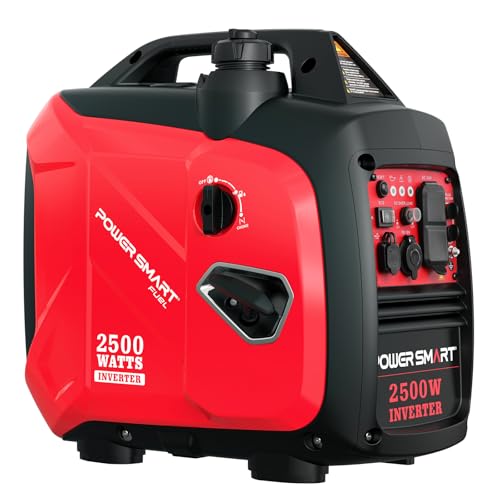
Campers who prize peace and portability will like the PowerSmart 2500W Portable Inverter Generator for its 52 dBA operation at 23 feet and 42-pound carry-friendly build. We appreciate its 2500 starting watts and 1900 running watts of clean power (<3% THD), enough for lights, a coffee maker, or electronics. Eco Mode, low-oil shutdown, and an overload reset keep it efficient and safe. It runs about 5.5 hours at 50% load, with recoil start reliability. Connectivity’s solid: two 120V 15A outlets, one 12V DC, and two USB ports, plus parallel capability when you need more. It’s an affordable, quiet camping pick.
Best For: Campers and tailgaters who want a quiet, portable inverter generator to power basics like lights, small appliances, and electronics without disturbing the campsite.
Pros:
- Super quiet operation (52 dBA at 23 ft at 25% load) and lightweight 42 lb design with carry handle
- Clean power (<3% THD) with 2500 starting watts/1900 running watts, plus Eco Mode and safety features (low-oil shutdown, overload reset)
- Versatile ports: two 120V 15A outlets, one 12V DC, two USB; parallel-capable for more power
Cons:
- Limited runtime (about 5.5 hours at 50% load) compared to larger units
- Recoil start only; no electric start option
- May struggle with high-demand devices or simultaneous heavy loads without using parallel setup
WEN 3600W Dual Fuel Portable Inverter Generator (DF360iX)
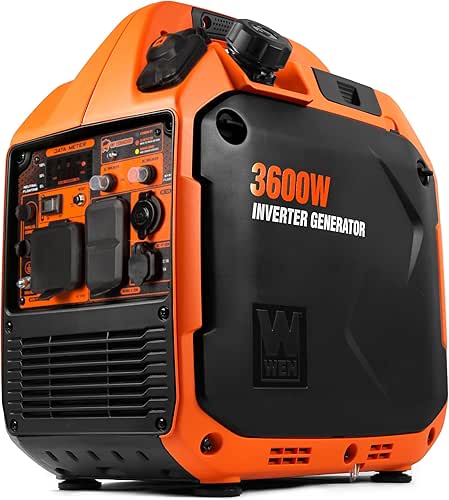
WEN’s DF360iX stands out for RVers and homeowners who want dual‑fuel flexibility in a lightweight frame. We get 3600 surge/2900 running watts on gasoline and 3500/2600 on propane, plus a tool‑free LPG quick‑connect. At 49 pounds and 18 x 11.63 x 19.68 inches, it’s easy to move. Expect up to 5 hours at half‑load on the 1.5‑gallon tank or about 14 hours on a 20‑pound LPG.
Clean power matters: THD stays under 0.3% no‑load and 1.2% full load, safe for electronics. CO Watchdog, fuel shutoff, eco‑mode, low‑oil/fuel shutdown, and overload protection boost safety. RV‑ready TT‑30, dual 120V, 12V, USB, parallel capability, 65 dBA, 3‑year warranty.
Best For: RV owners and homeowners who want a lightweight, quiet, dual‑fuel inverter generator with clean power for sensitive electronics and RV‑ready hookups.
Pros:
- Dual‑fuel flexibility with tool‑free LPG quick‑connect; long propane runtime (up to ~14 hrs at 50% load on 20‑lb tank)
- Clean, stable power (THD <0.3% no‑load, <1.2% full load) safe for phones, laptops, and RV electronics
- Lightweight (49 lb), compact, and RV‑ready TT‑30 outlet; eco‑mode and CO Watchdog safety
Cons:
- Shorter gasoline runtime (about 5 hrs at 50% load from 1.5‑gal tank)
- Lower running watts vs larger non‑inverter units (2900W gas / 2600W propane) may limit high‑draw appliances
- Some users report propane hose/fitting quirks; parallel kit sold separately
GENMAX Ultra Lightweight Generator for Home Backup and Camping

For ultralight portability without sacrificing clean power, the GENMAX GM1200i stands out for campers and homeowners who need a quiet, simple backup. Weighing just 25.3 pounds, it’s easy to carry yet delivers 1200 starting watts and 1000 running watts with <3% THD for sensitive electronics. We like the 58 dBA noise rating (25% load, 23 ft), Eco-Mode, and up to 6.5 hours at 50% load from the 0.66-gallon tank. USB ports, a 120V/20A outlet, parallel capability, and CO Detect protection add versatility and safety. Users praise fuel efficiency; some note panel fitment and occasional reliability or support hiccups. EPA compliant; 2-year warranty.
Best For: Campers and homeowners who want an ultra-light, quiet inverter generator for sensitive electronics and basic backup needs.
Pros:
- Ultra lightweight (25.3 lb) with compact size; quiet operation ~58 dBA at 25% load
- Clean inverter power (<3% THD) with USB ports, 120V/20A outlet, and parallel-ready capability
- Eco-Mode and efficient runtime (up to 6.5 hours at 50% load; user-reported ~15 hrs/gal at light loads)
Cons:
- Limited output (1000 running watts) not suitable for larger appliances beyond small A/C or tools
- Small 0.66-gallon tank requires more frequent refueling during extended use
- Some user reports of panel fitment, reliability variability, and customer support challenges
Portable Inverter Generator 2500W Gas Powered with CO Sensor (EPA Compliant)

Seeking a lightweight, quiet backup you can carry with one hand? We like Oxseryn’s 2500W inverter: 2500 peak/1800 running watts from a 79.8cc 4-stroke OHV, a 1.1-gallon tank, and up to 9.5 hours at 25% load. It’s under 58 dBA at 23 feet, delivers clean power (<3% THD) for laptops, drones, and even charging a power station, and includes ECO mode, parallel capability, and cold-start tech. Ports: 2x120V AC, 12V DC, USB, and Type‑C. The CO sensor auto-shuts for safety; it’s EPA compliant. At 39.8 pounds with a built-in handle, it’s camp- and RV-ready. Note: some units require side panel removal for oil checks.
Best For: Campers, RVers, and homeowners who need a lightweight, quiet, clean-power inverter generator for sensitive electronics and occasional backup.
Pros:
- Quiet operation (<58 dBA) with clean power (<3% THD) for laptops, drones, and charging a power station
- Portable 39.8 lb design with multi-outputs (2x120V AC, 12V DC, USB, Type‑C), ECO mode, and parallel capability
- CO sensor with auto-shutdown, cold-start tech, EPA compliant; up to 9.5 hours at 25% load
Cons:
- 1800 running watts may be insufficient for larger appliances without parallel setup
- Some units require removing a side panel to check or change oil
- High-altitude use (>4000 ft) may require a separate jet/kit and can reduce performance
Westinghouse 8200W Tri-Fuel Portable Inverter Generator

Tri-fuel versatility with true 50A, transfer-switch–ready output makes the Westinghouse iGen8200TFc a standout pick for home backup and RV users who need clean, quiet power. We get up to 8,200 starting watts and 6,600 running watts with sub-3% THD from a durable 298 cc OHV engine. It sips fuel, running up to 17 hours at 25% load on a 3.9-gallon tank, and holds around 60 dBA. Outlets include 14-50R (120/240V), TT-30R, and GFCI 5–20R. We like the electric and remote start, LED data center, CO sensor, and parallel capability. It’s heavy, but wheels and a folding handle help. Three-year warranty.
Best For: Home backup and RV users who want quiet, clean inverter power with true 50A, transfer-switch–ready output and the flexibility to run on gasoline, propane, or natural gas.
Pros:
- Tri-fuel capability (gas, propane, natural gas) with true 120/240V 50A output and transfer-switch readiness
- Clean inverter power (<3% THD) safe for electronics; up to 17 hours runtime at 25% load; around 60 dBA
- Convenient electric/remote start, LED data center, CO sensor, and parallel capability; 3-year warranty
Cons:
- Heavy unit; though wheels and folding handle help, it’s not ideal for frequent lifting
- 3.9-gallon tank limits long high-load runs on gasoline without refueling
- Natural gas and propane typically provide reduced wattage compared to gasoline (lower peak/running output)
2450-Watt Portable Inverter Generator (EPA Compliant)

Need a compact, EPA-compliant inverter that keeps campsite chatter louder than the generator? We like the POXURIO 2450-Watt Portable Inverter Generator for its quiet 59 dB operation and easy portability at about 40 pounds. It delivers up to 2450 watts at 120V, enough for RV fridges, microwaves, fans, lights, and occasional AC use, depending on load. The 6L tank can run up to 14 hours at 25% load. Setup’s straightforward: add oil first, use the included handles, and you’re off. It’s gas-powered with a noted dual-fuel mention, ABS body, and EPA compliance. Watch oil levels, starter/breaker interactions, and runtime under heavier loads.
Best For: Campers, RVers, and homeowners who need a lightweight, quiet, EPA‑compliant inverter generator for portable power and occasional backup.
Pros:
- Quiet 59 dB operation—quieter than traditional generators, suitable for campsites and RV parks
- Portable 40 lb design with handles; straightforward setup (add oil, fuel, start)
- Up to 14 hours runtime at 25% load from a 6L tank; enough power for fridge, microwave, fans, lights, and light AC use
Cons:
- Runtime drops under heavier loads; 6L tank may require refueling for sustained high demand
- Some reports of starter/breaker interactions and the need to closely monitor oil levels
- Dual-fuel is only “mentioned” and may not be a full-featured option; weight listed inconsistently (40–43 lbs)
Power Equipment 4000W Portable Inverter Generator (Gas, RV Ready, Low Noise, ECO Mode)

Quiet power on a budget makes the Oxseryn EDOG04 a smart pick for RV owners and home backup seekers who want 4000 peak/3200 running watts without the bulk. We like its 208cc OHV engine, inverter clean power, and low noise under 72 dBA at 23 feet. At 56 lbs with an open-frame design, it’s portable yet sturdy. The 2-gallon tank, fuel gauge, ECO mode, and up to 14-hour runtime at 25% load maximize efficiency. You get 2x120V AC, 12V DC, and an RV port. Features include Cold Start, low-oil shutdown, and overload protection. Note the altitude jet kit requirement and 1-year warranty.
Best For: RV owners and homeowners seeking a budget-friendly, portable 4000W peak/3200W running gas inverter generator with low noise, clean power, and long runtime for camping or emergency backup.
Pros:
- Inverter clean power with RV-ready outlet; 4000 peak/3200 running watts handles essentials
- Up to 14 hours at 25% load with ECO mode; 2-gallon tank and fuel gauge aid efficiency
- Lightweight 56 lbs with Cold Start, low-oil shutdown, and overload protection; under 72 dBA at 23 ft
Cons:
- Only a 1-year warranty, shorter than some competitors
- May require high-altitude jet kit above 4000 ft (not included) and swap back at low altitude
- Open-frame design is louder than fully enclosed inverter models and offers less weather protection
Westinghouse Dual Fuel Portable Inverter Generator (5000 Peak Watts)

Looking for RV-ready power without the racket? The Westinghouse iGen5000DF delivers 5000 peak and 3900 running watts with clean, under-3% THD power. We like its dual fuel flexibility—run gas or propane—and the quiet 52 dBA operation. It’s RV-ready via a TT-30R outlet, plus two 20A household outlets and USB ports. Expect up to 18 hours on a 3.4-gallon tank in Economy mode, with variable speed matching load.
At 122.7 pounds, the suitcase-style handle and wheels matter. Electric and remote start add convenience, with recoil backup. It’s parallel capable, factory-tested, and backed by a 3-year warranty and lifetime tech support.
Best For: RV owners, campers, and homeowners who want quiet, RV-ready, dual-fuel power with clean output for sensitive electronics and convenient electric/remote start.
Pros:
- Dual fuel (gas or propane) with up to 18 hours runtime and efficient Economy mode
- Quiet operation as low as 52 dBA with clean power (<3% THD) and RV-ready TT-30R outlet
- Electric and remote start, parallel capable, wheels and telescoping handle for easier transport
Cons:
- Heavy at 122.7 lb; still cumbersome to lift despite wheels/handle
- 3900 running watts may be limiting for larger RVs or whole-home loads without load management
- Reports of occasional accessory omissions/fit-and-finish issues; warranty service experiences can vary
Factors to Consider When Choosing Inverter Generators
As we pick the right inverter generator, we’ll match power output to our appliances and consider fuel type options that fit how we plan to use it. We’ll check the noise level rating for campground or neighborhood rules and weigh portability if we’ll be moving it often. Finally, we’ll confirm outlet compatibility so our cords and devices plug in without adapters.
Power Output Needs
How much power do we really need? Let’s total our loads. First, list each device’s running watts, then add them up. Next, identify the highest starting (surge) wattage—motors and compressors spike on startup—and pick a generator whose starting watts exceed that peak. For many setups, inverter units with 1,000–3,000+ running watts cover camping essentials or light home backup.
We should size for today and tomorrow. If we expect to add appliances, include their running watts and add a 10–20% safety margin. Parallel-capable models give us flexibility: we can pair a second unit later to roughly double output for temporary high-demand scenarios.
Finally, consider load type. Sensitive electronics need clean power—look for low THD (under 3%)—and confirm the generator sustains stable running watts at our typical load.
Fuel Type Options
Which fuel keeps our generator ready when we need it most? Gasoline powers most inverter generators and is easy to find, but its shelf life is short and quality varies, impacting performance and maintenance. If we want flexibility, dual-fuel models let us run on gasoline or an alternative like propane or natural gas.
Propane and natural gas store longer and burn cleaner, though they usually deliver slightly lower running watts and may need different delivery setups. Expect wattage differences at idle and under load depending on the fuel we choose.
We also like quick-connect or adapter systems that let us switch fuels fast, minimizing downtime. When we weigh fuel type, we balance availability, storage stability, power output, and the convenience of switching in real time.
Noise Level Rating
Why fixate on wattage if we can’t stand the noise? Noise level ratings tell us how livable a generator feels day to day. Manufacturers list sound in decibels (dBA), typically measured at about 23 feet, so we can compare models on equal footing. Quieter inverter generators often land around 52–62 dBA under typical loads, with standout units dipping into the low 50s.
Inverter technology helps because it modulates engine speed to match demand. At lighter loads—say 25% to 50%—many units run noticeably quieter; at full load, noise usually climbs. That’s why a single dBA figure doesn’t tell the whole story.
When we compare models, we should check the rated dBA along with the test conditions: load level, measurement distance, and any enclosure or eco mode.
Weight and Portability
Quiet operation only matters if we can actually move the unit where we need it. Weight and portability determine whether we can load it into a car, wheel it across a campsite, or stash it in a garage. Lighter inverter generators typically come in under 50 pounds, so one person can carry them easily. Built-in handles and compact dimensions make quick work of transport and storage.
When we step up in size, many models add wheels and telescoping handles, which help over gravel, grass, or long driveways. Heavier units—roughly 60 to 120+ pounds—often need two people or a dolly. Remember the trade-off: smaller, lighter units usually sacrifice runtime or output. For camping or tailgating, that’s fine; for longer outages, we may want the extra weight.
Outlet Compatibility
How will we plug everything in without juggling adapters? Let’s match outlets to our gear. Most inverter generators give us two to four 120V household receptacles (NEMA 5-20R or 5-15R) for appliances and tools. If we’re camping, an RV-ready model with a TT-30R lets us connect a 30A RV directly—no adapter required. Charging phones, cameras, or routers? USB ports (many include both Type-A and Type-C) and 12V DC outputs add flexibility without tying up AC capacity.
We should also check total harmonic distortion (THD). Units advertising clean power under 3% THD are safer for laptops, monitors, and other sensitive electronics. Need more simultaneous capacity? Models with parallel capability let us link a second generator via a kit to boost available wattage through the same outlet set.
Safety and Protections
Ultimately, safety features should shape our shortlist just as much as wattage and noise. We favor inverter generators with built‑in CO sensors that trigger auto shutoff when carbon monoxide rises, protecting us in garages, RVs, and camp setups. Low‑oil shutdown is non‑negotiable, too—it stops the engine before lubrication drops to damaging levels.
We also look for overload protection and clear output indicators. They warn us when we’re pulling too many amps and help safeguard sensitive electronics. If we plan to run units in parallel, we’ll choose models that require approved kits so synchronization and safety interlocks stay intact.
Finally, we value readable gauges—digital or analog—for fuel, voltage, frequency, and runtime. Better visibility makes it easier to maintain safe operating conditions and avoid surprises.
Conclusion
We’ve toured the best inverter generators of 2025, from ultra-quiet camp companions to dual-fuel home backup champs. If you need portability, pick a lightweight 2,000–2,500W unit; for RVs and outages, step up to 3,600–5,000W with CO safety and eco modes. Balance noise, runtime, fuel type, and outlets to fit your routine. Do that, and when the lights blink, you’ll be cooler than a VHS rewinder—ready, efficient, and confident your power plan won’t skip a beat.