

Silent power meets highway grit: in 2025’s best portable inverter generators, we get clean, low-THD electricity without the campsite roar. We focus on models with dual-fuel flexibility, RV-ready outlets, and CO sensors that put safety first. Many run under 60 dB, support parallel kits, and add USB-C for phones and CPAPs. We’ll compare runtimes, weight, and real-world usability—so you can pick the right unit before the lights—and your plans—flicker.
WEN 3600W Dual Fuel Portable Inverter Generator (DF360iX)
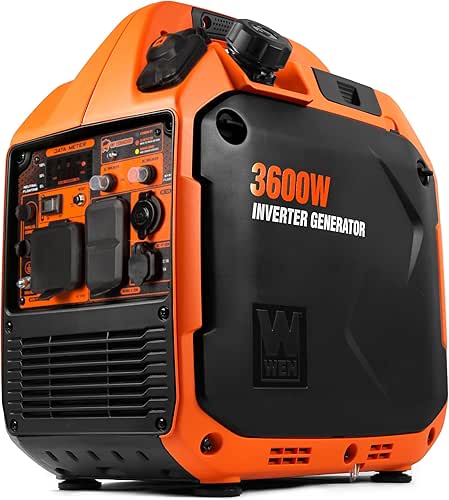

If you split time between RV boondocking and home backup, the WEN DF360iX stands out for its dual‑fuel flexibility and RV‑ready TT‑30R plug. You’ll get 3600 surge/2900 running watts on gasoline and 3500/2600 on propane, with clean power (THD under 1.2% at full load) for laptops and phones. Weighing 49 pounds, it’s compact (18 x 11.63 x 19.68). Expect up to 5 hours at half-load from the 1.5‑gallon tank or 14 hours on a 20‑pound LPG via tool‑free quick‑connect. CO Watchdog, fuel shutoff, eco‑mode, low‑oil/fuel shutdown, USB ports, and parallel capability round out a quiet, 65‑dB package.
Best For: RV owners and homeowners who want a lightweight, quiet, dual‑fuel inverter generator with clean power for boondocking and occasional home backup.
Pros:
- Dual‑fuel versatility with tool‑free propane quick‑connect; long runtimes (up to 14 hours on 20‑lb LPG at half‑load)
- Clean inverter power (THD under 1.2% at full load) with RV‑ready TT‑30R, 120V outlets, 12V DC, and USB ports
- Compact 49‑lb design, eco‑mode, CO Watchdog, fuel shutoff, and parallel capability for scalable power
Cons:
- Lower running watts on propane (2600W) may limit heavier loads compared to gasoline mode
- 1.5‑gallon gasoline tank yields about 5 hours at half‑load—shorter than some larger units
- Reported propane hose/fitting quirks may require extra attention during setup
2800 Watt Quiet Portable Inverter Generator (EPA Compliant)
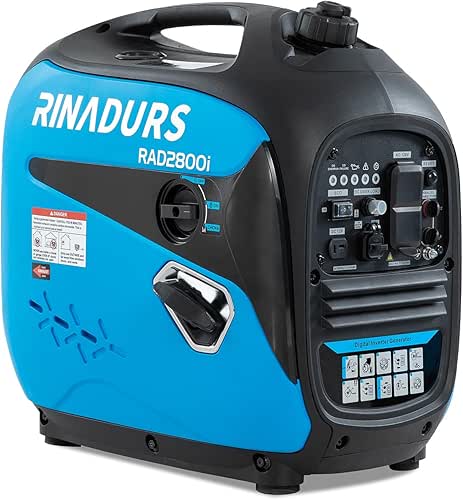
Looking for a compact, quiet workhorse that’s road-ready and EPA compliant? You’ll appreciate this 2800-watt inverter from RINADURS (RAD2800i). It delivers 2500W running and 2800W peak from a 122cc 4-stroke engine, producing clean <3% THD power for laptops, fridges, and tools. At 50.9 lb with a reinforced handle, it’s easy to haul to campsites, homes, or job sites.
You get two 120V 20A outlets, 12V DC ports, USB, and QC3.0 Type‑C fast charging. Eco Mode stretches the 1.5-gallon tank to 10 hours at 25% load. Safety features include a CO sensor, overload protection, and low-fuel alarm. It’s parallel-ready and backed by a 1-year warranty.
Best For: Campers, homeowners, and light-duty contractors who need a compact, quiet, EPA-compliant inverter generator with clean power and flexible outlets for sensitive electronics and essential tools.
Pros:
- Clean inverter output (<3% THD) safe for laptops, fridges, and electronics
- Portable 50.9 lb design with reinforced handle; quiet operation and Eco Mode up to 10 hours at 25% load
- Versatile power panel (2x 120V 20A, 12V DC, USB, QC3.0 Type‑C) plus CO sensor and parallel capability
Cons:
- 2500W running power may be insufficient for high-demand appliances or whole-home backup
- Parallel kit sold separately for doubling output
- Small 1.5-gallon tank limits runtime at higher loads despite Eco Mode
PowerSmart 2500-Watt Portable Inverter Generator with Quiet Technology
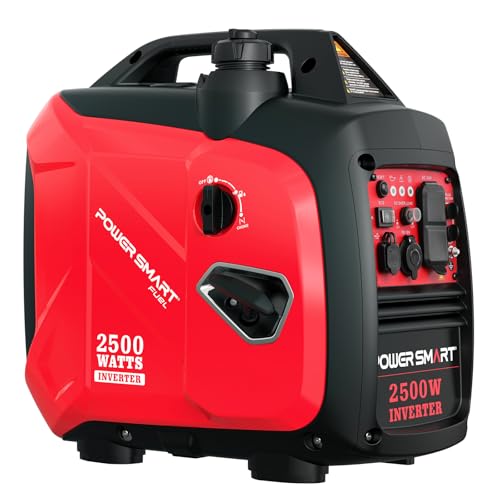
Quiet operation without sacrificing portability makes the PowerSmart 2500-Watt a smart pick for campers, tailgaters, and DIYers who need clean power on the go. You’ll get 2500 starting watts and 1900 running watts with <3% THD for sensitive electronics. At 52 dBA (25% load) and 59 dBA at full tilt, it stays conversation-friendly. Weighing 39.7 pounds with a built-in handle, it’s easy to haul.
Plug in two 120V 15A outlets, a 12V DC port, and two 5V USB ports. Eco Mode extends fuel efficiency, delivering about 5.5 hours at 50% load. Parallel ports add capacity. Safety includes Low Oil Shutdown and overload reset.
Best For: Campers, tailgaters, and DIYers who need a quiet, lightweight inverter generator with clean power for sensitive electronics.
Pros:
- Quiet operation: 52 dBA at 25% load (59 dBA at full load) keeps conversations comfortable
- Portable and easy to carry at 39.7 lbs with built-in handle
- Clean power (<3% THD) with versatile outlets (two 120V, 12V DC, two USB) and parallel capability
Cons:
- Limited runtime at 5.5 hours at 50% load may require refueling for longer use
- 1900 running watts may be insufficient for higher-demand appliances or RV A/C units
- No electric start; manual operation only
WEN 4800W Dual Fuel Portable Inverter Generator (DF480iX)

Prefer a compact, RV-ready workhorse that runs on either gas or propane? WEN’s DF480iX delivers 4800 surge/4000 running watts on gasoline and 4320 surge/4000 running watts on propane from a 224cc dual-fuel engine. You’ll get electric start convenience and ultra-quiet operation—about the level of normal conversation—while its inverter design feeds clean power to laptops, tablets, and phones.
It’s easy to move with onboard wheels and a telescoping handle, and the LPG quick-connector makes propane hookup tool-free. Safety’s covered with the WEN Watchdog CO Shutdown Sensor and fuel shut-off. Outlets include four 120V, one TT-30R, one 12V DC, two USB. Backed by a three-year warranty.
Best For: RV owners, campers, and homeowners who need a quiet, portable, RV-ready inverter generator that can run on either gasoline or propane while safely powering sensitive electronics.
Pros:
- Dual-fuel flexibility with electric start and tool-free LPG quick-connector
- Quiet inverter power that’s safe for laptops, tablets, and phones
- RV-ready TT-30R plus multiple outlets; easy mobility with wheels and telescoping handle
Cons:
- Same 4000 running watts on propane as gas, with slightly lower surge on propane
- Heavier than smaller inverter units despite wheels and handle
- Limited to 120V output; no 240V option for higher-voltage tools or appliances
Power Equipment 4000W Gas Inverter Generator, Portable and RV Ready

Meet the Oxseryn EDOG04, a 4000W gas inverter/open-frame generator that suits RV travelers and homeowners who want stable, RV‑ready power without excess bulk. You get 4000 peak and 3200 running watts from a 208cc OHV engine, plus clean inverter output for sensitive electronics.
It runs up to 14 hours at 25% load in ECO mode from a 2-gallon tank with a fuel gauge. Ports include 2x120V AC, a 12V DC, and an RV outlet. Noise stays under 72 dBA at 23 feet. At 56 lbs, it’s portable, with Cold Start, low‑oil shutdown, and overload protection. Note altitude jet changes; 1‑year warranty included.
Best For: RV owners and homeowners who need portable, clean inverter power for travel or emergency backup without the weight and size of larger generators.
Pros:
- 4000 peak/3200 running watts with clean inverter output for sensitive electronics
- Long runtime up to 14 hours at 25% load (ECO mode) from a compact 2-gallon tank
- RV-ready outlet, low noise under 72 dBA, and safety features like low-oil shutdown and overload protection
Cons:
- May require a high-altitude jet kit above 4000 ft (not included) and re-jetting when returning to low altitude
- Open-frame design is louder than fully enclosed inverter models
- 1-year warranty is shorter than some competitors
WEN 4800-Watt Portable Inverter Generator (56477i)

Need RV-ready power without the bulk? WEN’s 56477i delivers 4800 surge watts and 4000 running watts from a 224cc engine in a 72.7-pound package with wheels and a telescoping handle. You’ll get up to 7 hours at half-load from the 1.9-gallon tank, and just 62 dB at quarter load keeps camp quiet. Clean, inverter power (THD 0.3–1.2%) protects laptops, phones, and monitors.
Plug in with four 120V outlets, a TT-30R RV port, 12V DC, and dual USBs. Eco-mode saves fuel. Safety includes fuel shutoff, low-oil/low-fuel shutdown, overload protection, and CO protection. It’s parallel-ready and backed by a three-year limited warranty.
Best For: RV owners and campers who want quiet, clean inverter power with RV-ready hookups in a portable, wheeled package.
Pros:
- RV-ready TT-30R plus four 120V outlets, 12V DC, and dual USB; safe for sensitive electronics (low THD).
- Quiet operation (62 dB at quarter load) with eco-mode and fuel shutoff for efficiency and maintenance.
- Portable design with wheels and telescoping handle; parallel-capable; backed by a 3-year limited warranty.
Cons:
- 1.9-gallon tank limits runtime to about 7 hours at half-load, requiring refueling for longer use.
- Heavier than small inverters at 72.7 pounds, still may be cumbersome to lift without wheels.
- 120V-only output (no 240V) may not suit tools or appliances requiring split-phase power.
2450-Watt Portable Inverter Generator (EPA Compliant)

Looking for a quiet, go-anywhere generator that won’t weigh you down? This EPA-compliant inverter packs 2450 watts of starting power and sips gasoline from a 6L (≈1.6 gal) tank. You’ll get up to 14 hours of runtime at 25% load, so overnight camping or extended outages aren’t a problem.
At just 43 pounds, you can carry it easily and set it up fast. Advanced sound reduction keeps noise around 59 dB, so conversations and campsite calm stay intact. Its 120V output suits sensitive electronics, while gasoline’s broad availability, affordability, and easy storage add convenience. Ideal for camping, home backup, and light commercial tasks.
Best For: Campers, homeowners, and light commercial users who need a quiet, portable, and fuel-efficient 120V inverter generator for reliable power on the go or during outages.
Pros:
- Quiet operation around 59 dB with advanced sound reduction—great for campsites and neighborhoods
- Long runtime up to 14 hours at 25% load from a 6L (≈1.6 gal) fuel tank
- Lightweight 43 lb design for easy carry and fast setup; clean inverter power for sensitive electronics
Cons:
- 2450W starting power limits use with high-demand tools or large appliances
- Gasoline engine requires routine maintenance and fuel storage considerations
- Runtime drops at higher loads; no mention of parallel capability or 240V output
Portable 2500W Gas Powered Inverter Generator with CO Sensor

Quiet under 58 dBA yet capable of 2500 peak/1800 running watts, this 39.8‑lb inverter is a smart pick if you want camp-friendly power that won’t upset the neighbors or your electronics. You’ll get clean power (<3% THD) for phones, laptops, drones, and even a power station via 2x120V AC, 12V DC, USB, and Type‑C. The 79.8cc OHV engine sips from a 1.1‑gallon tank for up to 9.5 hours at 25% load, with ECO mode and parallel capability.
You also get a CO sensor with auto‑shutdown, cold‑start help, fuel gauge, and low‑oil shutdown. Note: high altitudes may require a kit; some units need side‑panel removal for oil checks. Warranty: 1 year (Oxseryn EDOG01).
Best For: Campers, RVers, and homeowners needing a quiet, portable inverter generator for clean power to sensitive electronics and light backup loads.
Pros:
- Quiet operation (<58 dBA) with clean power (<3% THD) safe for phones, laptops, and cameras
- Lightweight and compact (39.8 lb) with multi‑output ports (2x120V AC, 12V DC, USB, Type‑C) and parallel capability
- Safety and convenience features: CO sensor auto‑shutdown, cold‑start technology, fuel gauge, low‑oil shutdown, ECO mode
Cons:
- Limited runtime/power for heavier loads (1.1‑gallon tank; 1800 running watts)
- High‑altitude use (>4000 ft) may require a separate kit and may affect performance
- Some units require removing a side panel for oil checks; 1‑year warranty is short
PowerSmart 4400W Portable Inverter Generator with CO Sensor

If you want strong output without a heavy frame, the PowerSmart 4400W Portable Inverter Generator stands out with 4,400 starting watts, 3,600 running watts, and just 61.29 lbs to haul. You’ll get dependable power from a 223cc EPA-compliant 4-stroke engine, plus a 1.6-gallon tank delivering up to 11 hours at 25% load. At 76 dB from 23 feet, it’s manageable for residential use and camping.
You’re covered on safety with a CO sensor, low-oil shutdown, and overload protection. Its compact 19.3 x 16.9 x 16.5-inch design travels easily to RV sites, job locations, remote spots, and emergency outages without hogging space.
Best For: Campers, homeowners, and RV users who need a lightweight, quiet, and reliable portable generator with solid power and built-in safety features.
Pros:
- Strong output for size: 4,400 starting watts and 3,600 running watts handle most essentials
- Portable and compact at 61.29 lbs with a small footprint (19.3 x 16.9 x 16.5 inches)
- Long runtime up to 11 hours at 25% load with safety features including CO sensor, low-oil shutdown, and overload protection
Cons:
- Noise level of 76 dB at 23 feet may be noticeable in quieter campgrounds
- Limited fuel capacity (1.6-gallon tank) for higher-load, long-duration use
- Runtime figure provided only at 25% load; performance at higher loads will be shorter
ERAYAK 2400W Portable Inverter Generator for Home and Camping

For a compact, ultra‑quiet unit that won’t trip up sensitive electronics, the ERAYAK 2400W Portable Inverter Generator stands out. You get 2400W peak and 1800W running watts with clean power under 1.2% THD, safe for laptops, CPAPs, TVs, consoles, and medical devices. It’s gas powered, EPA compliant, and features Eco Mode to trim fuel use and noise.
At 52.5 dB (7 meters, 25% load), it’s campground friendly. The 42 lb body measures 18.82 x 11.73 x 18.11 inches and supports an optional wheel kit and telescoping handle. Expect up to 16 hours at 25% load. Ports: 2 AC, 2 USB, 1 DC. Includes tools, oil funnel, manual, 3‑year warranty, and lifetime tech support.
Best For: Campers, RV owners, and homeowners who need a compact, ultra‑quiet, clean‑power generator to safely run sensitive electronics and essential devices during outings or backup situations.
Pros:
- Clean power with less than 1.2% THD, safe for laptops, CPAPs, TVs, gaming consoles, and medical devices
- Ultra‑quiet operation at 52.5 dB (7 m, 25% load) with Eco Mode for improved fuel efficiency and lower noise
- Lightweight and compact (42 lbs; 18.82″ x 11.73″ x 18.11″) with multiple ports (2 AC, 2 USB, 1 DC) and optional wheel kit compatibility
Cons:
- 1800W running wattage may be insufficient for larger appliances or whole‑home backup
- Gas‑powered engine requires fuel storage and periodic maintenance
- Maximum runtime claims depend on low loads (25%); higher loads will reduce runtime significantly
Factors to Consider When Choosing Portable Inverter Generators
Before we pick a model, let’s match power output to our appliances and choose a fuel type that suits how we plan to use it. We’ll check noise level ratings and total harmonic distortion to protect our ears and sensitive electronics. Finally, we’ll weigh runtime and tank size to balance portability with how long we need continuous power.
Power Output Needs
Power output drives what we can actually run, so we start by tallying our essentials’ running watts and planning around that number. Inverter generators list running watts and higher surge watts to cover brief startup spikes. We match our continuous load to the rated running wattage—commonly 1800–4000 W—to avoid overloads during normal use.
When we’ll run multiple appliances together, we add their wattages and compare that sum to the generator’s running capacity, not its surge figure. Surge watts (often 3500–4800 W) matter for motor starts—think RV air conditioners or fridges—but they’re not a continuous budget.
If we expect frequent near-capacity operation, we choose a unit with a comfortable margin above our needs. That buffer maintains efficiency, reduces strain, and extends longevity.
Fuel Type Options
How do we pick a fuel that fits our use? We start by deciding between gasoline-only and dual-fuel. Gas-only inverter generators often run 5–14 hours at stated load percentages, driven by tank size (about 1.1–1.5 gallons) and engine displacement. Dual-fuel models add flexibility: we can hook up propane with tool-free quick-connects and see runtimes up to roughly 14 hours at half-load on a 20-pound tank.
We should also check wattage differences. The same generator may deliver slightly different continuous and surge watts on propane versus gasoline, which matters if our appliances push the limits. Features like fuel shutoff help extend carburetor life and let fuel reach the carb before shutdown. If we store gear long-term, that shutoff becomes especially valuable.
Noise Level Ratings
Quiet matters, but what do those noise numbers really tell us? Noise ratings are typically listed in decibels (dB) measured at a standard distance—often 7 to 23 feet. We’ll see inverter generators advertised from about 52 to 76 dB, but those figures depend on load. Many brands cite dB at 25% load (eco mode) to showcase quiet performance during light use.
We should compare apples to apples: check the test distance and the load percentage. Expect a unit to be much quieter near quarter load than at full tilt. Inverter designs generally run quieter than open-frame models because they modulate engine speed for stable output. Still, enclosure quality, ventilation paths, and exhaust resonance shape real-world sound, so published dB isn’t the whole story.
Total Harmonic Distortion
Why does Total Harmonic Distortion (THD) matter so much? Because it tells us how closely a generator’s output matches a pure sine wave—the standard our sensitive electronics expect. THD is expressed as a percentage: the lower it is, the less “noise” rides on the power signal.
For laptops, audio gear, routers, and medical devices, we look for THD below 1% when possible. Higher THD can introduce interference, overheating, or erratic behavior. That’s why THD performance is a headline spec for inverter models, often listed alongside “clean power” claims.
The good news: the best 2025 inverter units we’ve reviewed typically deliver under 3% THD at no load and under 1.2% at full load, indicating consistently clean power. When comparing models, prioritize documented THD figures.
Runtime and Tank Size
Curious where real-world endurance comes from? It’s mostly tank size and load. Bigger tanks store more energy; lighter loads sip fuel. Eco modes help by throttling engine speed to match demand, stretching every ounce. At a fixed load, we typically see around 5 hours from a 1.5-gallon tank, while 6–6.5 liter tanks can push 14–16 hours. Manufacturers often quote half-load runtimes—think 5–14 hours—to give a practical daily benchmark for planning.
Fuel type matters, too. On the same tank size, propane/LPG models often post longer runtimes thanks to steady fuel flow and efficiency. Need extended coverage without refueling? Parallel operation lets us pair two inverters to share load, effectively increasing total available energy and smoothing consumption across both units.
Portability and Weight
After runtime, how easily we can move a generator matters just as much. We look first at weight: compact inverter models often land around 39–50 pounds, while larger units typically run 60–73 pounds. If we’ll lift it solo, staying under 50 pounds helps. Built-in handles make short carries manageable, and models with wheels or telescoping handles reduce strain across campsites, docks, or parking lots.
Size matters, too. Compact dimensions—roughly under 20 inches in length and width—fit better in SUVs, RV bays, and garage shelves, and they slip through tight storage spots. We also prefer enclosed inverter designs over open-frame units; they’re usually lighter and more compact for similar output. Need extra power occasionally? Parallel-capable models let us pair two lighter units and keep transport simple.
Outlets and Connectivity
A generator’s outlet layout dictates what we can power without adapters, so we check it first. We look for a balanced mix: 2–4 standard 120V NEMA 5-20R receptacles for appliances and tools, plus a 12V DC port and USB charging. Built-in USB-A—and ideally USB-C—lets us top off phones, tablets, and cameras without extra bricks.
If we’re towing a camper, RV-ready models with a TT-30R plug are a win, powering RV accessories directly without a dongle. For bigger loads, we value parallel capability. Many panels include dedicated parallel ports or connectors; with a kit, we can link two identical units and effectively double available wattage.
Bottom line: choose the outlet set that matches our gear today and our expansion plans tomorrow.
Safety and Protections
Ports and plugs matter, but they don’t mean much if the generator isn’t safe to run. We prioritize models with built-in CO sensing that automatically shut down when carbon monoxide rises to dangerous levels. That safeguard can save lives during storms, camping, or tailgating.
We also look for low-oil and low-fuel shutdowns. These features prevent engine damage and help protect our connected electronics from brownouts. Inverter technology is another safety win: clean power with low total harmonic distortion—often under 3%—keeps sensitive gear happy.
Overload protection and clear indicator lights warn us before we push things too far, reducing the odds of tripped breakers or fried components. Lastly, Eco or automatic speed control optimizes fuel use while maintaining safe, stable output.
Frequently Asked Questions
Can Inverter Generators Safely Power Sensitive Medical Devices Like CPAP Machines?
Yes, they can—when they deliver clean sine-wave power and stable voltage. We’ll suggest using a pure sine inverter generator, proper wattage headroom, and a surge protector. Need extra assurance? We’ll add medical-grade UPS backup for seamless runtime.
How Do Altitude and Temperature Affect Generator Performance and Output?
Altitude and temperature reduce generator performance and output. As elevation rises, thinner air cuts engine power; heat further derates it. We plan for 3–4% loss per 1,000 feet, use cold-air intake, proper jetting, and avoid overloading.
What Smartphone Apps Work for Remote Monitoring and Start/Stop Control?
We recommend Honda My Generator, Yamaha EF Monitor, Westinghouse iGen Wi‑Fi, Champion Control, and Generac Mobile Link for remote monitoring/start/stop. Picture camping: we check fuel, start quietly at dawn, and stop remotely when neighbors wake.
Are There Tax Credits or Rebates for Cleaner Portable Generators?
Yes—sometimes. We’ve seen federal credits rarely apply, but states, utilities, and air districts offer rebates for CARB-compliant, inverter, or propane models. Let’s check DSIRE, local utility pages, and manufacturer promos, then save receipts and model certifications.
How Should I Winterize and Long-Term Store an Inverter Generator?
We drain or stabilize fuel, run it to circulate, fog the cylinder, change oil, clean or replace filters, disconnect the battery, cover vents, store dry and elevated, exercise monthly, and document maintenance. Check the manual’s specific procedures.
Conclusion
We’ve covered the top portable inverter generators of 2025—quiet, efficient, and ready for road trips or blackouts. The right pick comes down to your fuel preference, noise tolerance, and power needs. Envision this: a late-summer storm knocks out power, but we fire up a 3600W dual-fuel unit, keep the fridge cold, a CPAP running, and phones charged—all under 60 dB. That’s the peace of mind and portability we’re after. Choose smart, pack light, and be ready.