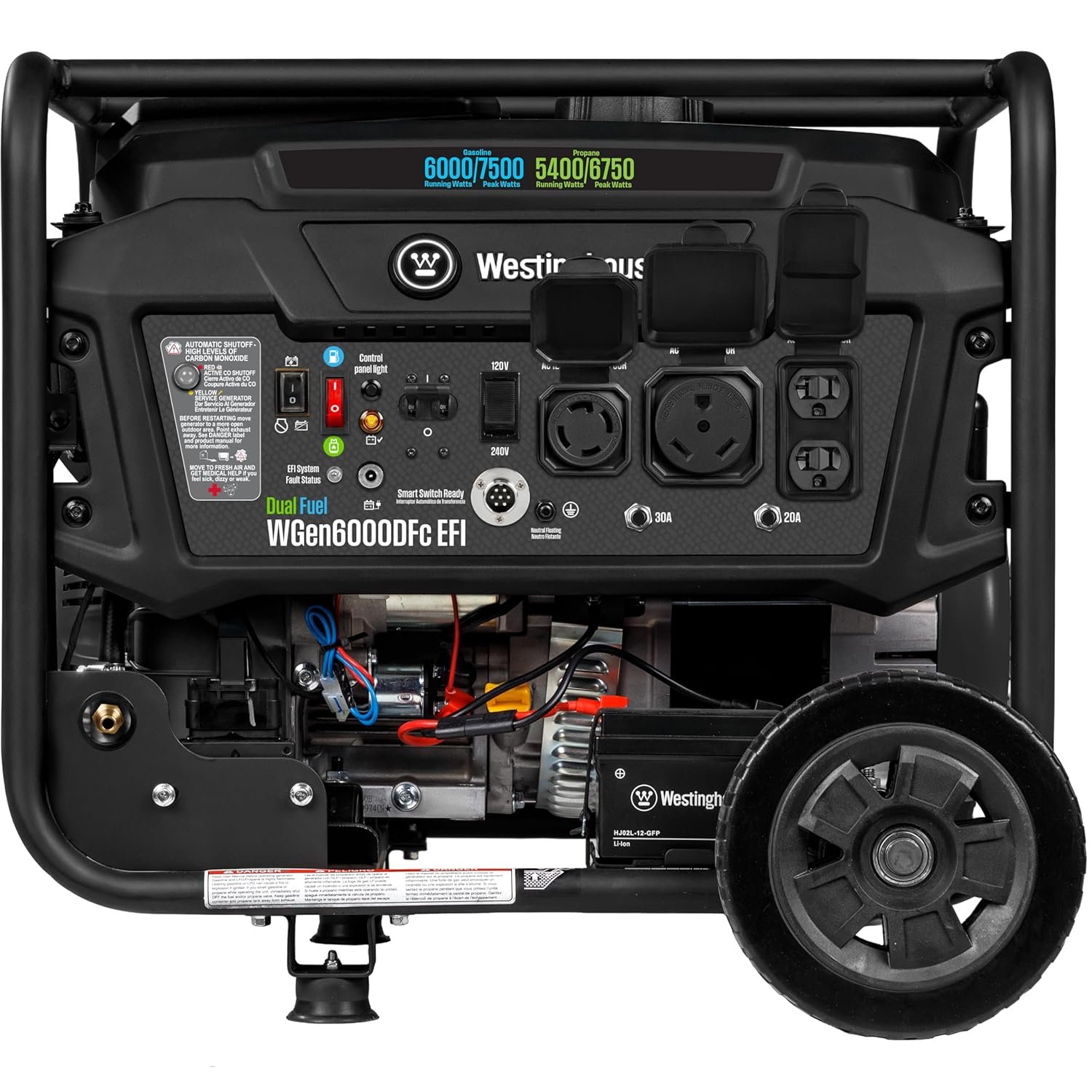
Switching fuels on a dual fuel generator requires precision and attention to detail. First, you’ll want to stop the generator engine and verify all connected devices are off. Then, carefully close the current fuel supply valve without any open flames nearby. Ready to explore the next steps? There’s more to take into account to guarantee smooth operation and safety as you toggle between fuel sources.
Stopping the Generator Engine
To effectively stop your dual fuel generator’s engine, begin by turning off all connected devices to prevent electrical damage or arcing. Next, switch the generator’s main and output breakers to the off position. This isolates the system, guaranteeing no power supply during the engine shutdown. Allow the generator to idle with no load for 1–2 minutes, cooling internal components. Use the engine switch, electric start button, or key, depending on your model, to turn off the engine. Consult your manual for specific shutdown methods and verify engine status if automatic systems engage. Once the engine halts, wait for it to cool before proceeding with any maintenance procedures. This guarantees safety and prevents potential damage to the unit.
Shutting Off the Current Fuel Supply
After safely stopping your dual fuel generator’s engine, the next step involves shutting off the current fuel supply. Begin with the fuel valve operation by closing the natural gas (NG) lock-off valve if you’re using NG. This action physically cuts off the fuel flow and isolates the line. The pressure sensor functionality is essential here; it monitors the NG pressure and signals the ECM when pressure drops below nine inches water column, guaranteeing safe shutdown protocols. Use manual intervention for precise control during maintenance or emergency situations. Always verify no open flames are nearby and confirm the valve is fully closed to prevent leaks. Regularly inspect valves and connections to maintain system integrity and avoid malfunctions.
Selecting the Alternate Fuel Source
When choosing the alternate fuel source for your dual-fuel generator, consider the advantages each type offers, like propane’s cleaner emissions and stable storage. Ascertain you follow switching safety protocols to prevent leaks or operational issues. Regularly maintain your storage systems to keep your generator running efficiently and safely.
Fuel Type Advantages
While selecting an alternate fuel source for your dual fuel generator, it is vital to weigh the advantages each option offers. Propane stands out for its clean-burning properties, leading to significant emissions reduction, and its stable storage, which guarantees long-term availability. However, it may increase your operating costs due to higher prices. Gasoline, on the other hand, delivers impressive fuel efficiency with higher energy density, providing more power per gallon. It’s easily accessible but degrades over time, requiring more frequent maintenance. Diesel offers excellent fuel efficiency, longer runtimes, and robust engine durability, though it comes with higher upfront costs and increased noise. Natural gas offers cleaner burns and lower emissions, but requires fixed installations and may struggle in remote areas.
Switching Safety Protocols
Choosing the right fuel for your dual fuel generator involves understanding the benefits of each option, yet the ability to switch between them safely is just as important. First, verify the availability of the alternate fuel source to avoid fuel contamination. Use integrated sensors or visual inspection to ascertain it’s not empty or compromised. Manually select the alternate fuel through the control panel if automatic switching isn’t active. Confirm generator stability to prevent interruptions. Engage the fuel selector switch only after verifying pressure regulation is stable to avoid mechanical damage. Activate safety interlocks to prevent simultaneous fuel operation. Execute switching in well-ventilated areas to manage fumes, and always refer to your generator’s specific manufacturer’s instructions for safe operation.
Storage and Maintenance
Selecting the right storage and maintenance setup for your alternate fuel source is essential for the efficient operation of a dual fuel generator. Opt for double-wall fuel storage tanks if you prioritize leak prevention and environmental safety, especially with diesel. They might be costlier but offer peace of mind in sensitive areas. Guarantee your tank meets standards like NFPA 110, with a capacity 133% of your fuel needs to allow room for maintenance practices without constant refilling. Keep storage temperatures below 70°F to maintain fuel quality. Regularly test fuel and use stabilizers to extend diesel’s shelf life. Properly installed fuel transfer pumps and non-return valves can prevent overflow, guaranteeing seamless fuel switching and reliable generator performance.
Restarting the Generator Engine
When restarting the generator engine after switching fuels, guarantee safe ignition by carefully verifying the fuel selector valve and checking for leaks. Once the engine is running, monitor the power output closely to confirm that it’s stable and meets your needs. Pay attention to any unusual sounds or exhaust smoke, as these can indicate issues with fuel delivery or combustion.
Ensuring Safe Ignition
Before restarting your dual fuel generator, it’s essential to guarantee a safe ignition process to protect both you and the equipment. To begin with, confirm fuel compatibility by ensuring the fuel you’ve selected matches the supply—either gasoline or LPG/propane. Check that the fuel is fresh and lead-free, with a minimum octane of 87 for gasoline. Place your generator outdoors on a level surface, away from windows and ignition sources. For a cold start, set the choke fully closed, but adjust it based on the engine temperature: partially open for warm engines. Pull the recoil cord firmly or use the electric start, then quickly move the choke to the “RUN” position to prevent flooding. Monitor the generator’s sound for smooth operation.
Monitoring Power Output
Once you’ve confirmed a safe ignition process, it’s time to focus on monitoring your generator’s power output to maintain peak performance. Utilize real-time power tracking with Bluetooth or WiFi connections to companion apps, providing continuous insights into voltage, wattage, and fuel consumption. This guarantees performance efficiency. Onboard LCD screens give you instant access to crucial statistics without extra devices. To prevent unbalanced loads, use portable clamp meters to measure AC volts and amps. Monitoring 120V lines separately avoids inefficient operation or damage. Companion apps let you set safety thresholds, automatically adjusting the generator under varied loads. This proactive approach keeps your generator running smoothly and efficiently, guaranteeing reliable power during shifts between fuel types.
Monitoring Generator Operation
Keeping a keen eye on your dual fuel generator’s operation is essential for ensuring its ideal performance and longevity. Performance evaluation involves periodically reading multiple operational values. Real-time monitoring covers critical aspects like fuel level, quality, and temperature, ensuring maximum combustion. You should track engine parameters, including starting speed, load operation, oil pressure, and temperatures, for thorough oversight. Electrical parameters, generator status, and alarms also need continuous supervision to anticipate and address potential issues.
Communication using protocols like Modbus allows seamless data exchange and remote management. Integration with SNMP gateways and cloud readiness enhances alert dissemination and data accessibility. Alarm and event management systems offer real-time alerts, helping prevent failures and reduce service costs through predictive maintenance.
Ensuring Safe and Efficient Fuel Switching
Switching fuels on a dual fuel generator requires careful attention to safety and efficiency to ascertain smooth operation. First, verify fuel compatibility with your generator’s seals, hoses, and carburetors to prevent damage. Propane and gasoline have different calorific values, so match them closely for combustion stability. When switching, use the generator’s fuel selector switch and let it run out of the first fuel or turn it off to avoid mixing. Always switch fuels in a well-ventilated area to prevent vapor buildup. Avoid switching under heavy load to minimize mechanical stress. After switching, inspect for leaks, monitor exhaust emissions, and check for signs of incomplete combustion. These steps help maintain performance and prolong your generator’s life.