
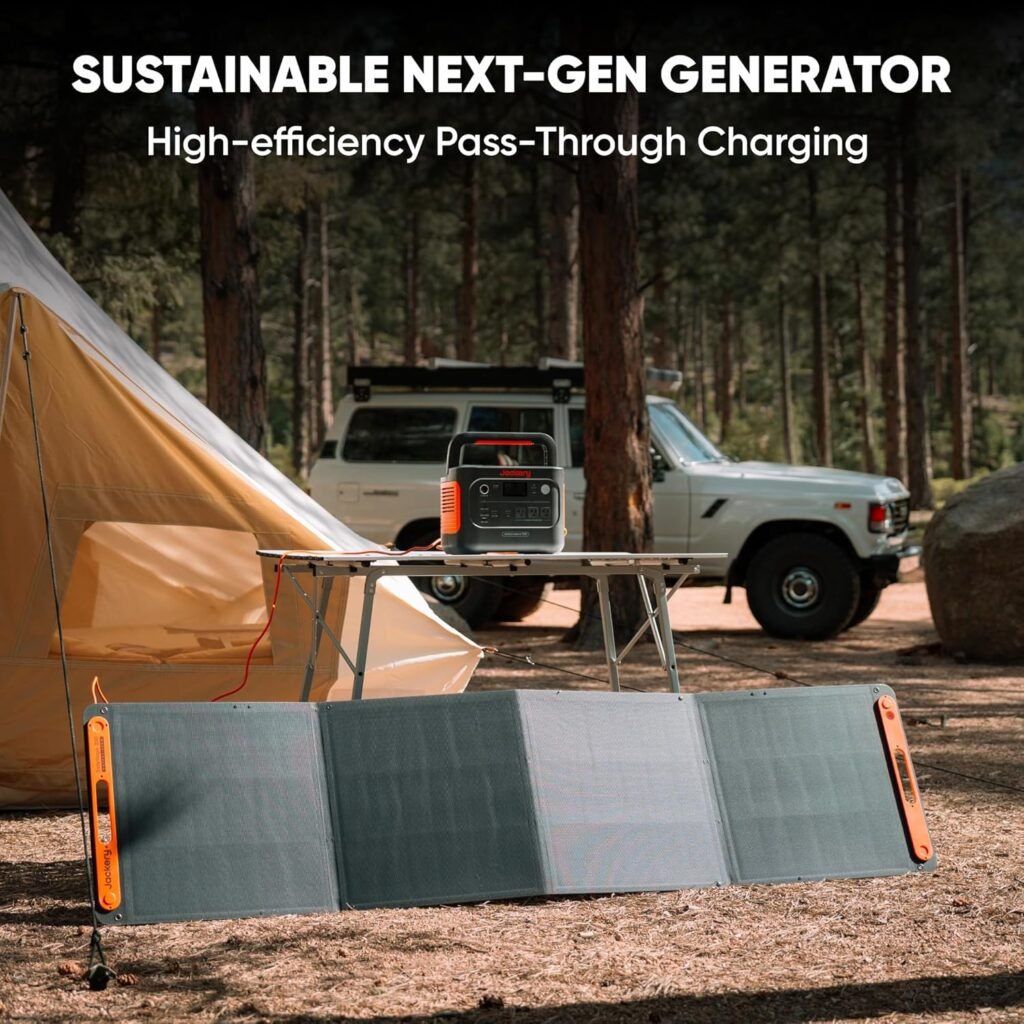
Have we ever wished our camping setup, road trip, or emergency kit had the same kind of reliable power we enjoy at home—without the noise, fumes, and hassle of a gas generator?
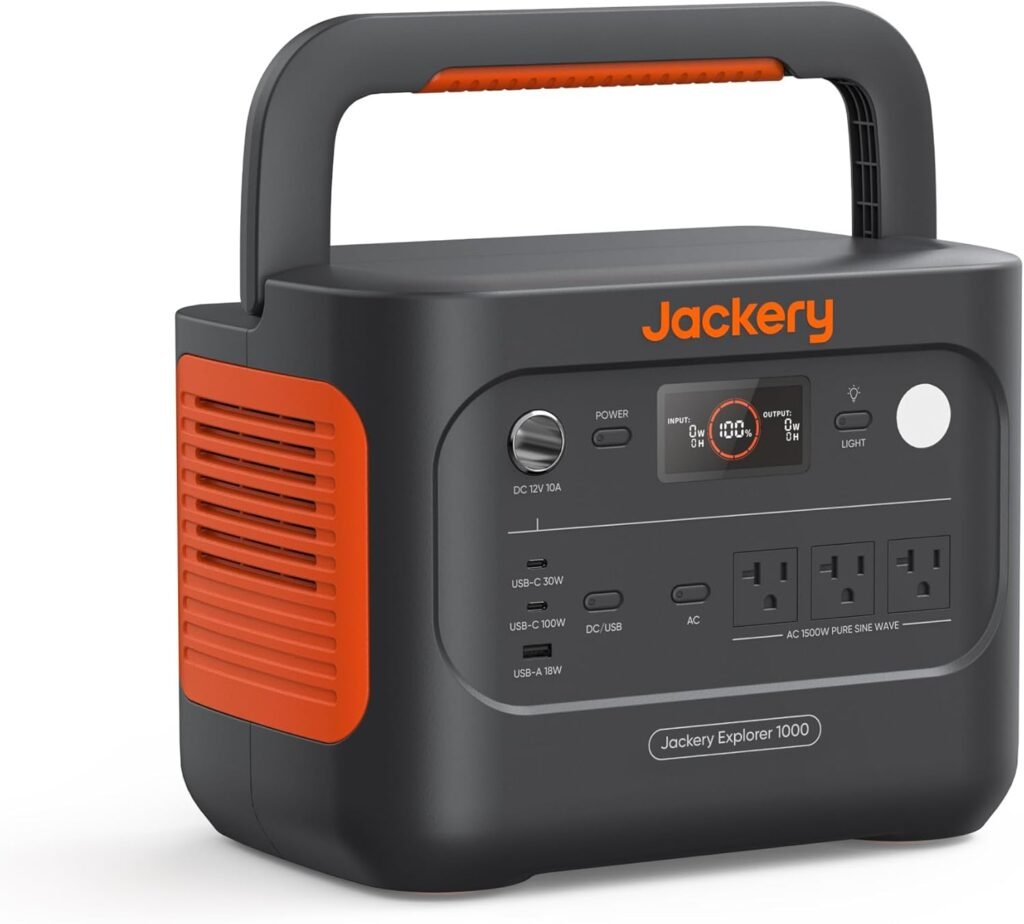

What Is the Jackery Explorer 1000 v2 Portable Power Station?
The Jackery Explorer 1000 v2 Portable Power Station (2024 New, Renewed) is a high-capacity, LiFePO4-based, battery-powered generator. It is designed to keep our devices and small appliances running wherever we go, from campsites and RV trips to off-grid cabins and power outages.
With a 1070Wh battery, 1500W AC output, multiple ports, and ultra-fast 1-hour charging, this model aims to blend serious performance with the convenience of a compact, user-friendly design.
Key Specifications at a Glance
To get a clear view of what this unit actually offers, we find it helpful to look at the core specs in a simple breakdown. This gives us a solid baseline before we talk about real-world use.
| Feature | Specification / Description |
|---|---|
| Product Name | Jackery Explorer 1000 v2 Portable Power Station (2024, Renewed) |
| Battery Type | LiFePO4 (Lithium Iron Phosphate) |
| Battery Capacity | 1070Wh |
| AC Output | 1500W continuous, 3000W surge, pure sine wave |
| USB-C Ports | 2 × USB-C (PD fast charging) |
| USB-A Ports | 1 × USB-A |
| DC Car Port | 1 × 12V car outlet |
| AC Outlets | 3 × pure sine wave AC ports |
| Charging Time (AC) | 0–100% in ~1 hour (super charging mode) |
| Lifespan | Up to 4000 cycles, ~70% capacity remaining after that |
| Weight | Approx. 23.8 lbs (lightweight for the capacity) |
| App Support | Yes, Jackery App (mode switching, monitoring, energy saving) |
| Noise Level | Around 30 dB in quiet overnight charging mode |
| Certification & Safety | UL certification, ChargeShield 2.0, fire and shock resistance |
| Use Cases | Camping, RV trips, off-grid living, backup power, emergencies |

Design and Build Quality
We like to start by looking at how a product feels in actual use: size, weight, and overall build. The Explorer 1000 v2 aims to pack substantial capacity into a compact and portable body.
Compact Yet Sturdy Construction
The unit weighs about 23.8 lbs, which is relatively light for over 1000Wh of LiFePO4 capacity and a 1500W inverter. We can carry it with one hand using the ergonomic handle, and lifting it in and out of a car trunk or RV compartment feels manageable for most adults.
The casing feels rugged enough for outdoor use while still being suitable for indoor placement. It does not feel flimsy, and the overall fit and finish look well thought out.
Port Layout and Usability
All the ports and buttons are clearly labeled and placed on the front of the unit. This front-facing design makes it easier to manage cables while the station sits on the ground, a table, or an RV counter.
We appreciate having the AC, DC, and USB ports separated into sections, which reduces clutter and helps us identify the right connection quickly, even in low light.
Battery Technology: Why LiFePO4 Matters
Battery chemistry can dramatically shape our long-term experience with a power station. The Explorer 1000 v2 uses LiFePO4, which offers major benefits over older lithium-ion designs.
Longevity and Cycle Life
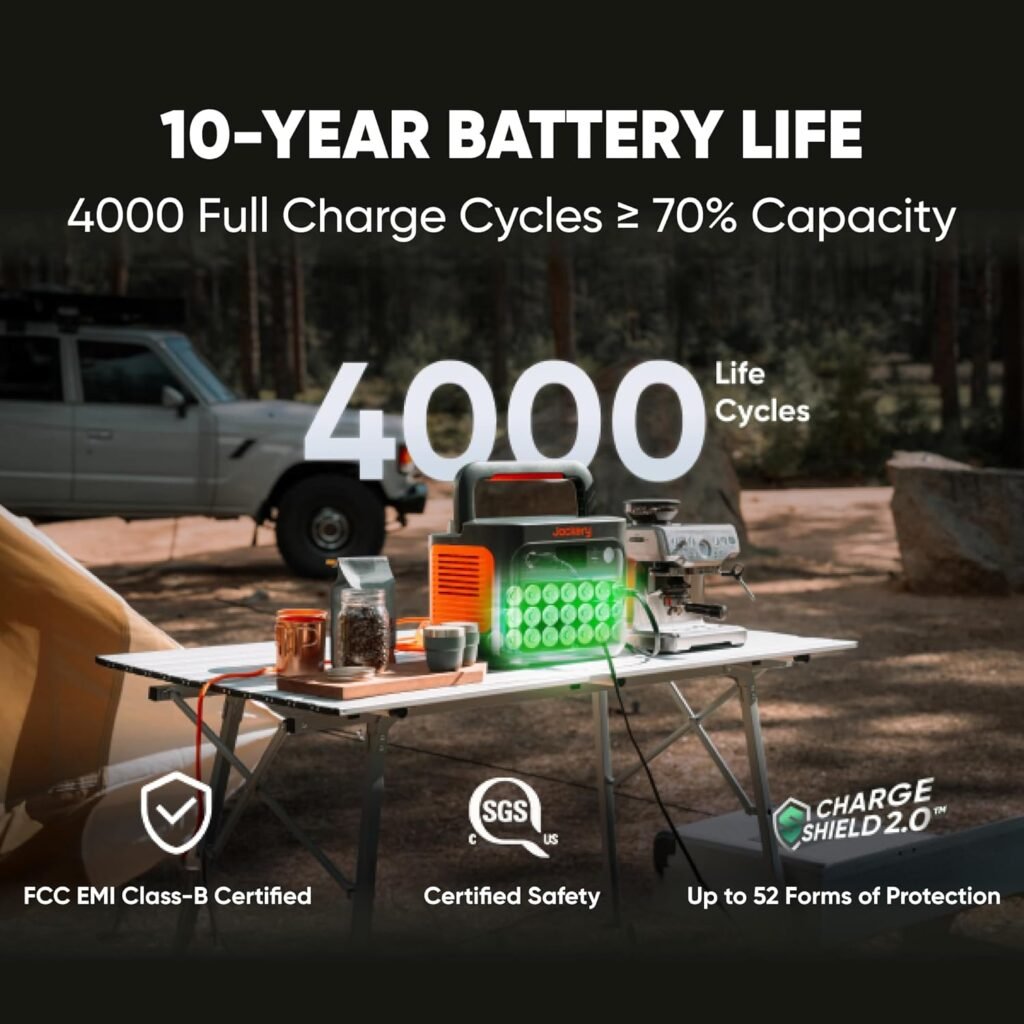
Jackery rates this model for up to 4000 charge cycles while maintaining about 70% of its original capacity. That is a significant improvement over many older portable power stations, which often offer around 500–800 cycles before noticeable degradation.
For us, this means:
- We can use the station regularly (even daily) for years before capacity becomes a concern.
- Our investment holds its value longer, especially if we rely on it for frequent off-grid use or as an everyday backup.
Safety and Stability
LiFePO4 chemistry is known for better thermal stability and lower risk of overheating or thermal runaway. Combined with Jackery’s ChargeShield 2.0 and UL certification, we get added peace of mind when running this power station indoors, in an RV, or around family and pets.
We feel more comfortable leaving it charging overnight or running critical devices during emergencies, knowing the safety systems are designed to be robust.
Power Output: What Can We Actually Run?
Specs are nice, but what matters most is whether this power station can handle the devices we care about. The Explorer 1000 v2 aims to be strong enough to run real-world appliances, not just phones and laptops.
1500W AC Output with 3000W Surge
With 1500W continuous AC output and a 3000W surge capability, we can power many common household and outdoor devices:
- Small to mid-size refrigerators
- Portable AC units (within wattage limits)
- Electric pots or small induction cookers
- Coffee makers (many are around 700–1200W)
- CPAP machines
- Power tools like drills or small saws
- TVs, gaming consoles, and routers
The pure sine wave AC output ensures sensitive electronics (like laptops, medical devices, and some audio gear) run smoothly without the risk of strange noise or damage from “dirty” power.
Realistic Use Scenarios
In a realistic scenario, we might use the Explorer 1000 v2 to:
- Keep a fridge cycling during a power outage.
- Run a CPAP machine overnight.
- Power a portable fan, LED lights, and charge phones during camping.
- Use a laptop, monitor, and modem/router for a remote work setup.
We do need to be mindful of the total wattage at any given time. For instance, running a high-draw appliance (like a coffee maker) at the same time as a fridge plus multiple chargers might hit or exceed that 1500W limit. But with some planning, we can keep most setups comfortably within range.
Capacity and Runtime: How Long Will It Last?
The 1070Wh capacity gives us solid runtime for many devices, but actual duration will vary based on wattage. A quick way to estimate is to divide 1070Wh by the appliance’s watt draw, and then factor in some efficiency loss (usually around 10–20%).
Example Runtime Estimates
To give a rough idea, here are ballpark runtimes, assuming around 85–90% efficiency:
| Device / Load | Approx. Power Use | Approx. Runtime on 1070Wh* |
|---|---|---|
| Smartphone (10–15W while charging) | 10–15W | Dozens of full charges |
| Laptop (standard, working use) | 50–60W | ~15–18 hours |
| CPAP (with humidifier off) | 30–60W | ~14–28 hours |
| Mini fridge (cycling) | 60–100W average | ~9–15 hours |
| 32″ LED TV | 40–60W | ~15–22 hours |
| Small portable fan | 20–40W | ~22–44 hours |
| Coffee maker (1000W, intermittent) | 1000W | ~45–55 minutes of full-on brewing time |
| Low-power LED string lights (10W) | 10W | ~90 hours |
*Actual results will vary based on efficiency, temperature, and how devices cycle on and off.
These estimates highlight that the Explorer 1000 v2 is particularly strong at running low-to-moderate loads for extended periods and higher-wattage devices for shorter bursts.
Fast Charging: 0–100% in About an Hour
One of the standout features of the Explorer 1000 v2 is its ultra-fast AC charging capability. This directly impacts how convenient this power station is in real life.
1-Hour Super Charging
Jackery claims we can charge from 0% to 100% in about 1 hour using AC power. For us, that means:
- We can top up the battery quickly between adventures.
- In a rolling blackout scenario, we can recharge rapidly when the grid comes back on.
- On the road, we can plug in at a stop or campground and replenish the battery without waiting all day.
This 7.5-times-faster charging (compared with the previous Explorer 1000 model) makes a big difference, especially if we rely on the station frequently and want minimum downtime.
Multiple Charging Modes for Battery Health
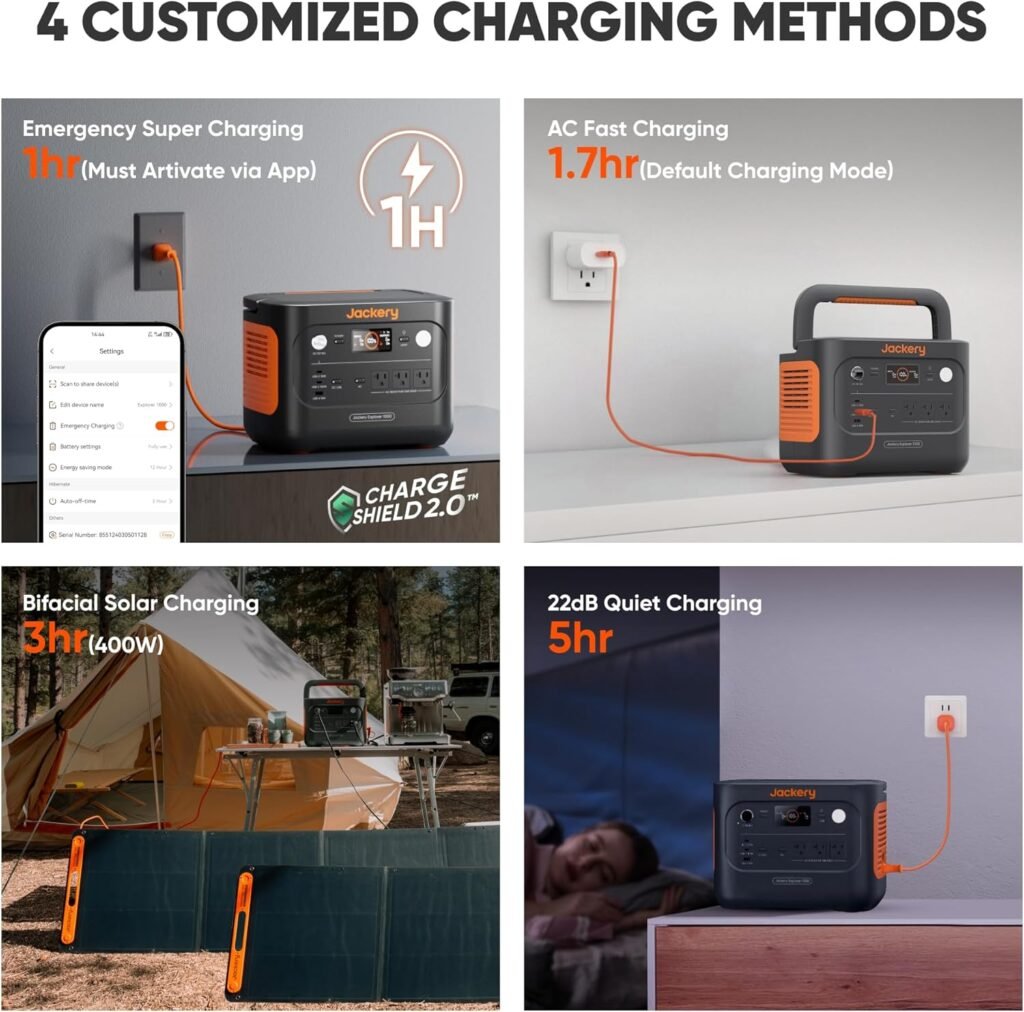
The Jackery App allows us to switch between:
- 1-hour super charging (max speed)
- 1.7-hour fast charging (more gentle on the battery)
- A quiet mode with around 30 dB noise level (better for overnight charging)
This kind of flexibility helps us balance urgency and long-term battery health. If we’re not in a hurry, we can choose a slower, less stressful charging profile.
Port Selection and Charging Options
The Explorer 1000 v2 is designed to handle a mix of modern electronics and traditional appliances. We like the port variety because it lets us leave some adapters at home.
AC, DC, and USB Options
We get:
-
3 × AC outlets (pure sine wave)
Great for small appliances, chargers, and anything that needs a standard wall plug. -
2 × USB-C ports (PD fast charging)
Perfect for modern devices like laptops, tablets, smartphones, and some cameras. We can often charge directly without a bulky power brick. -
1 × USB-A port
Useful for older devices, small gadgets, or anything that still uses standard USB. -
1 × DC car port (12V)
Handy for car coolers, air compressors, or devices designed for cigarette-lighter outlets.
This mix allows us to charge multiple devices simultaneously—phone, laptop, fridge, and lights, for instance—without constantly swapping cables.
PD Fast USB-C Charging
USB-C PD (Power Delivery) is especially helpful for modern laptops and tablets. Instead of bringing a brick and plugging it into AC, we can go straight from USB-C to USB-C. This is not just convenient; it can also be more efficient and reduce clutter.
Smart App Control and Monitoring
We appreciate when a power station does not behave like a black box. The Jackery App brings some modern smart controls to the Explorer 1000 v2.
Mode Switching and Settings
Within the app, we can:
- Switch between super charging (1-hour), fast charging (1.7-hour), and quieter modes.
- Enable energy-saving options (for example, turning off output automatically when no load is detected).
- Access customizable settings that help us tune performance and battery health.
This is easier than hunting through buttons and cryptic codes on a small screen.
Real-Time Power Usage Information
The app gives us:
- Current input power (how fast we’re charging).
- Current output power (how much we’re using).
- Remaining battery percentage and sometimes approximate runtime.
This real-time data makes it much easier to plan our power usage—especially off-grid, where we might need to decide whether to keep the fridge running all night or prioritize medical devices or communications.
Noise Levels and Indoor Use
One concern many of us have with power stations is fan noise, especially if we use them indoors or when we’re sleeping nearby.
Quiet Overnight Mode
The Explorer 1000 v2 includes a quiet charging mode rated at about 30 dB. That is roughly the sound of a quiet library or gentle whisper. In practical terms, this means:
- We can charge the unit overnight without it disturbing sleep too much.
- We can run it in a small RV or camper without feeling overwhelmed by fan noise.
Fans will still ramp up under heavier loads, but having a dedicated quiet mode for charging is a thoughtful touch for indoor or nighttime use.
Portability and Real-World Carrying
Even the most powerful power station is no good to us if it’s too awkward to move. At 23.8 lbs, the Explorer 1000 v2 sits in a sweet spot between compact units and heavy “power bricks.”
Carrying and Transport
The built-in ergonomic handle makes it straightforward to lift with one hand. For short distances—like moving from car to campsite or from one room to another—the weight feels manageable.
For those of us who plan to carry it frequently over longer distances (like deep into a campsite on foot), we might still want a cart or pack, but for most users the weight and size are very reasonable for the capacity and power it provides.
Fit in Vehicles and Storage
The rectangular, compact design makes it easy to:
- Fit under RV benches or beds.
- Tuck into car trunks alongside camping gear or luggage.
- Store in a closet or utility room at home for emergencies.
We do not have to design a whole storage system around it; it slides neatly into existing spaces.
Use Cases: Where This Power Station Really Shines
Different buyers have different priorities. The Explorer 1000 v2 is versatile enough to serve several core scenarios well.
Outdoor Camping and Overlanding
For camping, we can expect to:
- Charge phones, tablets, cameras, and drones.
- Run LED lights, a fan, or a small electric blanket.
- Use a portable fridge or cooler to keep food and drinks fresh.
- Occasionally brew coffee or cook with a small electric appliance.
The ability to recharge quickly (while at a campsite with power, or through optional solar panels) makes it a reliable hub for multi-day trips.
RV and Van Life
For RVers and van dwellers, the Explorer 1000 v2 can:
- Act as a secondary power bank to relieve the house batteries.
- Power AC devices without always wiring directly into the rig.
- Provide backup power when shore power is unavailable or unreliable.
The 1070Wh capacity and 1500W output cover many typical RV scenarios, from running an electric kettle to powering entertainment systems.
Off-Grid Living and Cabins
In off-grid cabins or tiny homes, we can use this power station to:
- Power small essentials when solar or other systems are limited.
- Keep lights and communications running.
- Serve as a backup for more permanent battery banks.
Its LiFePO4 longevity makes it attractive for regular off-grid use, as we can recharge it daily for many years.
Emergency and Backup Power
For home emergency use, the Explorer 1000 v2 can:
- Keep a fridge running during outages (for a limited time).
- Power a CPAP machine, fans, and essential lights.
- Charge phones, radios, and laptops for communication and work.
Pairing it with solar panels can extend its usefulness in prolonged outages. Even without solar, the fast recharge time allows us to quickly top it up when power briefly returns.
Sustainability and “Next-Gen” Power Claims
Jackery markets this as “next-gen sustainable power,” and there are a few angles to that.
Longer Lifespan, Less Waste
A 4000-cycle battery that still retains about 70% capacity at the end of its rated life is a big improvement over older chemistries. We are less likely to need a replacement unit after just a few years of steady use.
From a sustainability perspective, that means:
- Fewer units disposed of over time.
- Less frequent manufacturing and shipping for replacements.
- A better long-term return on our investment.
Solar Readiness (As a Solar Generator)
While this listing focuses on the power station itself, Jackery’s ecosystem typically supports solar panel input (sold separately). Used with panels, the Explorer 1000 v2 can function as a solar generator:
- We can charge it during the day using sunlight.
- We can run our essentials at night using the stored energy.
This reduces reliance on fossil fuels and can make off-grid and emergency setups more sustainable and self-sufficient.
Safety Features and Certification
Safety is crucial when we’re dealing with high-capacity lithium batteries. The Explorer 1000 v2 integrates several layers of protection.
ChargeShield 2.0 and UL Certification
ChargeShield 2.0 is Jackery’s advanced charging protection system, aimed at:
- Managing heat during fast charging.
- Preventing overvoltage and current surges.
- Extending the battery’s usable life.
The UL certification indicates the unit meets rigorous safety and performance standards. This is particularly important for:
- Indoor use around kids and pets.
- Medical devices like CPAP machines.
- Long-term unattended charging.
Fire and Shock Resistance
The materials and internal architecture are designed for enhanced fire and shock resistance. That does not mean we should treat it carelessly, but it gives extra confidence if we store it in a garage, RV, or potentially hot environment.
Renewed Condition: What Does It Mean for Us?
This particular listing is marked as “Renewed.” For many of us, that raises two main questions: reliability and value.
What “Renewed” Typically Involves
While the specifics can depend on the seller and marketplace, a renewed unit usually means:
- The device has been inspected and tested to ensure proper function.
- Any defective parts have been replaced.
- The product often comes with some form of warranty or satisfaction guarantee.
We are essentially getting a product that has been brought back to near-new condition, at a lower price than a brand-new unit.
Pros and Cons of Choosing Renewed
Pros:
- Lower cost compared to a brand-new model.
- Still benefits from the same core technology (LiFePO4, fast charging, high output).
- Environmentally friendlier than buying brand new every time.
Cons:
- Cosmetic blemishes might be present (depending on grading).
- Warranty length or terms might differ from a brand-new unit.
- Availability can be more limited or variable.
For many users, especially those wanting premium performance at a better price, a renewed Explorer 1000 v2 can be an attractive balance.
Pros and Cons Overview
To summarize strengths and trade-offs, it helps to list them out clearly.
What We Really Like
- Fast 1-hour AC charging that genuinely changes how convenient it is to use the unit.
- LiFePO4 battery with up to 4000 cycles for a long service life.
- 1500W AC output and 3000W surge, enough to comfortably run many household and camping devices.
- Solid port selection with 3 AC outlets, 2 USB-C PD, 1 USB-A, and 1 DC car port.
- Smart app control for real-time monitoring and custom charging modes.
- Compact and reasonably lightweight for its capacity (23.8 lbs).
- Quiet charging mode (~30 dB), suitable for indoor and overnight use.
- Safety credentials, including UL certification and ChargeShield 2.0 protection.
Potential Drawbacks to Consider
- Not suitable for very heavy loads like large AC units or high-power electric heaters for extended times.
- Renewed condition may mean shorter or different warranty coverage depending on the vendor.
- Solar panels often sold separately, which can increase the overall system cost if we want a full solar generator setup.
- Weight, while reasonable for capacity, may still be a bit heavy for some users to carry long distances.
Who Is the Jackery Explorer 1000 v2 Best For?
Understanding whether a product fits our own use case is just as important as knowing its specs.
Ideal Users
We think this power station is particularly well suited for:
- Car, RV, and van campers who want serious power without a large, installed system.
- Homeowners needing a reliable backup for short-to-medium outages, especially for fridges, CPAP machines, and communication devices.
- Off-grid cabin users who want a portable, long-lasting power hub.
- Outdoor enthusiasts and hobbyists who bring electronics, coolers, and work devices on the road.
- Users concerned about battery longevity and safety, who value LiFePO4 and higher cycle counts.
Less Ideal Users
It might not be the best fit for:
- Those who need to run very high-wattage appliances (large air conditioners, big power tools, full-size electric ovens) for long periods.
- People who only need to charge a few phones or lights, where a smaller, lighter, and cheaper power bank might be enough.
- Users seeking a permanent, whole-house backup system, where large stationary batteries and inverters make more sense.
Practical Tips for Getting the Most Out of It
Once we’ve decided this power station suits our needs, there are a few practical habits that can help us use it effectively and extend its life.
Battery Care and Best Practices
- Avoid leaving it at 0% for long periods; recharge after use.
- Use slower charging modes (like the 1.7-hour option) when we are not in a rush.
- Store it in a cool, dry place, away from extreme heat or freezing temperatures.
- Top it up periodically if stored long-term, so the battery does not sit at very low charge for months.
Load Management in Real Use
- Try to group high-wattage tasks (like boiling water or brewing coffee) and then turn them off to conserve power for low-draw devices.
- Use LED lighting and efficient appliances where possible to maximize runtime.
- Monitor consumption via the app so we can adjust before we accidentally drain the battery too quickly.
Final Thoughts on the Jackery Explorer 1000 v2 (2024, Renewed)
The Jackery Explorer 1000 v2 Portable Power Station (2024 New, Renewed) brings a strong combination of modern battery technology, rapid charging, and practical output capacity into a compact, portable package.
We get a 1070Wh LiFePO4 battery with up to 4000 cycles, 1500W AC output, multiple USB and DC ports, and smart app control—all while keeping weight under 24 lbs. For camping, RVs, off-grid setups, and emergency backup, it offers a thoughtful balance between power and portability.
Choosing a renewed unit gives us access to this advanced feature set at a potentially lower cost, with the usual trade-offs that come with refurbished gear. For many of us who want a reliable, long-lasting power station without paying full premium price, that can be a compelling option.
In our view, the Explorer 1000 v2 stands out as a well-rounded, future-focused portable power station that fits neatly into our adventures, our homes, and our emergency plans—without feeling like a compromise in performance or safety.
Disclosure: As an Amazon Associate, I earn from qualifying purchases.