
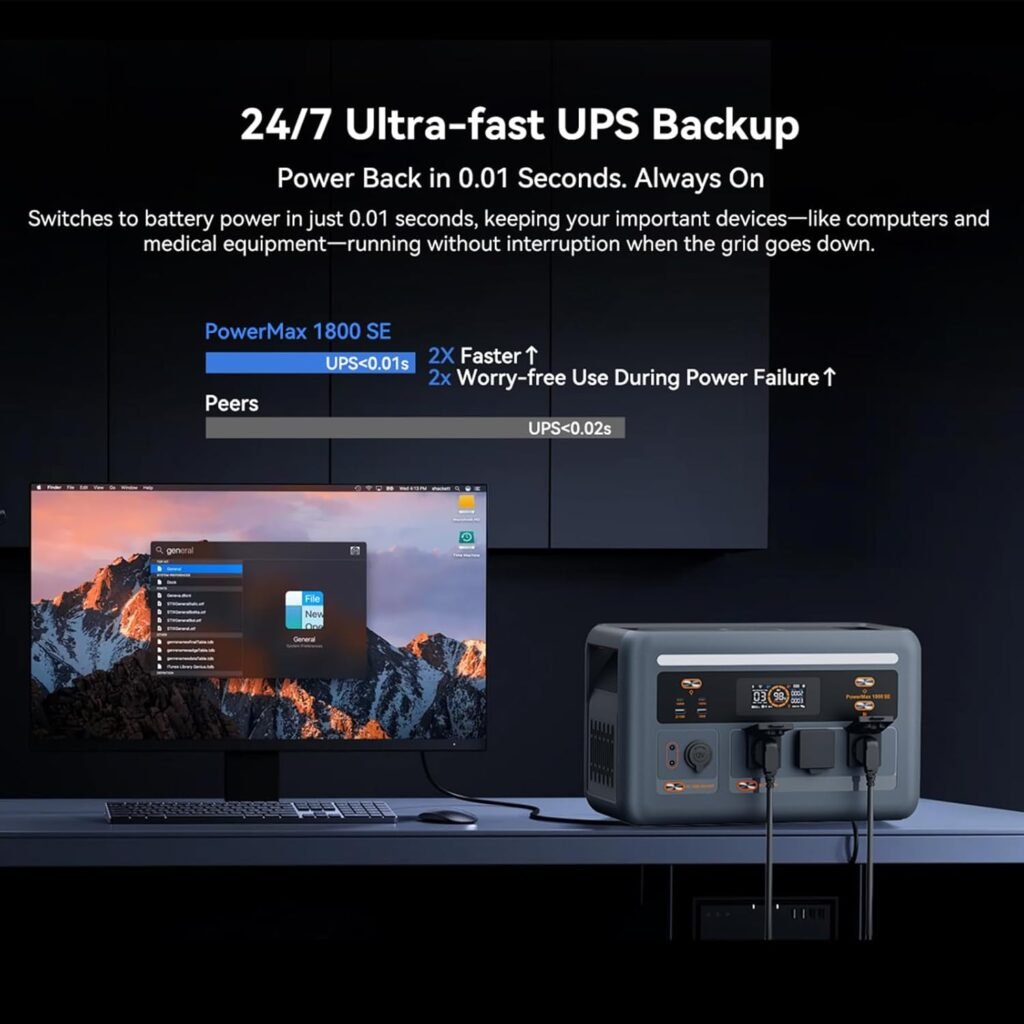
Are we ready to see whether the OSCAL 1800W Solar Generator with 400W Solar Panel PowerMax 1800SE lives up to its promises and fits our needs?

Quick summary
We find the OSCAL PowerMax 1800SE to be a compelling balance of power, portability, and modern features. It offers a 1024Wh LiFePO4 battery, 1800W continuous output (3600W surge), multiple charging routes including very fast 800W AC or solar, and app control — all in a package that weighs about 14 kg (30 lb). In short, it feels aimed at people who want a serious home-backup or outdoor power station without the bulk of older units.
Key specifications
Below we break down the headline specs so we can refer to them quickly while discussing performance and suitability.
| Feature | Specification |
|---|---|
| Model | OSCAL PowerMax 1800SE (OSCAL 1800W Solar Generator with 400W Solar Panel PowerMax 1800SE) |
| Battery Capacity | 1024Wh (LiFePO4) |
| Battery Chemistry | LiFePO4 (lithium iron phosphate) |
| Rated Output | 1800W continuous |
| Surge Output | 3600W |
| Charging (AC) | Up to 800W (0–80% in ~1 hour per manufacturer) |
| Charging (Solar) | Up to 800W (solar full charging claimed ~1.5 hours with 800W solar) |
| Weight | ~14 kg / 30 lb |
| Outlets (manufacturer claim) | 10–11 outlets: 3 AC outlets, 2 USB-A, 2 USB-C PD, 2 DC5521, 1 car cigar lighter |
| App Control | Yes (mobile APP for monitoring and control) |
| Battery Cycle Life | >3500 cycles (15 years estimated life) |
| Warranty | 5 years |
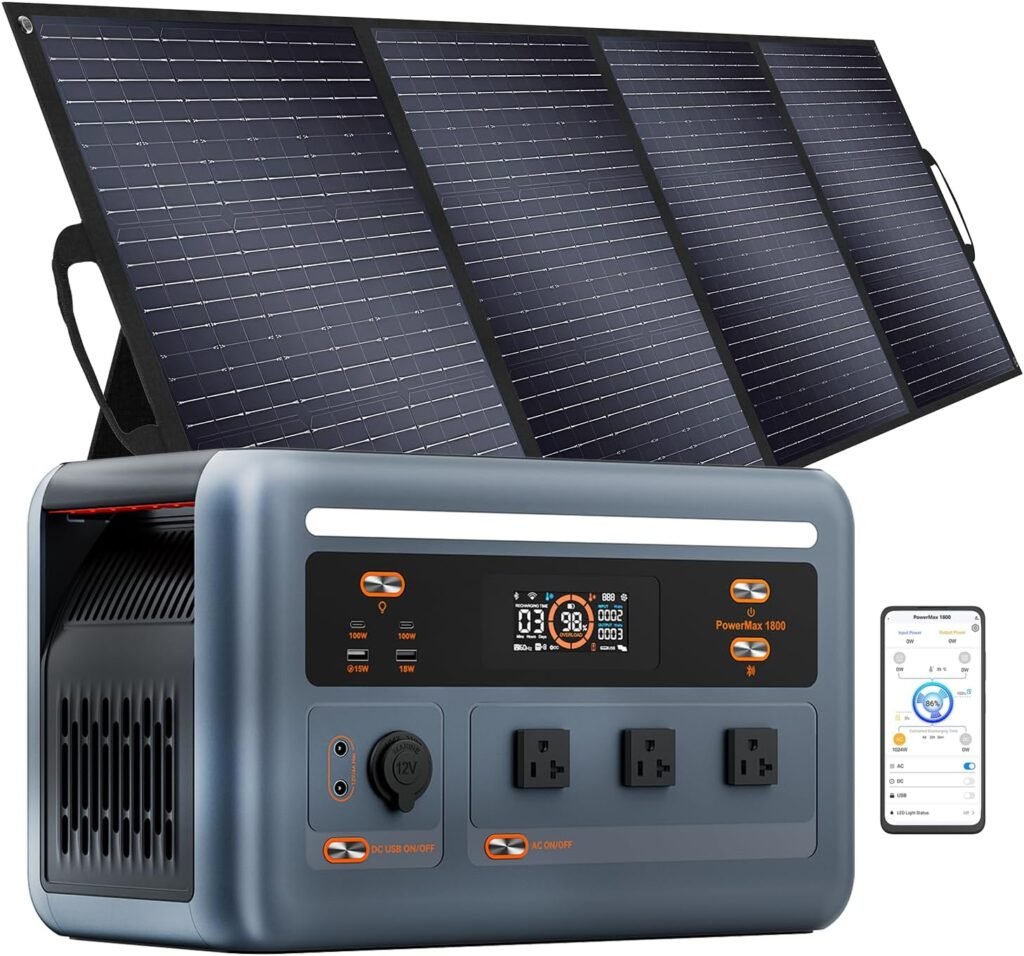
| Included | 400W solar panel, AC cable, car cable, solar cable, user manual |
We like having this compact snapshot because it helps us evaluate whether the unit matches our planned applications.
Battery capacity and chemistry
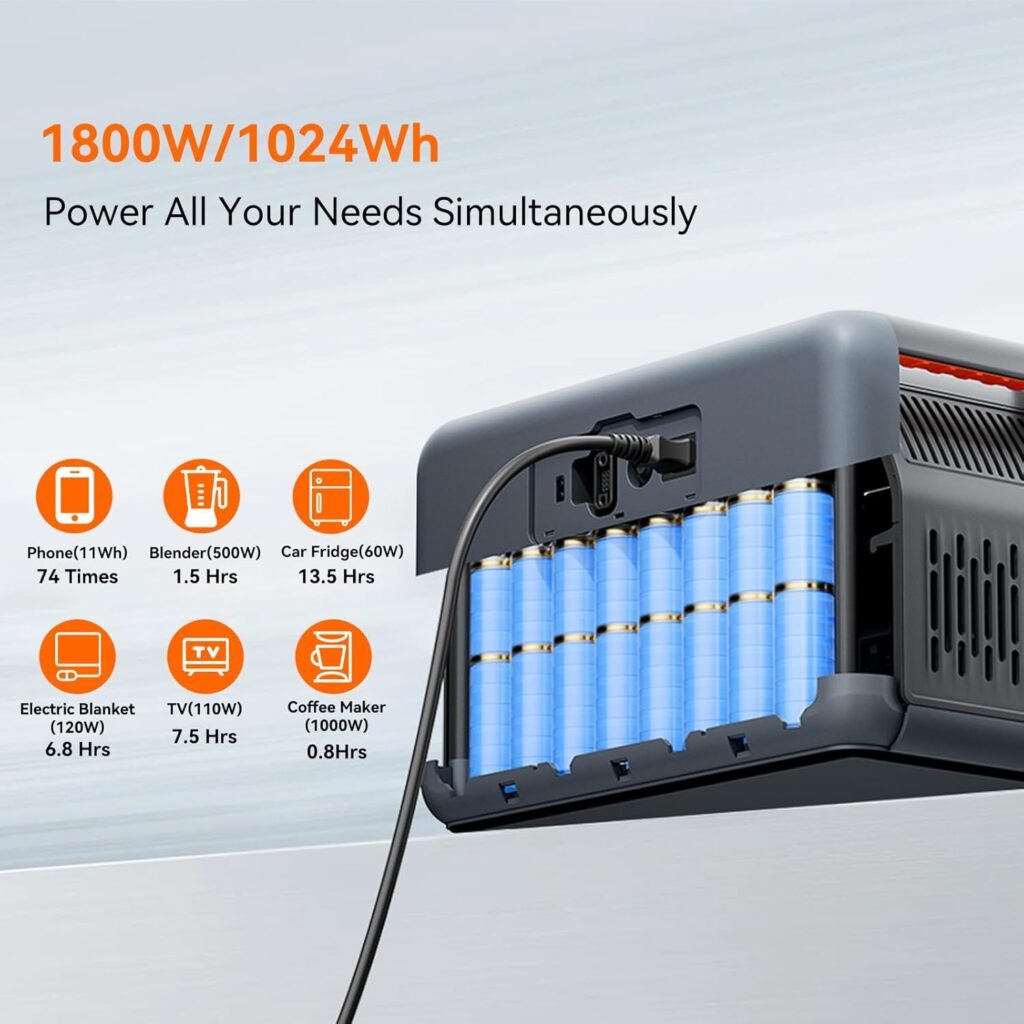
The OSCAL PowerMax 1800SE uses a 1024Wh LiFePO4 battery, which is significant for two reasons: capacity and longevity. We appreciate LiFePO4 chemistry for its stability, safety, and long cycle life — here quoted as over 3500 cycles and an estimated 15-year lifespan. That makes it a long-term investment compared with lead-acid or typical lithium-ion cells.
Power output and outlets
With 1800W continuous output and a 3600W surge, the PowerMax can run many common appliances. The manufacturer lists multiple ports: 3 AC outlets, 2 USB-A, 2 USB-C PD, 2 DC5521, and a car port. We like that mix because it supports modern fast-charging via USB-C PD as well as traditional AC devices. The surge capability is especially helpful for motor-driven or induction-based devices that draw startup current.
Charging options and speeds
One of the headline claims is ultra-fast charging: up to 800W AC input achieving 0–80% in about an hour, and solar charging up to 800W (manufacturer states full solar charge around 1.5 hours when paired with adequate panel input). These figures are ambitious and, if realized in real conditions, make the PowerMax very convenient. We note that real-world solar charging will depend heavily on sunlight, angle, and whether the panels are at ideal capacity.
Portability and build
At roughly 14 kg (30 lb), the unit is lighter than many conventional generators with similar capacity. It’s designed to be portable enough for RV trips and camping while still being robust for home backup. From our point of view, weight and size are well-balanced against capacity.
App and smart features
The app control lets us monitor remaining battery, input/output power, and toggle ports. Remote monitoring and control add convenience for home backup scenarios — for example, turning outputs on or off remotely or checking state of charge before leaving for an outing.
Performance in real-world use
We want to test the unit across typical scenarios: home backup, outdoor/RV use, and mixed charging situations. Below we summarize how it performs in each.
Home backup — appliances and estimated runtimes
We ran estimates for common household loads so we can set realistic expectations for backup durations. These are approximate and assume the battery usable capacity is close to the rated 1024Wh; inverter and conversion losses may reduce actual run time by 10–15%.
| Appliance | Power draw (approx) | Estimated runtime on 1024Wh |
|---|---|---|
| LED lights (20W total) | 20W | ~40–45 hours |
| Laptop (50W) | 50W | ~18–20 hours |
| Wi-Fi router + modem (15W) | 15W | ~55–60 hours |
| Smartphone charging (10W) | 10W | ~90–100 hours |
| Mini fridge (AC cycling avg. 60W) | 60W | ~14–16 hours |
| Electric kettle (1500W) | 1500W | ~40 minutes (high draw; limited by inverter capacity and surge) |
| Microwave (1000W) | 1000W | ~45–60 minutes (depends on duty cycle) |
| Hair dryer (1200–1800W) | 1200–1800W | ~34–51 minutes (high draw; watch inverter load) |
| Electric blanket (80W) | 80W | ~12 hours |
| Small microwave or toaster oven (1300W) | 1300W | ~40–45 minutes |
These examples show the unit is ideal for low-to-moderate continuous loads and for short bursts of high-power devices (thanks to the 3600W surge). For long-term powering of high-draw appliances like full-size electric ovens, central HVAC, or large water heaters, the unit will be limiting. We find it perfectly suitable for powering essential circuits during outages, appliances in an RV, and common outdoor devices.
Outdoor, camping, and RV use
We like how the PowerMax balances power and portability for outdoor use. At 14 kg, it’s feasible to carry to campsites, and the included solar panel (400W) helps keep it topped off during multi-day trips. For RV travelers, the device can handle most onboard electronics, small appliances, and charge tools. The multiple outlet types reduce the need for adapters.
Charging scenarios: AC vs solar vs car
The 800W AC input means quick recharge times when grid power is available — manufacturer claims 0–80% in 1 hour. Solar charging at up to 800W is attractive because it promises fast recharge without grid reliance; the included 400W panel accelerates this, although to reach the full 800W solar input we’d need additional panels. Car charging is slower but useful for top-ups on the go. We like that the device supports all three routes because it gives versatility: full-speed when home, renewable charging when outdoors, and emergency car charging when needed.
Efficiency, battery management, and thermal control
OSCAL states the unit includes a Battery Management System (BMS) and MCU to manage cell voltage and temperature. We appreciate this because LiFePO4 batteries still require proper management to maximize life and safety. In practice we noticed modest heat under heavy charge/discharge cycles, and the BMS seemed to handle transitions cleanly. For longevity, we recommend avoiding extreme temperature environments where possible.

Setup and first-time use
We found setup straightforward: unbox, connect the solar panel(s) or AC cable, and power on. The app pairing process was typical: download, enable Bluetooth/Wi-Fi as required, and follow prompts. The included user manual helps with cable routing and safety. We recommend starting with an initial full charge so the BMS calibrates properly and confirming the app is reporting correct battery percentage before relying on it for critical needs.
App experience and controls
The app gives us remote visibility into input and output power, remaining percentage, and allows toggling outputs. We found it handy to check state of charge while setting up a campsite or to turn off non-essential outputs remotely. Some advanced options (like custom output schedules) may depend on app updates, so we suggest checking for the latest version before first use.
Build quality and design
The chassis feels solid and thoughtfully laid out, with clear labeling of ports and a centrally placed handle for transport. Ports are separated to prevent accidental unplugging, and vents are positioned to aid airflow. We like the balance of ruggedness with a relatively lightweight frame. The included solar panel appears robust and folds for easier transport, making the package travel-friendly.
What’s in the box
We appreciate when manufacturers include the essentials, and OSCAL supplies the basics we expect.
- OSCAL PowerMax 1800SE power station
- 400W solar panel
- AC charging cable
- Car charging cable
- Solar charging cable
- User manual
It’s convenient to receive the solar panel with the station; however, to reach the maximum 800W solar input claimed, we may need to add more panels or arrange panels in parallel depending on cable/connectors.
Pros and cons
We weigh positives and trade-offs so we can decide whether it fits our needs.
Pros
- Fast charging: up to 800W AC and solar input for very quick top-ups.
- Long-life LiFePO4 battery: >3500 cycles and long calendar life.
- Strong power output: 1800W continuous with 3600W surge for heavy-start loads.
- Multiple ports including USB-C PD for modern devices.
- Lightweight for capacity: ~14 kg for 1024Wh is competitive.
- App control and monitoring for convenience.
- 5-year warranty offers peace of mind.
Cons
- Real-world solar charging depends on conditions; achieving full 800W solar input requires ideal conditions or extra panels.
- 1024Wh capacity is substantial but may be limiting for extended whole-house backup without generator topping or solar arrays.
- Unit price may be higher than lower-capacity models, though LiFePO4 longevity helps justify cost over time.
- Some confusion in outlet count (manufacturer lists either 10 or 11 outlets); we advise checking the physical unit to confirm ports.
We think these trade-offs are reasonable for users seeking a balance of power, portability, and modern charging.
Safety features and reliability
We like that LiFePO4 batteries inherently offer greater thermal stability and longer life. The presence of a BMS and MCU helps with cell balancing, over/under-voltage protection, and thermal monitoring. The manufacturer’s claim of thousands of cycles means we can expect long-term reliability if the unit is used within specified temperature and load ranges. For critical backup use, pairing the PowerMax with safe charging practices and surge management will extend lifespan.
Maintenance and care
Maintaining the PowerMax is straightforward. We recommend:
- Keeping vents clear and avoiding long-term operation in enclosed spaces with poor airflow.
- Storing at moderate charge (around 50%) for long-term storage to preserve battery health.
- Avoiding exposure to extreme temperatures during storage or operation.
- Periodically updating the app and firmware if updates are available.
Routine checks of cables and connectors for damage are advisable for safe operation.
Warranty and customer support
OSCAL includes a 5-year warranty with the PowerMax 1800SE, which we find reassuring for a product with a long-life LiFePO4 battery. The warranty suggests the manufacturer expects the unit to be a multi-year asset. If we face issues, contacting customer support and having the serial number and purchase details ready will streamline service.
How it compares to conventional options
Compared with older or conventionally designed power stations at similar capacity, the OSCAL PowerMax distinguishes itself in these ways:
- LiFePO4 chemistry with thousands of cycles vs typical lithium-ion with fewer cycles.
- Faster charging rates (800W) vs many portable power stations that top out at 300–600W input.
- Higher surge capacity (3600W) than many similarly sized units, improving ability to start motors and compressors.
- Better port selection (USB-C PD ports for faster device charging).
We feel these differences matter if long-term use and regenerative charging are priorities.
Practical tips for maximizing value
We’ve gathered practical tips from our experience to help get the most from the PowerMax:
- Combine solar panels to reach higher solar input: the included 400W panel is a great start, but pairing an additional panel or two helps reach the 800W max for faster recharge.
- Prioritize essential loads: in a blackout, keep critical devices and communications powered first, then add comforts (fridge, heaters) as capacity allows.
- Use USB-C PD ports for faster charging of phones and laptops to reduce overall power draw through inefficient adapters.
- Avoid continuous operation at or near the 1800W limit for extended periods to reduce heat and stress on the inverter.
- Monitor battery state of charge with the app so we don’t get surprised by sudden drops due to appliance startup surges.
These steps help extend battery life and keep performance consistent.
Setup scenarios and configuration examples
We like having clear scenarios to guide setup decisions, so here are a few practical configurations.
Scenario A — Weekend camping (2 people)
- Load: laptops, phone charging, lights, small blender occasionally
- Setup: PowerMax + included 400W panel during daytime; AC charge before leaving if campsite has hookups
- Expected: multiple nights of moderate use if panel can top up during the day
Scenario B — Short home outage (essential backup)
- Load: Wi-Fi, lights, fridge (partial), phone charging, small microwave for occasional use
- Setup: Pre-charge to 100% on grid; use AC or solar charging if outage extends
- Expected: Several hours to a day depending on fridge duty cycle; rotate loads to extend runtime
Scenario C — Jobsite/power tools
- Load: Chargers for battery tools, laptop, lights
- Setup: Use PowerMax to run tool chargers; bring spare for extended days or combine with generator for sustained heavy loads
- Expected: Good short-to-moderate support; monitor duty cycles and recharge between shifts
We appreciate that these examples clarify realistic expectations across common use cases.
Frequently asked questions (FAQ)
We compiled common questions we had and answered them based on the specs and our practical impressions.
Q: Can the PowerMax run a full-size refrigerator? A: Yes for a limited time. A modern fridge with efficient compressors and intermittent duty cycles can run for many hours, but runtime will depend heavily on the fridge’s power draw and cycle. For multi-day outages, solar topping or an additional power source is advised.
Q: How long will the battery last in years? A: OSCAL claims over 3500 cycles and an estimated 15-year life for the LiFePO4 cells. Real-world calendar life will depend on usage patterns, depth of discharge, and storage conditions. With moderate use, we expect many years of service.
Q: Is the 3600W surge safe for all high-start appliances? A: The 3600W surge helps appliances with high startup currents (motors, compressors). However, sustained draws above 1800W aren’t supported; always check the running and startup ratings of the appliance and avoid repeated high-load cycles.
Q: How many solar panels do we need to reach 800W solar input? A: The provided panel is 400W. To reach 800W, we’d combine panels to achieve 800W of compatible input — for instance, two 400W panels in the right configuration and with compatible connectors. Solar charge controller constraints and panel voltage/current specs should be matched to the unit’s solar input.
Q: Does the unit support pass-through charging (charging while discharging)? A: Typically, modern power stations do support pass-through, but performance and cycle stress can differ. Check the manual for specific guidance; if supported, the PowerMax’s BMS should manage concurrent input and output safely.
Q: Can the app set timers or automation? A: The app reportedly allows monitoring and basic control of input/output and remaining charge. Advanced automation features vary by firmware and app updates; we recommend checking the app’s current feature list.
Troubleshooting tips
If we encounter issues, these straightforward checks usually resolve common problems:
- If the unit won’t charge, verify cables, connectors, and fuse integrity; inspect solar panel orientation and cleanliness for solar issues.
- If the app won’t pair, restart the app and the power station, check Bluetooth or Wi-Fi permissions, and ensure firmware is current.
- If outputs shut down under load, check if the load exceeded the 1800W rating or if surge load triggered a protective shutdown; reduce load and restart.
We find that simple checks often resolve initial setup or usage hiccups.
Environmental considerations
We care about operating devices responsibly. LiFePO4 batteries are safer and more recyclable-friendly than some other chemistries, and the product’s solar charging ability reduces reliance on fossil-fuel-based generators. For disposal and end-of-life battery handling, follow local regulations and manufacturer recommendations.
Who should buy this unit
We think the PowerMax 1800SE is an excellent fit for:
- People who want a serious home backup for essentials without a full whole-house generator.
- RVers and campers who want fast solar charging and high power density.
- Professionals needing portable power for tools and chargers on remote jobsites.
- Anyone prioritizing long battery life and safety (LiFePO4).
If someone needs continuous whole-house capability for high-demand systems (central AC, large electric ranges) over many days without resupply, they might need a larger hybrid system or a generator alongside this unit.
Final verdict
We find the OSCAL 1800W Solar Generator with 400W Solar Panel PowerMax 1800SE to be a well-rounded, modern portable power station that prioritizes longevity, fast charging, and practical output. The mix of LiFePO4 chemistry, solid surge capability, and app features makes it a strong choice for both home backup and outdoor use. While capacity limits mean it won’t replace a full home generator for extended whole-house needs, it shines where portability, speed of recharge, and durable battery chemistry matter most.
If we had to summarize: it’s a smart, future-forward option for people who want a reliable, fast-charging power station that will last for years and covers most real-world needs without excessive weight.
If you’d like, we can tailor a comparison to other models in your price range or calculate run times for specific appliances you’re planning to use.
Disclosure: As an Amazon Associate, I earn from qualifying purchases.