
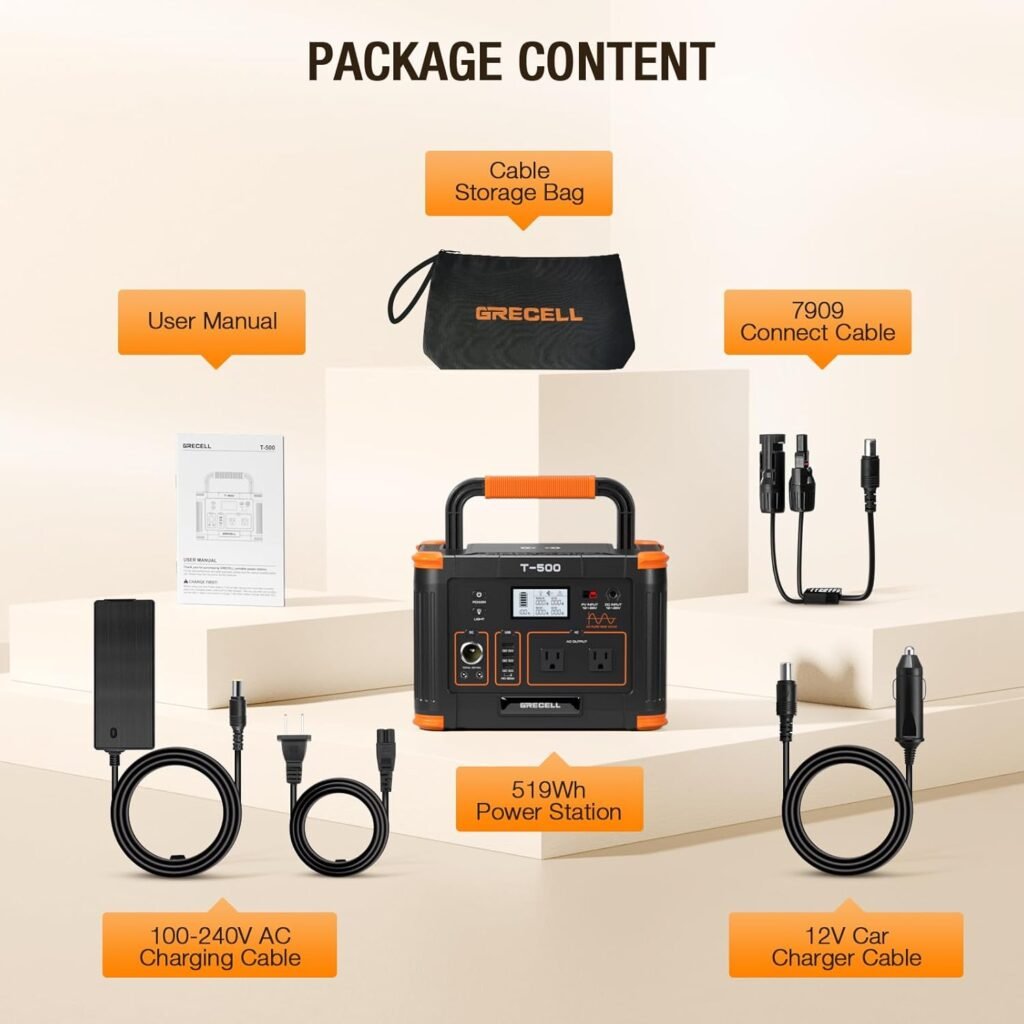
Have we ever been halfway through a camping trip or stuck during a storm at home and suddenly realized how much we rely on electricity?

Why We Think This Portable Power Station Matters
When we talk about backup power, we are really talking about peace of mind. This Portable Power Station 500W (Peak 1000W), 519Wh Outdoor Solar Generator is designed to keep our essential devices and small appliances running whether we are out in the wild or stuck at home during an outage.
We see it as a compact power hub that fits between two worlds: outdoor freedom and everyday security. Let’s walk through what makes it useful, what it does well, and where we should be realistic about its limits.
Key Features at a Glance
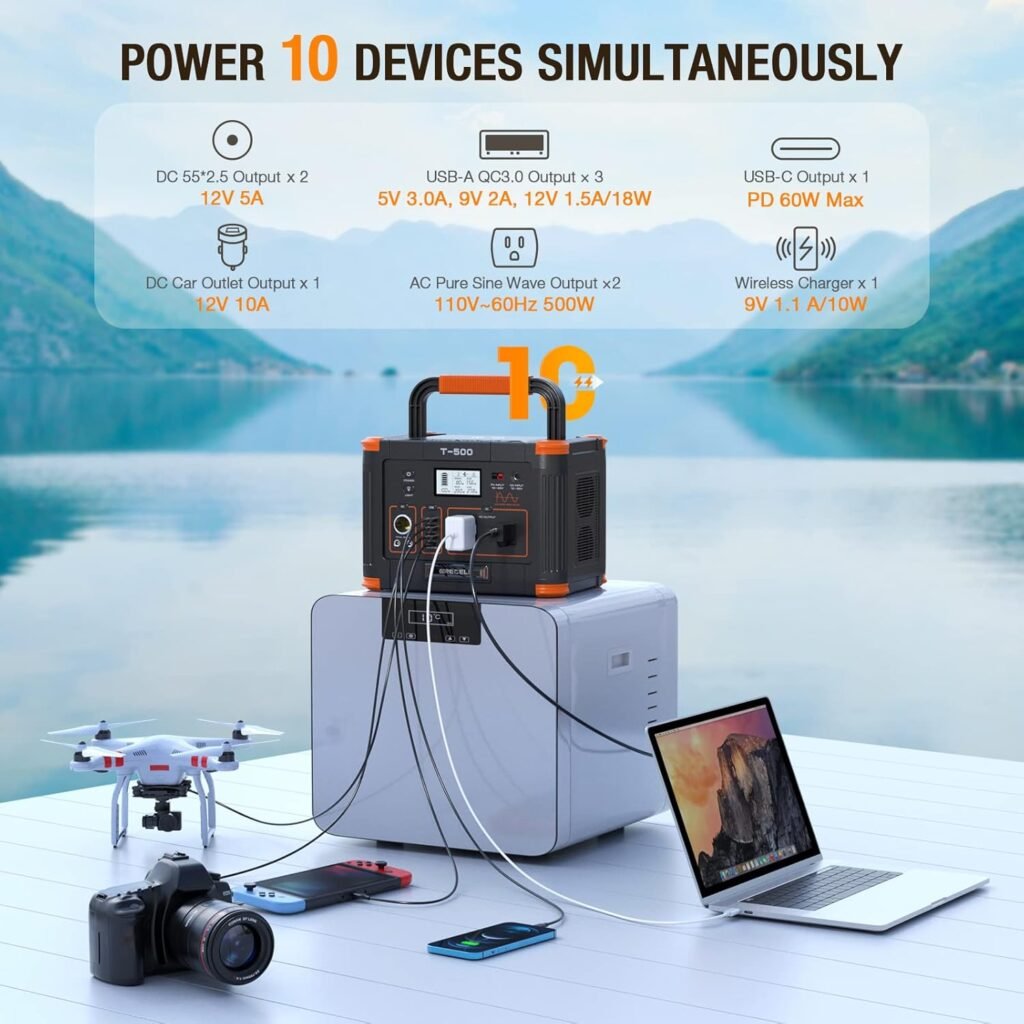
Before we get into real-world usage, it helps to have a quick overview of what this unit actually offers. This power station is all about flexibility, offering 10 different output options and a battery capacity big enough to cover most everyday electronics.
Main Specs Overview
Here is a summary of the core technical details so we can understand what we are working with:
| Feature | Details |
|---|---|
| Battery Capacity | 519Wh (140,400mAh) |
| Rated Output | 500W (continuous) |
| Peak Output | 1000W (for brief surges) |
| AC Outlets | 2 × 110V pure sine wave (500W total) |
| USB-A Ports | 3 × QC3.0 (up to 18W each) |
| USB-C Port | 1 × PD (20V/3A, up to 60W) |
| DC Ports | 2 × 12V/5A |
| Car Port | 1 × 12V/10A |
| Wireless Charger | 1 × 10W (9V/1.1A) |
| Weight | 14.1 lb |
| Recharging Methods | Solar panel / Wall outlet / Car charger |
| Built-in Light | LED flashlight with light–strobe–SOS modes |
| Battery Management System (BMS) | Temperature, overvoltage, overcurrent, short-circuit protection |
We see right away that this power station aims to be a central charging hub. With ten ports and built-in safety features, it is clearly designed for versatility instead of brute-force power for large appliances.

Design and Portability
Size, Weight, and Carrying Comfort
Portability can make or break a power station. At 14.1 pounds, this unit is light enough for most of us to carry with one hand without feeling like we are hauling a car battery.
The compact build and solid handle help us move it from the car to a campsite, tuck it into an RV storage bay, or carry it around the house during a blackout. It is not something we would want to backpack with all day, but for car-based travel, cabins, tailgating, and home emergencies, it feels very manageable.
Build Quality and Layout
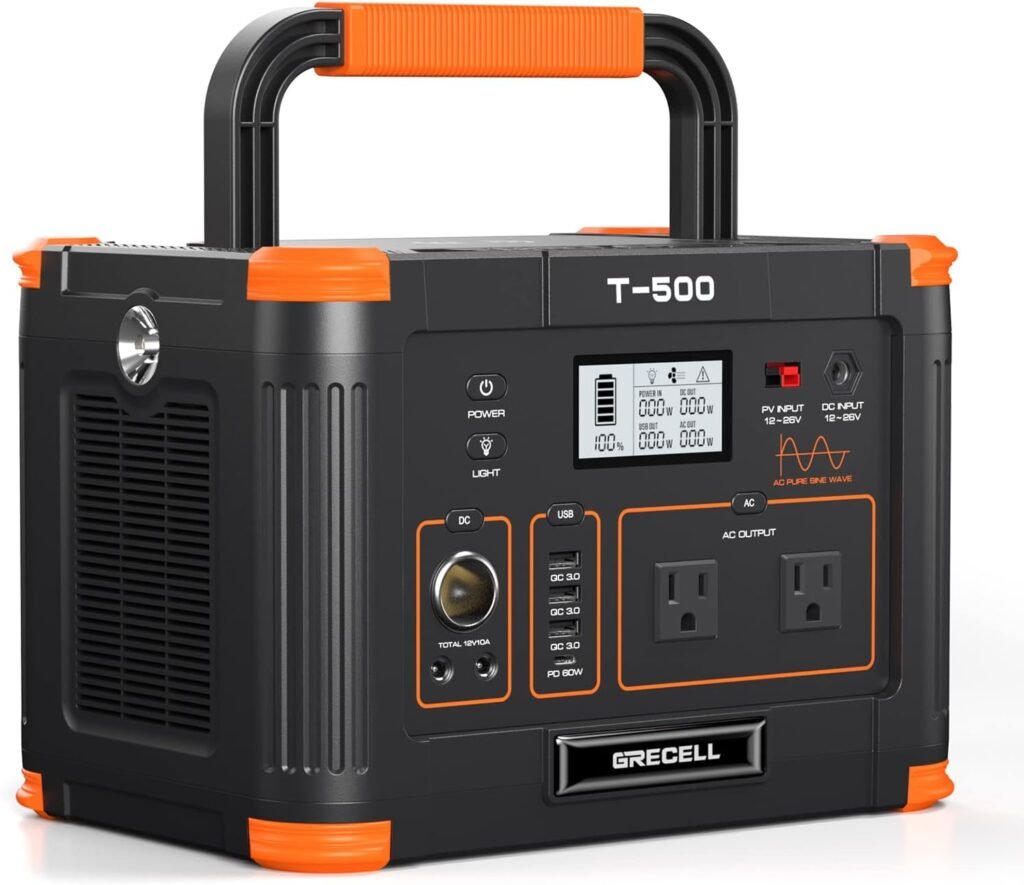
We appreciate that the ports are laid out cleanly on the front, which makes it easier to see what is plugged in and access everything quickly. Having the AC ports, DC ports, USB ports, and wireless charging area each clearly defined helps reduce fumbling, especially in dim light.
The casing feels designed for everyday use rather than industrial abuse. It is a home-and-outdoor product, not a heavy-duty construction-site tool, so we would treat it as durable but not indestructible.
Power Output and Performance
Understanding the 500W Rating and 1000W Peak
The station is rated at 500W continuous with a peak of 1000W. That means we can run devices that draw up to 500W steadily, and for brief moments it can handle a surge up to 1000W. Many appliances spike briefly when they start up, so this peak rating gives a bit of breathing room.
However, we must stay aware of that 500W continuous limit. Anything with a rated power above 500W should not be used. That includes things like many hair dryers, space heaters, electric kettles, and some larger power tools.
Realistic Usage Examples
To make sense of its 519Wh capacity and 500W limit, here are some typical scenarios:
- Smartphones: With roughly 10–15Wh per full charge, we could charge phones dozens of times.
- Laptops: A 60W laptop could run for around 7–8 hours (519Wh ÷ 60W, with some loss accounted for).
- CPAP machine: Depending on settings and whether the humidifier is used, we might get a full night or more of use.
- Portable fridge (car refrigerator): Many draw around 40–60W while running. We could reasonably expect many hours of cooling, especially since they cycle on and off.
- Small fan or LED lights: These draw minimal power, so we can extend usage for many hours, perfect for camping or power outages.
- TV or projector: A modern LED TV in the 60–100W range can run several hours, turning an outage or camping night into movie time.
We see that this station is ideal for small appliances and electronics up to 500W. It is not a whole-house solution but a targeted power backup for essential and comfort devices.
Multiple Outputs: Powering Up to 10 Devices
AC Outlets for Small Appliances
The two 110V pure sine wave AC outlets are the main attraction for many of us. Pure sine wave output is important because it mimics the quality of power from a typical household wall outlet, which is better for sensitive electronics and appliances.
With the combined 500W limit, we just need to think about what we plug in at the same time. For example, running a laptop (60W), a fan (30W), and a small TV (80W) together keeps us well within the limit.
USB Ports for Phones, Tablets, and Gadgets
The three USB-A QC3.0 ports and one USB-C PD port make this power station feel like a charging hub for all our modern tech:
- USB-A QC3.0 ports (up to 18W each) can fast charge many phones and tablets.
- USB-C PD 60W port is perfect for newer laptops, tablets, and phones that support Power Delivery.
We especially like that the USB-C PD port can charge many laptops directly, which means we do not always need to rely on the AC outlet and a big brick charger.
DC Ports and Car Port for Specialty Gear
The two 12V/5A DC ports and 12V/10A car port are handy for devices that are designed for vehicle use or other 12V accessories. This includes car fridges, some air pumps, and other camping gadgets.
Having these 12V outputs lets us use devices more efficiently without always converting DC to AC, which generally helps preserve some of the battery capacity by avoiding unnecessary conversion losses.
Wireless Charging Pad
On top of the standard ports, there is a 10W wireless charging pad. Once we turn on the main power and then press the USB button to activate it, we can place a compatible phone on top and charge cable-free.
This is not the fastest way to charge a phone, especially compared to the wired fast-charging ports, but it is very convenient when we just want to drop our phone somewhere and keep a cable free.
How Long Can We Expect It to Run?
Approximating Runtime
While actual runtimes will vary depending on load, efficiency, and conditions, we can use the battery capacity (519Wh) as a starting point. To estimate, we roughly do:
Runtime (hours) ≈ 519Wh ÷ Device Power (W) × 0.85
The 0.85 factor accounts for typical conversion and efficiency losses.
For different examples:
- LED light (10W)
~519 ÷ 10 × 0.85 ≈ 44 hours - Laptop (60W)
~519 ÷ 60 × 0.85 ≈ 7.3 hours - Portable fridge (50W average)
~519 ÷ 50 × 0.85 ≈ 8.8 hours - TV (80W)
~519 ÷ 80 × 0.85 ≈ 5.5 hours
In real use, many devices do not pull their maximum rated power all the time, so we might get slightly better performance, but it is helpful to be conservative.
What Not to Power
The product specifically warns us not to use this station for devices with a rated power above 500W. This includes:
- Many hair dryers
- Space heaters
- Electric kettles and high-watt hot plates
- Large microwaves
- Some power tools like large saws or compressors
Trying to run these can trigger protection mechanisms or shut the unit down, and in some cases may risk damage. We need to treat this as a compact power station, not a substitute for a whole-home generator.
Recharging the Power Station
Three Ways to Recharge
We have three main options to recharge the 519Wh battery:
-
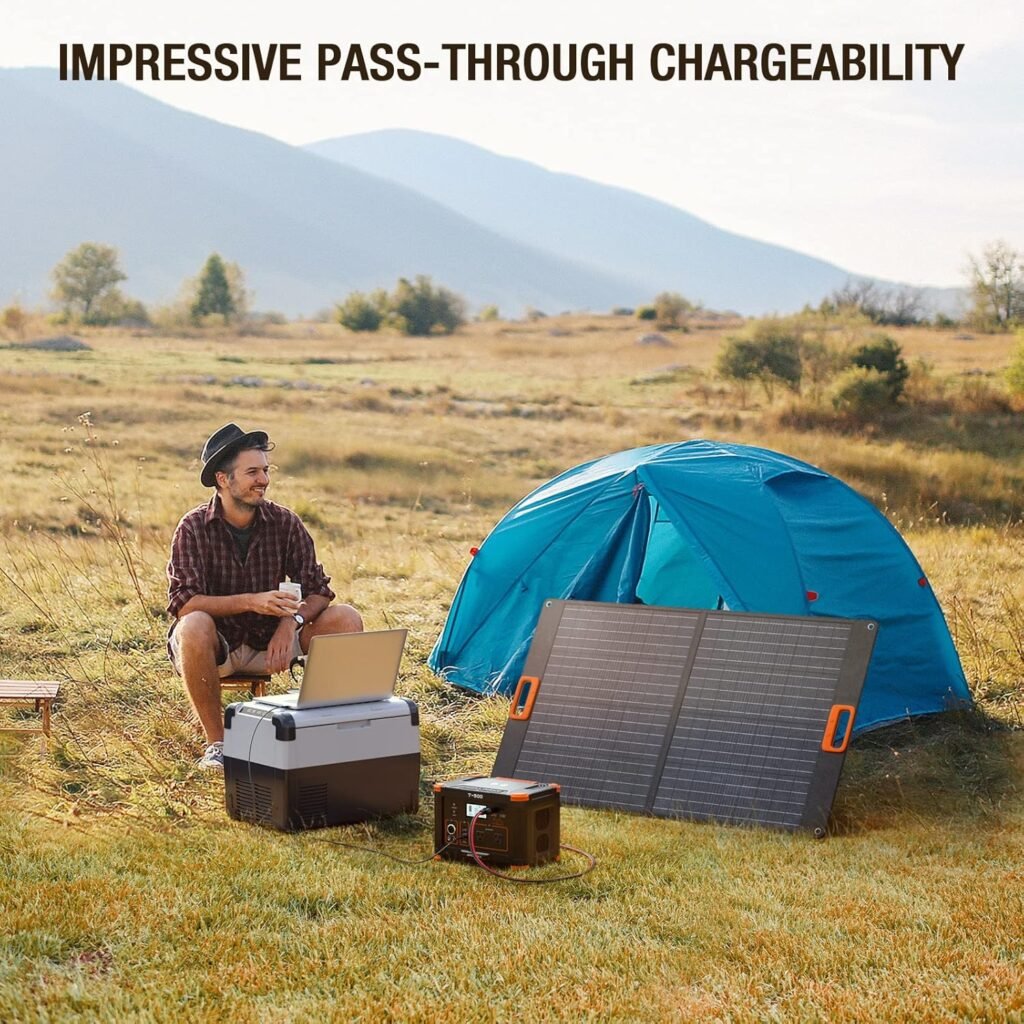
Solar Panel (100–200W compatible)
- A 100W panel in full sun: about 6–9 hours to fully recharge.
- A 200W panel (if supported and available conditions): generally faster, though real times depend a lot on sun strength and angle.
-
Wall Outlet (AC)
- Fully charged in about 6–7 hours.
This is our most reliable method when grid power is available, such as pre-charging before a road trip or storm.
- Fully charged in about 6–7 hours.
-
Car Charger (12V)
- Fully charged in about 7–8 hours.
Good for long drives, RV use, and recharging while traveling between destinations.
- Fully charged in about 7–8 hours.
We appreciate that these three options give us flexibility. We can keep it charged from home, top it off on the road, and maintain it with solar in the field.
Using Solar Efficiently
While solar panels are not included, the station works with compatible 100W or 200W panels. For us, that means we can build a small solar setup around it for off-grid or extended camping trips.
Solar charging times are optimistic under perfect conditions: full sunlight, correct angle, no clouds. In actual use, we should be prepared for longer charge times depending on the weather and time of day. Planning ahead becomes important if we want to rely on solar for continuous use.
Safety and Battery Management
Built-In Battery Management System (BMS)
The integrated BMS is one of the quiet heroes of this device. It handles:
- Temperature control
- Overvoltage protection
- Overcurrent protection
- Short circuit protection
These protections not only safeguard our connected devices but also help extend the life of the power station itself. We want a unit we can trust during emergencies, and the BMS is a key part of that trust.
Pure Sine Wave Inverter for Sensitive Devices
Some devices, especially those with motors or sensitive electronics (like certain medical equipment, CPAP machines, and high-end laptops), benefit from pure sine wave power. Cheaper inverters that produce modified sine wave can cause buzzing, heat, or erratic behavior in some devices.
With this power station, the pure sine wave AC output gives us confidence to connect more sensitive gear without worrying as much about compatibility or long-term damage.
Using It for Camping, Road Trips, and Outdoor Fun
RVs, Vans, and Car-Based Travel
For RV, van life, or car camping, this power station becomes a compact and flexible part of our setup. It can:
- Run a small fridge or cooler
- Charge phones, tablets, cameras, and drones
- Power lights and fans at night
- Run a laptop or small projector for movie nights
We can recharge it while we drive using the car charger, and extend our independence by adding a solar panel at camp.
Fishing, Climbing, and Remote Adventures
When we are far from outlets, this station can keep essential devices going:
- GPS units, cameras, and phones
- LED lights and headlamps
- Drone batteries
- Portable air pumps or small inflators
It is not feather-light, so for climbing or hiking we likely keep it at base camp or in a vehicle. But for stationary or semi-mobile activities, the 14.1-pound weight is very reasonable.
LED Flashlight and SOS Mode
The built-in LED flashlight with light, strobe, and SOS modes adds a layer of practicality. During camping, we can use the light as a camp lantern. In emergencies, the SOS or strobe mode can serve as a signal or attention-getter.
We like having the light on the same device that stores our power, because it means one less thing to remember or lose in the dark.
Home Use and Emergency Backup
Handling Power Outages
During storms, grid failures, or unexpected blackouts, this power station can give us some control over a stressful situation. We can:
- Keep phones charged to stay informed
- Run a router for internet as long as our service is still active
- Power a small TV for news and communication
- Keep LED lights and a small fan running for comfort
- Support a CPAP machine (within power limits and with proper setup)
While 519Wh will not power an entire household, it can cover key essentials, especially for short to medium outages. For families, that can mean the difference between complete darkness and having communication, light, and a bit of entertainment.
Medical and Comfort Devices
For those of us who rely on devices like CPAP machines, having portable backup power can be important. Since this station uses a pure sine wave inverter and offers sufficient capacity for low to moderate power CPAP machines, it can be part of an emergency plan.
We still need to check our specific machine’s power draw and possibly disable the humidifier to extend runtime. Testing it before an actual emergency is always wise.
Everyday Convenience, Not Just Emergencies
Around the House
Even when we are not camping or dealing with outages, this power station can be handy:
- Powering tools in spots without easy outlets (like the yard or shed, as long as they are under 500W)
- Charging multiple devices at once in a central spot
- Running a projector for an outdoor movie night
- Temporary power during home projects
We appreciate backup gear that does not just collect dust until something goes wrong. This unit is useful enough that we can find reasons to use it regularly.
Work and Creative Projects
For remote work or creative tasks away from conventional power, we can:
- Power laptops and monitors during a short work session at a park or in a van
- Charge camera gear during on-location shoots
- Support small audio equipment for recordings or small events
Again, we must keep device loads within that 500W limit, but many modern laptops, cameras, and audio devices are well below that threshold.
Ease of Use and Controls
Turning Outputs On and Off
Each set of outputs usually has its own power button to activate it. For this model, we need to:
- Press the main POWER ON/OFF button.
- Press the USB button to turn on the USB outputs and wireless charging.
We should also remember the manufacturer’s tip:
If we are not using the AC output, we should turn it off. Leaving AC on with nothing plugged in can still drain the battery over time, which might surprise us during an emergency if we forgot to switch it off.
Display and Status Awareness
Although the detailed display description is not in the provided text, most similar stations show:
- Battery percentage or charge level
- Input wattage (when charging)
- Output wattage (when powering devices)
Having these numbers visible helps us manage our usage. We can see which devices use the most power and decide when to plug in or unplug certain loads to stretch the battery.
Maintenance and Care
Keeping the Battery Healthy
To keep the battery in good shape over time, we should:
- Use and recharge it at least once every three months
- Avoid storing it completely drained for long periods
- Keep it away from extreme heat or freezing temperatures
The manufacturer specifically reminds us to use and recharge the station at least one time every three months. This periodic use helps prevent the battery from sitting idle too long and losing performance.
Warm Tips and Best Practices
A few practical points we should keep in mind:
- Do not power devices rated above 500W
- Turn off AC output when not needed to avoid silent battery drain
- Follow the wireless charge sequence: main power first, then USB button
- Check compatibility of solar panels and cables before use
By following these guidelines, we not only protect the device and connected gear but also get more consistent performance from the power station.
Strengths and Limitations
What We Think It Does Really Well
From our perspective, the big strengths are:
- Versatile output options (10 ports): AC, USB-A, USB-C PD, DC, car port, and wireless charging make it a true multi-device hub.
- Balanced capacity (519Wh): Enough to handle phones, laptops, small fridges, and lights without being overly heavy.
- Pure sine wave AC: Better and safer for sensitive electronics and medical devices compared with modified sine wave units.
- Multiple recharge methods: Solar, wall, and car charging give us flexibility in different situations.
- Portable and fairly lightweight: 14.1 pounds is reasonable to move around regularly.
- Built-in flashlight and SOS mode: Integrates lighting for both camping and emergencies.
We see it as a strong all-around choice for households, campers, and travelers who want backup power for essentials rather than full-blown whole-home coverage.
Where We Need Realistic Expectations
We should also be clear about its limits:
- 500W continuous limit means no large heaters, kettles, or heavy-duty power tools.
- Solar charging depends heavily on weather and panel quality; we cannot count on the fastest times every day.
- 519Wh capacity, while solid, is not designed to power major appliances for many hours (like large refrigerators or air conditioners).
If we understand these boundaries going in, the power station delivers nicely within its intended role.
Comparing Use Cases
For Camping and Road Trips
For outdoor adventures, this station gives us:
- Ample power for phones, lights, fans, and entertainment
- Support for car fridges and camera gear
- Recharge options via car and solar
As long as we are not trying to run high-draw cooking appliances or large heaters, it covers most modern camping needs, especially for vehicle-based trips.
For Home Emergencies
For home use during outages, it excels at:
- Keeping communication devices powered
- Running a router and small TV
- Providing light and a bit of comfort (fan, small appliances)
- Supporting specific medical devices under 500W
It will not keep an entire kitchen operating, but it will help keep our household functioning and connected until the power returns.
For Everyday Utility
In day-to-day life, it offers:
- A portable power source for yard or garage tasks
- Backup power for work gear during sudden outages
- Flexibility for outdoor movie nights, events, and hobby projects
That versatility makes it more than just a “just in case” device; it becomes a part of our regular toolkit.
Example Scenarios to Picture Its Use
Weekend Camping Trip
We pack the station, along with a car fridge, a string of LED lights, a small fan, and our devices. Over a weekend, we:
- Charge two phones, a tablet, and a camera multiple times
- Run the fridge during the day and night
- Power lights and a fan each evening
We recharge once via the car during a day trip or use a solar panel at camp to top things up. We come home with our gadgets charged and no melted food.
Storm-Induced Power Outage
The lights flicker and go out. We bring out the power station we had kept charged:
- Plug in our router and modem to stay connected
- Keep phones at 100% for communication
- Run a small LED lamp and a fan in the evening
- Watch a bit of news on a small TV
If the outage stretches overnight, we manage our usage carefully and recharge the next day with a car charger or a solar panel if we have one.
Remote Work in a Van or Cabin
We head out for a quiet working day somewhere scenic, taking the power station along:
- Power a laptop through the USB-C PD port
- Keep a second monitor and Wi-Fi hotspot running through AC
- Charge a phone and tablet using the USB-A ports
With 519Wh, we can comfortably work through the day, especially if we are mindful to keep power-hungry devices to a minimum and recharge when we drive back.
Who We Think This Power Station Is Best For
Ideal Users
From everything we see, this product fits well for:
- Campers and RV owners who want compact, reliable power for trips
- Families who want a practical home emergency backup for essentials
- Outdoor enthusiasts who carry multiple gadgets and small appliances
- Remote workers and creators who occasionally need off-grid power
- People using lower-power medical devices, like certain CPAP machines, who want extra security (after verifying compatibility)
If we live in an area with frequent storms, love weekend adventures, or have gear that benefits from clean, portable power, this station offers a nice mix of capacity and portability.
Who Might Need Something Different
We might want to look at larger or different systems if we:
- Need to power large appliances, like full-size refrigerators or AC units, for many hours
- Regularly use high-wattage tools above 500W
- Want to supply whole-home backup power for extended outages
In those cases, larger capacity and higher wattage units—or full home generator systems—would be more appropriate.
Our Overall Take
We see the Portable Power Station 500W (Peak 1000W), 519Wh Outdoor Solar Generator Backup Battery Pack as a highly useful middle-ground solution. It is not trying to be a giant whole-house generator, and that honesty about its role is part of its strength.
Within its 500W power limit and 519Wh capacity, it offers:
- Enough energy to keep our modern life running during short outages
- Flexibility for travel, camping, and remote work
- Safety and protection for both the device and our electronics
- Convenient charging options, including solar for longer-term or off-grid use
If we approach it knowing what it is built to handle—small appliances, electronics, communication gear, and essential comfort devices—it feels like a reliable and friendly companion for both everyday life and unexpected situations.
In short, we would view this power station as a smart addition to our emergency kit, our travel gear, and our home toolbox, giving us confidence that we can stay connected and powered even when wall outlets are out of reach.
Disclosure: As an Amazon Associate, I earn from qualifying purchases.