
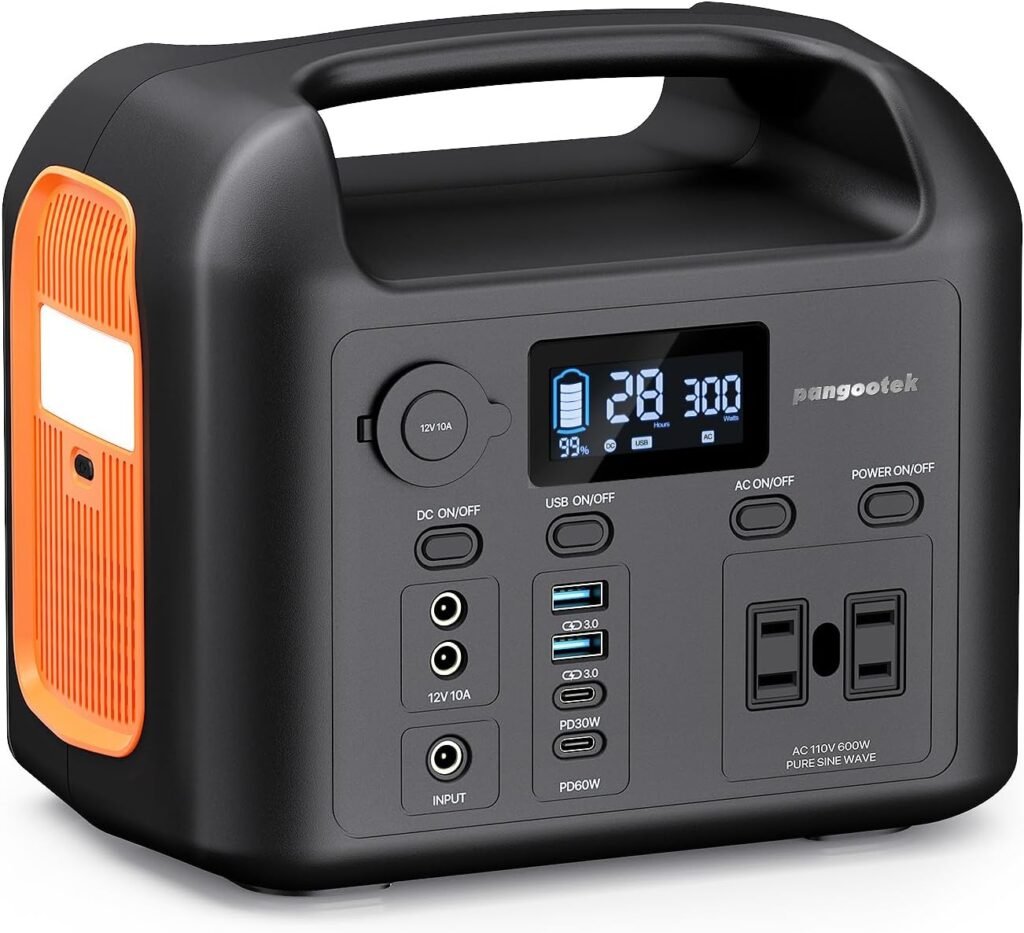
Have we ever wished we could bring reliable, quiet electricity with us wherever we go—without lugging around a noisy gas generator?

Why We Think This Portable Power Station Matters
When we lose power at home or pack up for a camping trip, we usually want one thing: dependable energy without hassle. This portable power station, a 600W (1200W peak) 299Wh LiFePO4 solar generator with pure sine wave output, gives us a compact way to keep our essential devices running. We see it as a bridge between home comfort and off-grid freedom.
Instead of worrying about dead phones, spoiled food, or CPAP interruptions, we can treat this as a small, quiet, rechargeable battery hub that sits in the background until we really need it.
Key Features at a Glance
We like to get a quick overview before we commit to any gadget. Here is how the core specs of this power station break down and what they mean in real life.
| Feature | Specification / Detail | What It Means for Us |
|---|---|---|
| Battery Type | LiFePO4 (Lithium Iron Phosphate) | Safer, longer-lasting, more stable than typical lithium-ion |
| Capacity | 299Wh | Enough for phones, laptops, CPAP, lights, small appliances |
| Rated Output (AC) | 600W (pure sine wave) | Runs many household devices safely and quietly |
| Peak Output | 1200W | Handles short surges when devices start up |
| AC Outlets | 2 × 110V AC | Plug in standard US-powered devices |
| USB-C PD Outputs | 1 × 60W PD, 1 × 30W PD | Fast charging for phones, tablets, laptops |
| USB-A QC 3.0 Ports | 2 × QC 3.0 | Quick charging for compatible phones and gadgets |
| DC Outputs | 2 × 12V/10A DC + 1 × 12V/10A car/cigarette lighter port | Power car fridges, inflators, routers, and other DC devices |
| Recharge Methods | Wall outlet, 12V car charging, compatible solar panel | Flexible charging at home, on the road, or off-grid |
| Estimated Lifespan | 2000+ cycles, 10+ years (under typical use) | Long-term investment for emergencies and outdoor use |
| Protection Systems | BMS with over-voltage, over-current, over-temperature protection | Safer charging and discharging for us and our devices |
We see this as a practical middle-ground unit: not huge like a home backup system, but powerful enough to matter during a blackout or camping weekend.

Design and Build Quality
Compact but Functional Form Factor
We want something portable but solid, and this unit aims for that balance. The 299Wh capacity sits in a compact housing that is small enough to keep in the trunk or a closet without taking over our space. The handle makes carrying it around the campsite or moving it between rooms fairly straightforward.
It does have some weight because of the LiFePO4 battery cells, but the benefit is a sturdier, longer-lasting unit. We get the sense that we are carrying a serious power tool rather than a flimsy gadget.
Build Materials and Durability
The casing feels like it is made from firm, impact-resistant plastic. While we would not throw it off a truck bed or leave it in the rain, it looks ready to handle normal bumps, road trips, and daily handling.
The ports are neatly laid out on the front panel so we are not fumbling around the sides to plug in devices. We appreciate when the design keeps things straightforward—especially during a power outage when tension is already high.
Battery Technology: Why LiFePO4 Matters
Longer Lifespan for Our Investment
We see LiFePO4 as a major selling point. Compared to traditional lithium-ion batteries (like NMC), LiFePO4 cells typically offer:
- 2000+ charge cycles before losing noticeable capacity
- More stable chemical structure
- Lower risk of overheating and thermal runaway
For us, that means this power station is not just a one-season wonder. If we use it regularly for camping, tailgating, or blackouts, we can expect many years of reliable performance before we see a serious drop in capacity.
Safety and Peace of Mind
With LiFePO4, we gain improved thermal and chemical stability. The unit also integrates:
- Over-voltage protection
- Over-current protection
- Over-temperature protection
- A full Battery Management System (BMS)
We like knowing that the power station is actively monitoring itself. When we plug in sensitive devices like a CPAP, a laptop, or a camera battery charger, we do not want to worry about weird spikes or heat.
Power Output: 600W Continuous, 1200W Peak
What 600W Really Lets Us Power
On paper, 600W continuous output does not sound huge, but it goes much further than we might expect when we use it cleverly. Examples of what we can typically run (one or combinations, depending on total load):
- A CPAP machine (usually around 40–80W)
- A laptop (50–100W)
- Several phones or tablets at once (10–30W total)
- LED lights or lanterns (5–20W)
- A small fan (20–50W)
- A mini projector (50–150W, depending on model)
We just need to remember: all these device wattages add up. As long as we stay under about 600W ongoing usage, the power station should handle it comfortably.
Why 1200W Peak Output Matters
Many electrical devices need a short burst of higher power just to start up. That is where the 1200W peak rating is helpful. For example, some:
- Small pumps
- Mini fridges
- Tools with motors
may briefly pull more power during startup. Once they are running, they drop back down. This headroom helps reduce annoying shutdowns when we plug in something that has a motor or compressor.
We still need to check each device’s specs, but the peak gives us extra breathing room for momentary surges.
Pure Sine Wave Output: Better for Sensitive Electronics
What Pure Sine Wave Means for Us
A pure sine wave inverter mimics household power more closely than modified sine wave units. This matters for:
- Laptops and desktops
- CPAP machines
- Medical devices
- Certain chargers and digital equipment
With pure sine wave, we reduce the risk of buzz, flickering, or unusual heat in delicate electronics. We also avoid the “humming” or “vibrating” that some devices show on cheap inverters.
CPAP and Medical Device Use
For anyone using a CPAP machine, uninterrupted, clean power is more than convenience; it is comfort and health. With this power station’s pure sine wave output and 600W continuous rating, most CPAP units should run smoothly throughout the night.
We can also connect DC if our CPAP has a compatible adapter, potentially extending runtime by avoiding inverter losses. Either way, the cleaner the power, the better for both the machine and our peace of mind.
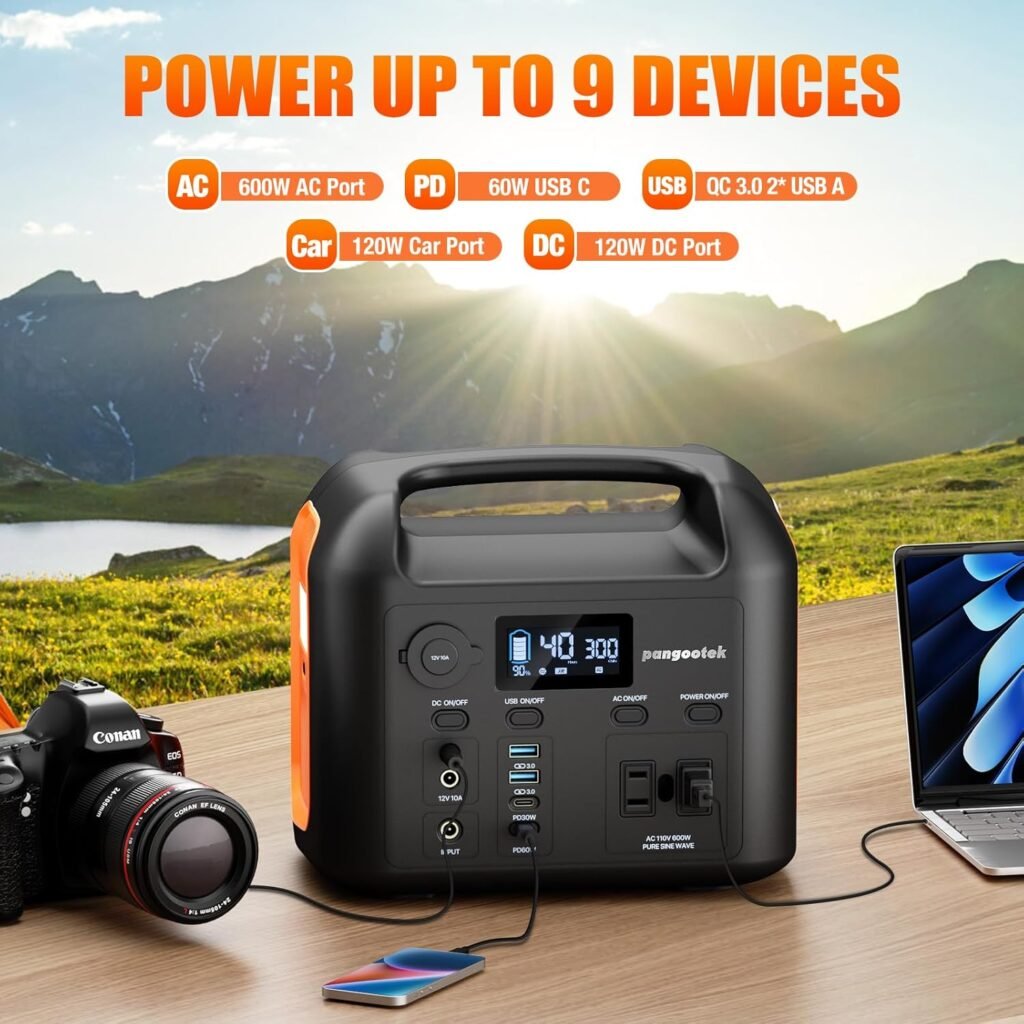
Output Ports: 9 Ways to Power Our Gear
Overview of All Outputs
The variety of ports is one of the strengths of this unit. We can run multiple devices simultaneously without wrestling over a single outlet.
| Port Type | Quantity | Specs | Typical Uses |
|---|---|---|---|
| AC Outlets (110V) | 2 | 600W rated, 1200W peak, pure sine | Laptops, CPAP, mini-fridge, small tools |
| USB-C PD | 2 | 60W + 30W | Phones, tablets, USB-C laptops, Switch |
| USB-A QC 3.0 | 2 | 5V/3A, 9V/2A, 12V/1.5A | Fast-charging phones and gadgets |
| DC 12V Outputs | 2 | 12V/10A | LED lights, routers, car-style gadgets |
| Cigarette Lighter Port | 1 | 12V/10A | Car fridge, air compressor, car chargers |
We can power our AC and DC devices at the same time, within the unit’s total power limits. This makes it especially helpful as a central hub for a small campsite or living room during a blackout.
USB-C Power Delivery (PD) for Modern Devices
The 60W PD USB-C output is especially attractive if we use a USB-C laptop, modern Android phone, newer iPhone with USB-C, iPad, Switch, or other PD-compatible gear. It lets us:
- Charge laptops quickly without using the AC inverter
- Fast-charge phones and tablets directly
- Reduce conversion losses vs. plugging in a bulky charger via AC
The 30W PD port adds flexibility for a second device needing moderate fast charging. We like having both, so one laptop and one tablet or phone can charge simultaneously.
Fast USB-A QC 3.0 Outputs
The 2 × QC3.0 USB ports offer quick charging for compatible phones, wireless earbuds, action cameras, and other USB-A devices. We can still use them for non-QC devices; they just fall back to regular USB charging speeds.
Having these extra ports means we can leave a few wall bricks at home when we travel.
DC and Car-Style Outputs
The 12V DC ports and the cigarette lighter output open up a different range of devices:
- Car-style mini fridge or cooler
- Tire inflator or small air compressor
- 12V fans or light strips
- 12V router or modem (for temporary internet backup)
We see these as especially handy for road trips and camping. Instead of idling our vehicle just to run a cooler, we plug it into the power station and enjoy quiet, battery-powered cooling.
Capacity in Real Life: What 299Wh Can Do
Estimating Runtime for Common Devices
The capacity rating of 299Wh lets us approximate how long we can run certain equipment. Real-world performance will vary due to inverter losses and usage patterns, but we can get a ballpark idea.
We can roughly use:
Runtime (hours) ≈ Battery Capacity (Wh) × 0.85 ÷ Device Power (W)
We include about 15% loss for conversion and inefficiencies.
Some examples:
-
Phone (10Wh per full charge):
- Around 20–25 full charges (depending on phone and cable efficiency).
-
Laptop (60W while charging):
- 299Wh × 0.85 ÷ 60 ≈ 4.2 hours of laptop charging (or several full charges if we plug and unplug).
-
CPAP (40W without humidifier):
- 299Wh × 0.85 ÷ 40 ≈ 6.3 hours.
- If the CPAP averages less power or we use DC connectors, we may stretch it further.
-
LED String Lights (10W total):
- 299Wh × 0.85 ÷ 10 ≈ 25+ hours.
These numbers are approximate, but they give us a sense of what 299Wh really delivers. For multi-day trips, we may want to add solar or recharge via car or wall power.
Use Cases Where This Capacity Shines
We see this 299Wh unit as especially good for:
- Single-night or weekend camping trips
- Short to medium blackouts
- Road trips where we need to run a cooler, charge devices, and maybe a laptop
- Occasional CPAP backup or overnight usage (with attention to power draw)
For fully running multiple heavy-duty appliances for long stretches, we would need a larger station. However, for essentials and electronics, this size hits a practical sweet spot.
Recharging Options: 3 Ways to Keep It Topped Up
1. Wall Outlet Charging (AC)
Using the included wall charger, we can recharge the station in about 3–5 hours. That is a reasonable turnaround time if we remember to top it up:
- Before a storm or power interruption
- Before heading out on a trip
- After returning from a weekend of use
We find it best to treat this device like a fire extinguisher or spare tire: keep it ready rather than waiting until the moment of crisis.
2. Car Charging (12V)
We can also recharge from our car’s 12V port using the included car cable, with a similar 3–5 hour range. This makes sense for:
- Long drives to the campsite
- Road trips where we can top up between stops
- Times when grid power is not available but we can run the car engine periodically
We just need to remember not to drain our car battery when the engine is off. Topping off while driving is the safer route.
3. Solar Charging (100W Recommended)
If we want genuine off-grid freedom, we can connect a compatible solar panel (not included). With a 100W panel:
- Full charge typically in 5–8 hours under good sun conditions
This timing depends on sun strength, angle, region, and season. Still, pairing the station with solar can extend our off-grid stay dramatically, especially for lower power uses like phones, lights, and small laptops.
We get the benefit of green energy and reduced need to carry extra fuel or rely on a noisy generator.
Everyday and Emergency Use Cases
Camping and Outdoor Adventures
For camping, this power station can change our entire experience:
- Run lights, fans, and a mini projector for evening entertainment
- Charge phones, cameras, and drones
- Keep a 12V fridge or cooler running to avoid soggy ice chests
- Power a small induction cooker or electric grill briefly (if wattage allows)
We can place it in a central spot in the tent or RV and not worry about fumes or noise. We also avoid disturbing nearby campers the way gas generators might.
Blackouts and Home Backup
At home, a unit like this can be the difference between a stressful outage and a manageable one:
- Keep phones, tablets, and laptops powered for communication and work
- Run LED lights or a lamp to maintain visibility
- Power a router and modem to stay online (if the network in our area is still up)
- Keep a CPAP working through the night
- Temporarily power a small TV or streaming device for updates and entertainment
While it does not replace a whole-home backup system, it covers the essentials for many households, especially in short to medium outages.
CPAP and Nighttime Reliability
For CPAP users, losing power can be more than inconvenient. With this station:
- We can keep a CPAP running during abrupt outages
- We can bring it on trips where local power may be unreliable
- We can potentially run on DC output, if our CPAP supports it, for better efficiency
We do need to check our specific CPAP’s power usage and consider disabling heated humidification if we want maximum runtime from a 299Wh battery.
Road Trips and Vehicle Use
When we hit the road, having a portable power station on hand can help us:
- Power a car fridge so snacks and drinks stay cold
- Run an air pump or small compressor for inflatable mattresses or tires
- Charge multiple devices at once without hogging the car’s single 12V port
- Use a laptop or tablet without worrying about the car battery
We like having a separate power source that keeps everyone’s gear charged without straining the vehicle.
Ease of Use and User Experience
Simple Operation and Controls
We typically enjoy devices that require minimal instructions. From what we see here:
- Buttons are easy to identify and operate
- Output groups can usually be turned on or off as needed
- There is likely a display showing battery level and other basic info
We simply charge the station, connect our devices, and toggle the power for the ports we need. That’s about as complicated as it gets.
Noise Level and Indoor Friendliness
Because it is battery-based, there is no engine noise. The only sound might be a small internal cooling fan when under high load or during charging. For indoor or nighttime use, that is a big advantage over gas generators.
We can place it by the bed, under a desk, or next to the couch without worrying about fumes or loud vibrations.
Safety Features and Protections
Built-In Electrical Safeguards
The integrated BMS (Battery Management System) monitors and controls:
- Over-voltage
- Over-current
- Over-temperature
These protections help avoid:
- Abrupt shutdowns
- Overheating under heavy loads
- Battery damage from improper charging or discharging
We feel more comfortable leaving it charging or running overnight with these safety features in place.
Thermal and Chemical Stability of LiFePO4
LiFePO4 is naturally more stable than many traditional lithium chemistries, especially in higher temperature situations. We still should not leave it in a locked car in direct summer sun, but regular operation is safer than older chemistries with higher thermal runaway risk.
For households with kids or pets, this extra safety margin is a welcome benefit.
Warranty, Support, and What We Get in the Box
Included Items
When we purchase this power station, we receive:
- 1 × pangootek R600 Power Station
- 1 × AC Wall Charger
- 1 × Car Port Cable
- 1 × User Manual
In other words, we are ready to use it out of the box, aside from any optional solar panels we may want to add later.
Warranty and Customer Service
The product comes with:
- 30-day money-back guarantee
- 1-year warranty
- 24-hour prompt customer service support
We appreciate knowing that if we notice a serious issue early on, we have a clear return or support path. The 1-year warranty gives us basic coverage, and the 30-day window lets us test it in real conditions.
Strengths and Limitations
What We Think This Power Station Does Especially Well
We see several strong points that make this product stand out:
- LiFePO4 battery: Longer life, better safety, improved stability.
- Pure sine wave inverter: Ideal for sensitive electronics and medical devices.
- Solid 600W / 1200W performance: Enough for many common household and camping devices.
- Good port selection: AC, DC, 60W PD, 30W PD, QC3.0, and car port all in one unit.
- Three charging methods: AC wall, car, and solar give us flexible recharging routes.
- Portable design: Small and manageable enough for camping, road trips, and indoor use.
For everyday backup, casual off-grid use, or CPAP support, it hits a very functional balance between power and portability.
Where We Need to Set Realistic Expectations
No product is perfect, and this station has natural limits:
- 299Wh capacity: Great for smaller loads and short-term use, but not suitable for running high-draw appliances (like large space heaters, full-size microwaves, or big fridges) for long periods.
- 600W continuous limit: Larger power tools, hair dryers, and some kitchen appliances will not be compatible.
- Solar panel not included: We need to buy a separate panel if we want renewable, off-grid charging.
- 1-year warranty: While LiFePO4 can last many years, the standard warranty is on the shorter side compared to some premium brands that offer longer coverage.
If we understand these boundaries and buy it for the right reasons—portable backup and moderate loads—it meets expectations.
Quick Scenario Comparisons
To help put everything in context, we can think about a few practical situations and how this product fits.
Short Blackout (Few Hours)
- Keep phones, tablets, and laptops charged
- Run a Wi-Fi router and modem
- Power a few LED lamps
- Possibly keep a CPAP running through the night
Result: We stay connected, lit, and relatively comfortable during a typical outage.
Weekend Camping Trip
- Run a car fridge on and off
- Charge phones, action cameras, and drones
- Use LED lighting around the campsite
- Power a small speaker or projector in the evening
Result: We enhance our comfort and entertainment without running a noisy generator.
CPAP Backup for Overnight
- Run a CPAP machine (especially without heated humidifier to save energy)
- Possibly combine with solar or daytime car charging to extend use over multiple nights
Result: We gain a sense of security if local power goes out unexpectedly.
Who This Portable Power Station Is Best For
We find this particular model especially suitable for:
- Campers and RV travelers who want quiet power without a gas generator.
- Homeowners in storm-prone areas needing a compact, easy backup solution.
- CPAP users seeking a reliable pure sine wave battery source for overnight support.
- Road-trippers and vanlifers who want to run 12V fridges, lights, and electronics.
- Students or remote workers who need laptop and internet backup during occasional blackouts.
If we are expecting to fully power a large household or run energy-hungry appliances for days, this will not be enough on its own. However, as a practical, portable middle-tier solution, it fits many everyday scenarios very well.
Our Final Thoughts
We see the “Portable Power Station, 600W (1200W Peak) 299Wh LiFePO4 Solar Generator Pure Sine Wave 110V AC Car Outlets PD 60W QC3.0 Backup Power Supply Bank for Camping, Blackout, CPAP” as a thoughtfully balanced power solution for real-world use.
Its combination of LiFePO4 safety and longevity, pure sine wave power, multiple charging methods, and versatile ports makes it a dependable companion for both emergencies and outdoor life. It will not replace a massive whole-house backup system, but for its size and price class, it covers a lot of what we truly need when the lights go out or we step away from the grid.
If we want a portable, quiet, and user-friendly way to keep our essential devices running—whether we are camping, traveling, or riding out a storm—this power station is a compelling choice to keep in our toolkit.
Disclosure: As an Amazon Associate, I earn from qualifying purchases.