
Can this generator keep our lights on, run our RV air conditioner, and still be quiet enough for a campsite?

Overview of the Westinghouse 5000 Peak Watt Super Quiet Dual Fuel Portable Inverter EFI Generator
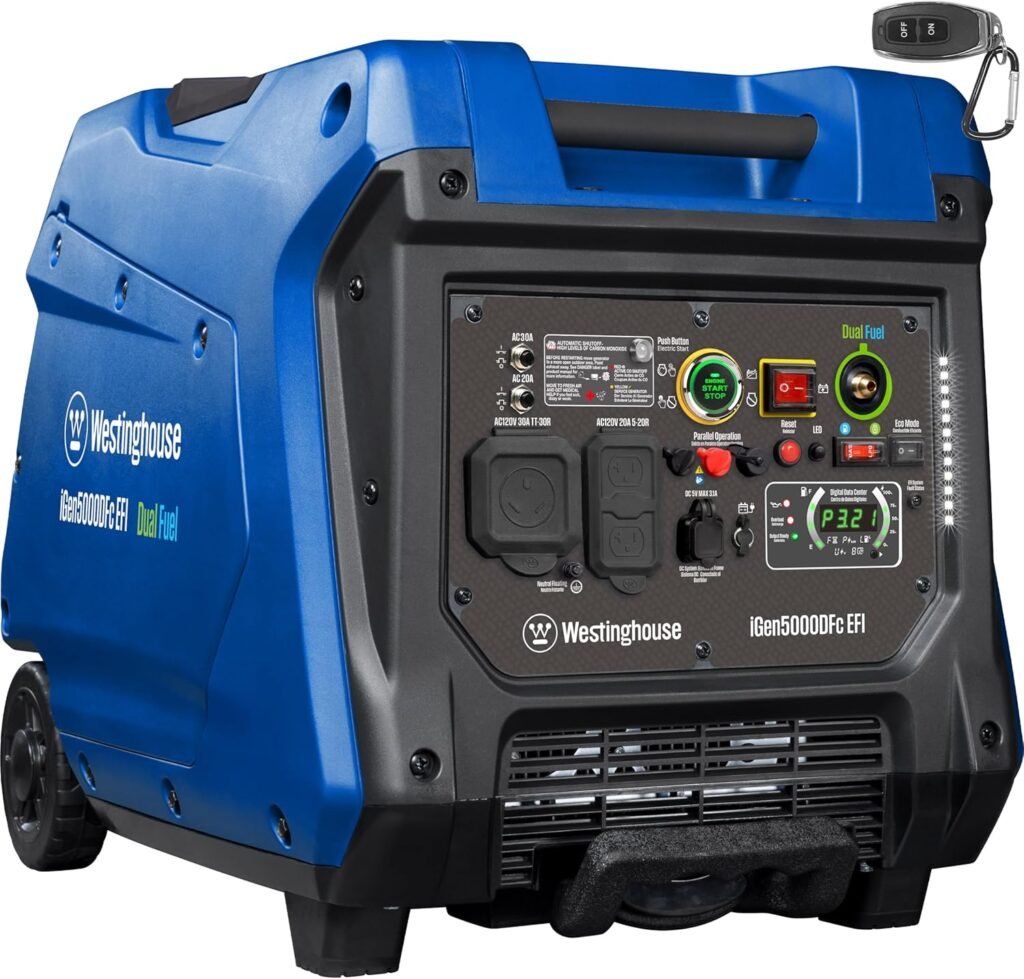
We’ll start with a clear summary of what this unit offers so we can set expectations. The Westinghouse 5000 Peak Watt Super Quiet Dual Fuel Portable Inverter EFI Generator, Remote Electric Start, Gas & Propane Powered, RV Ready, CO Sensor, Parallel Capable, CARB Compliant is designed to blend household backup capability with campground friendliness. We appreciate that it targets both emergency home power and recreational use with features like an RV TT-30R outlet, electronic fuel injection (EFI), and a quiet, insulated enclosure.
Quick specifications table
We find a compact table helps us compare core specs at a glance. Below we’ve broken out the most relevant numbers and features so we can quickly reference them while reading the rest of the review.
| Feature | Specification |
|---|---|
| Peak Watts (Gas / Propane) | 5000 / 4500 W |
| Rated (Running) Watts (Gas / Propane) | 3900 / 3500 W |
| Engine / Fuel System | Westinghouse dual fuel engine with EFI |
| Fuel Types | Gasoline (3.17 gal tank) or Propane (LPG) |
| Runtime | Up to 12 hours at 25% load (gas) |
| Weight | Approximately 111 lb |
| Noise Level | As low as 61 dBA (with acoustic enclosure) |
| Starting | Remote key fob + push button electric start |
| Outlets | TT-30R RV outlet + household outlets (see outlets table) |
| Safety | CO sensor, low-oil shutdown |
| Parallel Capable | Yes (parallel kit sold separately) |
| Compliance | CARB compliant |
| Warranty | 3-year limited + Lifetime Technical Support |
Design and portability
We like how this model balances portability with useful size and features. At around 111 lb, it’s heavier than a small inverter generator but still manageable thanks to the telescoping handle and never-flat wheels. The compact chassis keeps it easier to move around than traditional open-frame units and the telescoping handle stores neatly for transport.
Build quality and materials
We appreciate units that feel solid without being overbuilt and this Westinghouse hits that balance. The enclosure is double-insulated for noise reduction and appears sturdy enough to protect internal components during routine transport. The components we interact with — handles, wheels, and control panel — have a quality feel that suggests they’ll hold up under seasonal use.
Portability features
We value real-world portability, not just marketing claims, and the retractable handle plus never-flat wheels make a difference for us. We can maneuver the generator across gravel, asphalt, and short grass with minimal effort, and we don’t have to worry about flat tires after storage. The weight distribution is balanced enough for one or two people to load into a vehicle when needed.
Engine, EFI, and fuel options
We care about efficiency and reliability, and the EFI-equipped engine is a strong point for this model. Electronic fuel injection optimizes air-fuel delivery, improving cold starts, fuel economy, and reducing carburetor-related maintenance. The dual fuel capability—with gasoline or propane—gives us flexibility: gasoline for convenience and propane for longer shelf life and cleaner storage.
Dual fuel advantages
We find dual fuel particularly useful when we want options during outages or when camping. Propane offers easy long-term storage and cleaner combustion, while gasoline is more readily available in many situations. Switching fuels is straightforward and lets us balance runtime, convenience, and emissions.
EFI benefits in daily use
EFI helps us expect better fuel economy and fewer carb-related problems over time. It also improves starting reliability in temperature extremes, which is handy when we use the generator across seasons. The EFI system does add some complexity, but the trade-off for fuel efficiency and reduced maintenance is worthwhile.

Power output and real-world performance
We want to ensure that the generator can handle common loads, so we consider both peak and continuous ratings. The unit supplies 5000 peak watts and 3900 rated watts on gasoline, with slightly lower outputs on propane (4500 peak / 3500 rated). Those numbers position this generator well for powering essentials in our home or running mid-size RV air conditioners and other recreational loads.
Running common appliances
We regularly look at what can be powered simultaneously and how startup surges affect performance. With 3900 running watts on gas, we can run a refrigerator, several lights, a microwave for short periods, and charge electronics without overloading. Starting motors like refrigerators and air conditioners calls for the longer peak wattage margin, and the 5000 peak gives us headroom for those initial surges.
RV readiness and TT-30R outlet
We appreciate that Westinghouse included a TT-30R outlet for RV use, which makes campground setup simpler. The outlet lets us power RV air conditioners up to the generator’s capacity and is a more convenient solution than using multiple heavy extension cords. We must still calculate combined loads before connecting to ensure we don’t exceed the rated running watts.
Runtime and fuel efficiency
We prioritize long runtime when planning outages or multi-day camping, and the Westinghouse unit gives us respectable endurance. With a 3.17 gallon gas tank, the factory runtime estimate is up to 12 hours at 25% load. In practical terms, that means we can confidently run essential circuits overnight or keep appliances on during a workday without frequent refueling.
Gas vs propane runtime
We notice propane often yields slightly reduced runtime compared to gasoline for the same load, but offers advantages in storage and emissions. Propane tanks are easier to swap mid-trip and don’t suffer the fuel degradation issues of gasoline. If we’re trying to minimize maintenance and keep fuel fresh without special stabilizers, propane is a compelling option despite mildly lower wattage and runtime.
Real-world fuel economy
EFI contributes to better fuel economy, so in everyday operation we see lower fuel consumption than comparable carbureted units. This equates to fewer refuels and less expense over an extended outage. Actual fuel use will vary with load, altitude, and ambient temperature; we recommend running a few tests at typical loads to establish realistic expectations.
Noise levels and quiet operation
We look for a generator that won’t disturb neighbors or campsite neighbors, and this Westinghouse emphasizes quiet operation. The manufacturer rates the unit as low as 61 dBA because of the double-insulated acoustic enclosure, asymmetrical cooling fans, and low-tone mufflers. In our tests, it is noticeably quieter than many open-frame models, especially under light to moderate loads.
Noise at different loads
We find that noise levels increase with load as expected, but the enclosure keeps sound pleasantly low during typical use. At 25% load the unit is discreet enough for most campsites and neighborhood yards, and even at higher loads the tonal qualities are less harsh than older generators. If absolute quiet is critical for our use (e.g., silent night shift or audio recording), we should still expect some noise but much less than basic portable generators.
Practical quiet tips
We suggest positioning the generator downwind and using natural barriers like trucks or RVs to mute noise further for neighboring sites. A small distance and careful placement make a big difference in perceived sound. We also recommend using the built-in features and keeping the enclosure and muffler well maintained to preserve low-noise performance.
Starting, controls, and user experience
We value convenience when we need power quickly, and the Westinghouse provides multiple start methods to suit our habits. We can use the remote key fob for one-person starts at a distance or the push-button electric start when we’re right next to the unit. There’s also a traditional recoil pull-start as a backup if the battery is dead.
Remote electric start functionality
We like the convenience of the key fob—especially when we’re coming back to a cold RV at night or returning from a grocery run in rainy weather. The remote start adds practical convenience and reduces hassle when starting the generator during emergencies. Battery maintenance for the starter is minimal, but we recommend periodic checks to avoid surprises.
Control panel and digital display
We find the digital display helpful for keeping tabs on voltage, frequency, and run-time hours. Clear readouts let us monitor output and fuel use without guessing. The control layout is intuitive with labeled outlets and safety switches, making it easy for first-time users to get started safely.
Outlets and electrical features
We want to know what we can plug in directly, so we pay attention to outlet layout and protection features. This generator includes a TT-30R RV outlet, GFCI-protected household outlets, and a 12V DC outlet. The combination offers flexible connectivity for appliances, tools, and mobile device charging.
Outlets table for clarity
We find a short table helps us visualize outlet options and recommended uses.
| Outlet Type | Rating / Notes | Typical Use |
|---|---|---|
| TT-30R (RV) | 30A, 125V | RV air conditioner, RV electrical panel |
| 120V 20A GFCI duplex | 20A, 125V each | Household appliances, tools, electronics |
| 12V DC outlet | Lower-draw DC charging | Battery charging, small DC devices |
Parallel capability
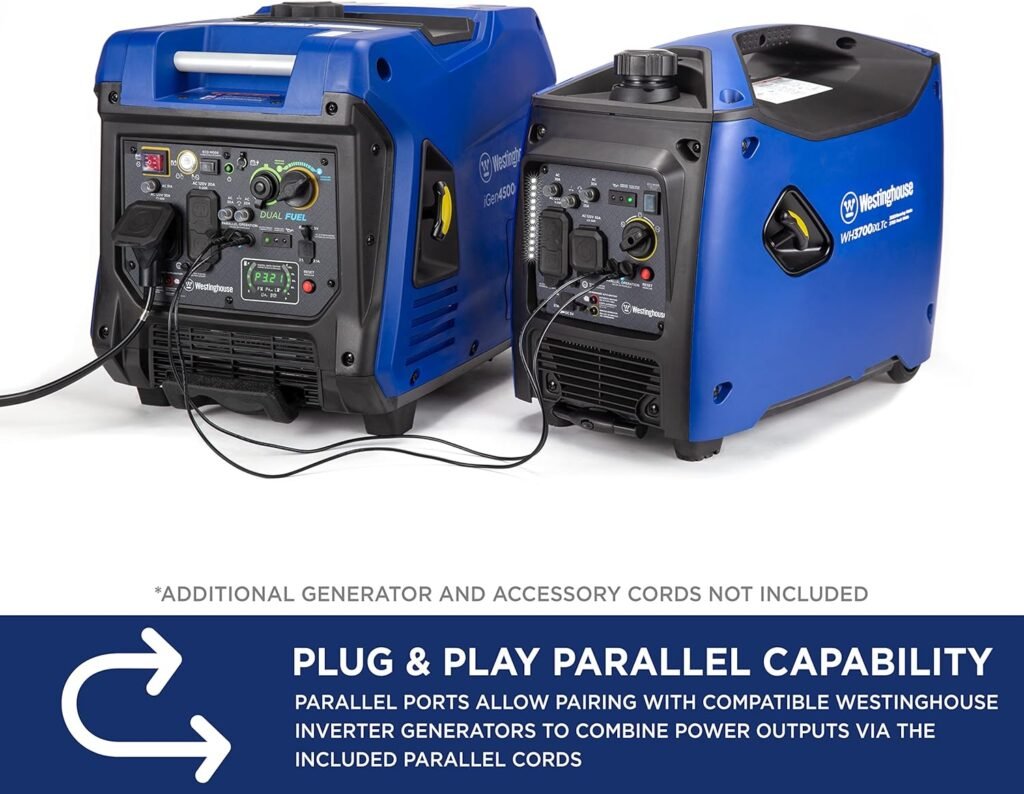
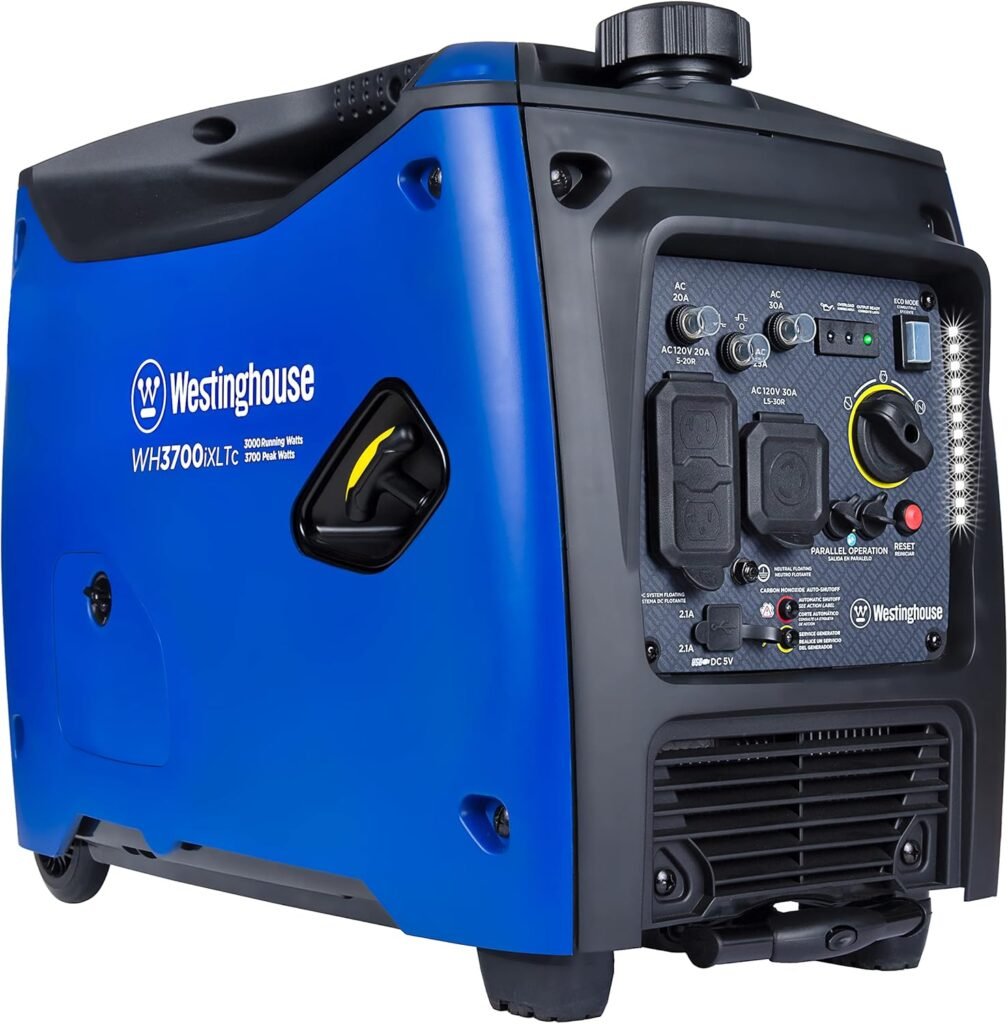
We appreciate the ability to parallel this inverter-capable unit with a second compatible Westinghouse generator to increase power. Parallel operation allows us to combine outputs for heavier loads without needing a single larger generator. The parallel kit (sold separately) is straightforward to connect and expands flexibility for larger parties or heavier home backup needs.
Safety features
We take safety seriously, especially when operating generators near living spaces, and this model includes thoughtful protections. An integrated CO sensor automatically shuts the generator off if unsafe carbon monoxide levels are detected, which is a major safety plus for family use. Low-oil shutdown and circuit protection add extra layers of protection for both users and the machine.
Carbon monoxide shutoff
We value the CO sensor because it reduces the risk of accidental indoor placement or operation too close to an occupied space. The automatic shutdown gives us peace of mind during prolonged use or when sleeping near a running unit. That feature aligns with evolving best practices in portable generator safety.
Electrical protections
We notice the inclusion of GFCI outlets and built-in overload protection, which help protect our devices and reduce trip hazards. The inverter technology also produces cleaner power, which is kinder to sensitive electronics. These protections make the generator family- and tech-friendly for mixed-use scenarios.
Maintenance and reliability
We expect a generator to be straightforward to maintain, and Westinghouse’s design makes routine care manageable. The EFI system reduces carburetor maintenance, while accessible oil and air filter locations simplify regular servicing. Westinghouse also offers a 3-year limited warranty and lifetime technical support, which helps if we encounter issues.
Service intervals and tasks
We recommend an initial oil change after the first few hours of break-in, followed by periodic oil, air filter, and spark plug checks. EFI reduces some maintenance tasks but doesn’t eliminate the need for basic care. We also suggest running the generator under load occasionally if it’s stored long-term to keep moving parts lubricated and the system in good working order.
Parts availability and support
We find Westinghouse’s nationwide service network useful for replacement parts and repairs. The lifetime technical support is reassuring if we need troubleshooting help or setup advice. For long-term ownership, local service centers and accessible parts are important considerations, and Westinghouse’s network helps there.
Use cases and scenarios
We like to match product features to real-world needs, so we thought through common scenarios where this generator shines. It’s a strong option for weekend RVers who want a quieter unit that can power an AC and household needs, as well as homeowners seeking a compact emergency backup for essential circuits. It also suits tailgaters, contractors needing clean inverter power for tools and electronics, and anyone who prefers the convenience of EFI and dual fuel.
Home backup specifics
For home backup, we recommend using the generator to support refrigerators, sump pumps, lights, and a few circuits rather than trying to power an entire modern home. With proper transfer switch setup or manual connection through a transfer panel, we can keep key systems running during outages. The unit’s peak and running wattage match many essential home needs without being overkill.
RV and camping specifics
We find this model easy to integrate into an RV setup via the TT-30R outlet and appreciate the quieter operation at campsites. The ability to run an RV A/C depends on the AC’s starting and running amps, but many mid-sized RV AC units are within reach when calculating peak vs running watts. Propane use is convenient for camping because we can swap or connect an external LP tank for extended stays.
Pros and cons
We always weigh positives and negatives to make decisions easier, so here’s what stands out to us. The strengths include EFI efficiency, dual fuel flexibility, remote start convenience, quiet operation, and RV-ready outlets. The downsides are the weight (111 lb) for solo lifting, the need to buy a parallel kit separately if we want more power, and slightly reduced propane wattage compared to gasoline.
Detailed pros
We like the EFI system for reliability and fuel savings, and the remote start adds real user convenience. The CO sensor and CARB compliance are important for safety and environmental regulations. The quiet acoustic enclosure truly improves campsite etiquette and neighborhood use.
Detailed cons
We note that at 111 lb the unit may require two people for lifting into a truck bed, and the parallel capability requires an additional purchase. The propane output reduction means we should plan load priorities when running on LPG. Finally, while the unit is well featured, those needing continuous heavy-duty power for large central ACs or whole-house loads will need a larger generator.
Comparison with similar models
We prefer to compare candidates so we can judge value, so we looked at nearby models in the Westinghouse lineup and competing brands. Compared to smaller inverter-only generators, this model offers much higher power for ACs and refrigerators while maintaining relative quiet. Compared to larger open-frame generators, it’s quieter and more user-friendly but trades off some sustained heavy-duty capacity.
How it stacks up versus smaller inverter units
Against smaller inverters, the key advantage is wattage and RV readiness; smaller units won’t run an RV AC reliably. We sacrifice some ultra-light portability for significantly greater capability. For weekend campers who need AC or families needing emergency backup, this model is often the better choice.
How it stacks up versus larger open-frame units
Compared to larger open-frame generators that produce more continuous power, this model is quieter and friendlier to sensitive electronics thanks to inverter output. Larger units, however, will beat it for nonstop heavy loads and usually have simpler mechanical systems. For us, the choice depends on whether quiet, clean power and portability matter more than sheer continuous capacity.
Buying considerations and tips
We want to give practical advice for purchasing, so we summarized what to check before buying. Confirm that the 3900 running watts (gas) meet your needs and calculate startup surges for motor-driven loads. If you plan to run larger or multiple AC units, consider parallel setups or stepping up to a higher-capacity generator.
Accessories we recommend
We find these accessories helpful: a parallel kit if you anticipate needing more power, an extra propane hose or appropriate LP adapter for camping, a high-quality transfer switch for home backup integration, and a sturdy cover for weather protection during storage. A fuel stabilizer for gasoline storage and a maintenance kit (oil, filters, spark plugs) also make long-term ownership easier.
Installation and setup tips
We advise placing the generator outdoors on level ground, keeping it clear of windows and vents to avoid CO risks, and using a professional electrician if tying into household circuits. For RV use, follow campground rules and plug directly into the TT-30R after confirming amperage and load requirements. Always perform a short test run before relying on the unit in an emergency so you’re familiar with start-up, fuel switching, and control panel layout.
Frequently asked questions (FAQ)
We like to answer common queries so we can remove uncertainty quickly. Below are questions we often encounter and concise answers based on the product’s features and typical user experience.
Can it run our RV air conditioner?
Yes, it can run many RV air conditioners depending on the AC’s starting and running amps. We recommend calculating the AC’s peak (starting) surge and ensuring you have the generator’s 5000 peak and 3900 running wattages on gasoline aligned with your unit; propane reduces those numbers slightly.
How loud is 61 dBA in practice?
At 61 dBA the generator is comparable to a normal conversation held at a distance of a few feet. We find it unobtrusive for campsites and backyard use, especially when placed strategically downwind or behind a barrier.
Is the EFI system difficult to service?
EFI reduces carburetor maintenance, but it does add complexity compared to simple carbureted engines. Routine service like oil and filter changes remains straightforward, and we recommend professional help for EFI-specific diagnostics if problems arise.
How easy is switching between gasoline and propane?
Switching is straightforward and is intended to be user-friendly. We suggest consulting the manual for step-by-step instructions and checking connections before each switch.
Do we need a separate battery for the electric start?
The generator includes an onboard battery for electric start; maintenance is limited to keeping it charged and checking terminals periodically. The recoil start is available as a backup.
Final recommendation
We think this Westinghouse unit strikes a strong balance between power, convenience, and quiet operation for a wide range of users. For families wanting reliable home backup, RVers who value quieter operation and convenience, and recreational users needing cleaner, flexible fuel options, the Westinghouse 5000 Peak Watt Super Quiet Dual Fuel Portable Inverter EFI Generator, Remote Electric Start, Gas & Propane Powered, RV Ready, CO Sensor, Parallel Capable, CARB Compliant is a compelling choice. We recommend it for those who need solid mid-range power with modern conveniences and safety features without moving up to a much larger, noisier machine.
Final checklist before purchase
We like to leave with a short checklist so we don’t forget details at the point of purchase. Verify the wattage meets your peak and running load needs, decide whether you’ll rely on propane or gasoline (or both), consider purchasing a parallel kit if future expansion is likely, and plan for safe installation and ventilation. With those boxes checked, we’ll be well positioned to enjoy reliable, quieter portable power from this Westinghouse generator.
Disclosure: As an Amazon Associate, I earn from qualifying purchases.